
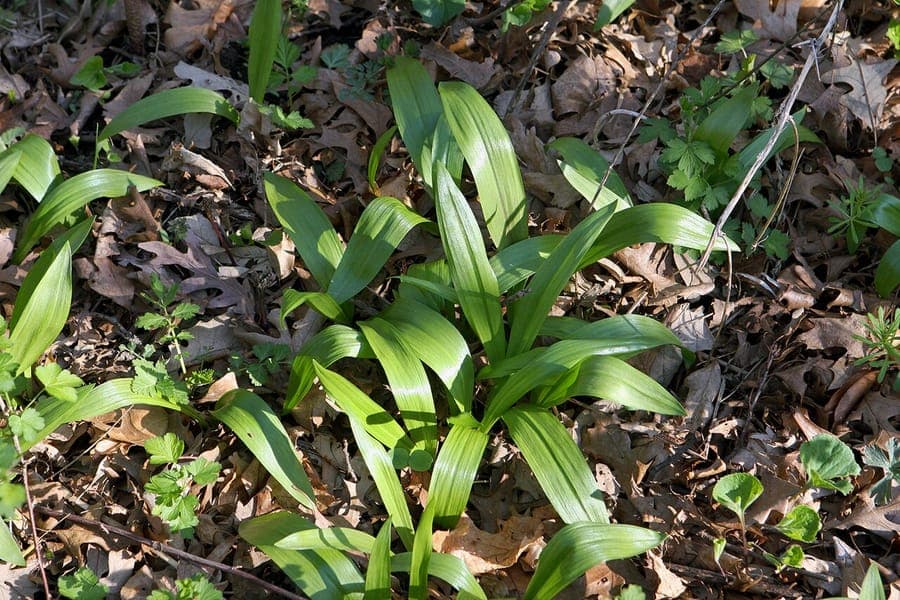
Hardyplants at English Wikipedia / Public domain, via Wikimedia Commons
Allium tricoccum: complete guide
Allium tricoccum
¿Quieres ver Allium tricoccum: complete guide en tu jardín?
1 minuto, sin tarjeta de crédito
Overview
Allium tricoccum, commonly known as ramp or wild leek, is a North American forest plant with a long history of food use. This pungent garlic-flavored plant grows wild from Canada through North Carolina and is a valuable addition to shaded woodland gardens.
The plant reaches 30-50 centimeters in height with large, elegant leaves in spring. In June white flowers appear on stems, followed by interesting seed capsules. The ramp is completely winter hardy and a vigorous grower in woodland gardens.
Appearance and bloom
The ramp grows from underground bulbs with large, elliptical leaves reaching 10-20 centimeters long. The leaves are of prominent spring appearance in April-May with pearlescent green appearance. This is the best harvest period for leaf gathering.
After approximately two months the leaves disappear and flowering stems appear, 20-40 centimeters tall. White to pink flowers on small stems form the inflorescence. The blooming period is June-July.
After blooming seed capsules form which remain interesting through August. These contain seeds for reproduction. The entire plant - leaves, flowers and bulbs - is edible with strong garlic flavor.
Ideal location
The ramp is a forest plant and thrives best in full to partial shade. Dappled sunlight through tree canopies is ideal. Full sun is not well tolerated and can lead to plant death.
Plant beneath trees, in woodland gardens or in shaded corners of gardens. The plant is perfect for shaded borders where many other flowers do not thrive. Minimum spacing of 30 centimeters from other plants.
In food gardens it can grow as a groundcover beneath trees where fruit is cultivated.
Soil
The ramp prefers rich, moist soils with abundant organic material. The forest floor where it naturally grows is full of composted leaves and organic matter. This must be imitated.
Add abundant compost when planting. Acidic to neutral pH (5.5-7.0) is ideal. The soil must drain well yet retain moisture. This is a balance that is important.
Plant bulbs 5 centimeters deep and 15 centimeters apart. Thick layer of leaf mold on the surface helps.
Diseño gratis
¿Quieres ver Allium tricoccum: complete guide en tu jardín? Crea un diseño gratis ahora.
Watering
The ramp prefers consistent moisture, especially during growing season. Water regularly throughout growing period (April-May) and bloom period (June-July). After blooming and seed formation water can be gradually reduced.
In dry periods give extra water. Mulch around the plant helps moisture retention.
After seed ripening in August the plant goes dormant and needs no water.
Pruning
Minimal pruning needed. Harvest leaves carefully in April-May for food. Leave some leaves for plant nutrition.
Spent flowers can be left for seed formation, or removed if you don't want self-seeding. Allow seed capsules to ripen if you want new plants from seed.
Maintenance calendar
March: Wait for soil thaw. Prepare mulch.
April through May: Leaves appear! Carefully harvest for food. Water regularly.
June through July: Blooming appears. White flowers beautiful against green foliage.
August: Seed ripening. Reduce water as leaves yellow.
September through February: Rest period. Bulbs sleep. Add mulch for protection.
Winter hardiness
The ramp is completely hardy to USDA zone 3 (to -40 degrees C), extremely frost-resistant. No protection needed.
Companion plants
Ideal combination with other forest plants: Hepatica, Trillium, Hellebores, shade ferns. These together create an authentic woodland flora atmosphere.
Also good with hostas and other broad-leafed plants where strong textural contrast is interesting.
Closing thoughts
The ramp is a unique plant - beautiful, nutritious and ecologically valuable. For gardeners with shaded spaces this is a top choice. Plant bulbs in fall and enjoy food in spring and flowers in summer. A true woodland treasure.
¿Quieres ver Allium tricoccum: complete guide en tu jardín? Crea un diseño gratis ahora.
Sube una foto, elige un estilo y obtén un diseño fotorrealista con lista de plantas en menos de un minuto.
Más de 10.000 jardines diseñados
Sin tarjeta de crédito


Plantas similares
Douglas' Onion: complete guide
Allium douglasii
Douglas' onion is a compact ornamental allium with purple flowers, perfect for rock gardens and sunny borders. Learn care, siting and hardiness.
Oblique onion: complete guide
Allium obliquum
The oblique onion is a hardy ornamental allium with chartreuse flower heads and blue-green foliage. Location, soil and care explained.
False hooded garlic: complete guide
Allium pseudocalyptratum
Discover false hooded garlic (Allium pseudocalyptratum): a rare ornamental onion from Lebanon for rock gardens and alpine troughs.