
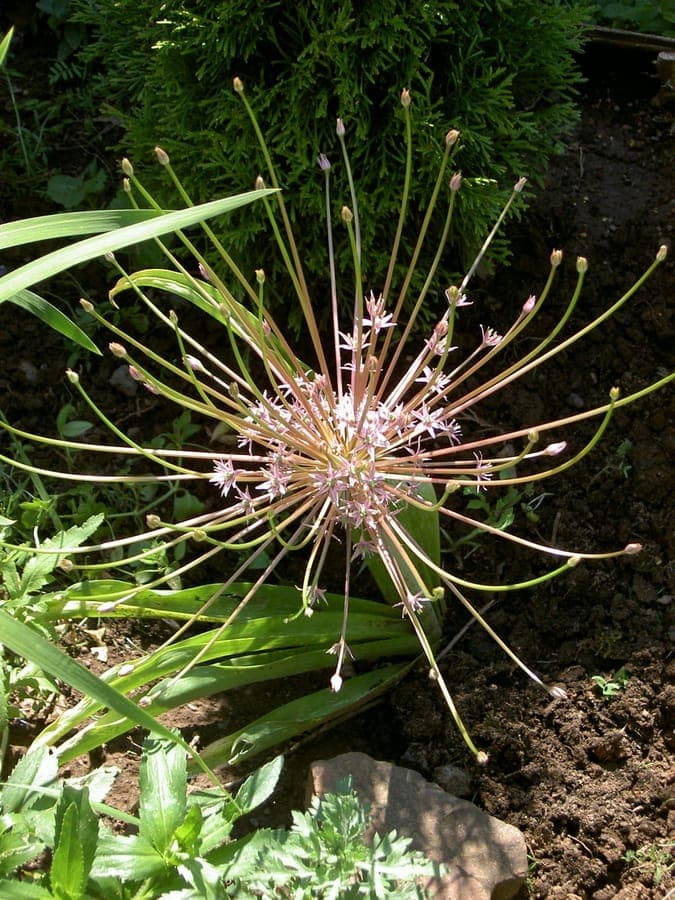
Simone / CC BY-SA 3.0, via Wikimedia Commons
Schubert's Garlic: complete guide
Allium schubertii
¿Quieres ver Schubert's Garlic: complete guide en tu jardín?
1 minuto, sin tarjeta de crédito
Overview
Schubert's garlic (Allium schubertii) is a remarkable ornamental bulb from the Mediterranean region, ranging from Turkey to Libya. This ornamental onion is celebrated for its explosive, fireworks-like flower structure that brings drama to any garden. With its unusual appearance, it forms a spectacular addition to borders and floral displays. Flowers emerge in June and July in shades of rosy pink to purple.
Appearance and Bloom
Schubert's garlic grows to a height of 30 to 60 centimeters with narrow, grayish-green foliage emerging from the base. The true marvel of this plant, however, is its flower. The inflorescence is spherical with dozens of tiny blooms radiating outward, creating a firework-like effect. This unique pattern distinctly sets it apart from other ornamental onion species. The individual flowers are small but numerous, in shades of pink to lilac, and attract bees and other pollinators.
Ideal Location
Schubert's garlic thrives in a sunny spot in your garden. Aim for at least six to eight hours of direct sunlight daily. This plant is highly drought-tolerant and feels at home in warm, sunny corners where many other plants would struggle. Place it in mixed borders where it can visually stand out, or cultivate it in drifts for greater impact. It also works beautifully in ornamental grass plantings and Mediterranean gardens.
Soil
The ideal soil for Schubert's garlic must be well-drained. This plant is extremely sensitive to excess moisture, making drainage essential. A sandy to loamy soil with neutral pH works best. Add humus-rich amendments like compost, but ensure water does not stagnate around the roots. For container cultivation, use a mix of garden soil and sand in a ratio of two parts soil to one part sand.
Watering
Once established, Schubert's garlic requires very little water. In fact, too much water can be harmful and may cause bulb rot. Water only when the soil is completely dry, usually just a few times during the growing season. During dry heat waves, you can provide slightly more water, but remain vigilant against water stagnation. In wet winters, be extra cautious with watering frequency.
Diseño gratis
¿Quieres ver Schubert's Garlic: complete guide en tu jardín? Crea un diseño gratis ahora.
Pruning
Pruning is not strictly necessary, but you can remove spent flowers to keep the plant looking neat. Consider leaving the seed heads standing, especially since they are attractive and attract birds. After the growing season, you can remove dead foliage. The leaves naturally disappear as the season transitions to dormancy in summer and fall.
Maintenance Calendar
Spring: Check drainage and ensure the soil is well-drained. April to May is when growth begins. May-June: Apply low-nitrogen fertilizer if needed. Summer: Drastically reduce watering and allow the plant to rest. August-October: Prepares for dormancy. October to November: The planting date for next season.
Winter Hardiness
Schubert's garlic is relatively winter-hardy in temperate climates and can survive to USDA zone 5 (down to -29 degrees Celsius). In cold regions, winter protection is beneficial, especially in the first year. Mulch around the base of the plant in late fall. In much of Europe, including the UK, it survives outdoors without protection, though winters at borders in mountainous regions require caution.
Companion Plants
Schubert's garlic combines beautifully with other drought-lovers and Mediterranean plants. Plant it alongside silvery artemisia, red stipa grasses, lavender, and salvias. The tall spike-like structure makes it suitable as a background plant alongside shorter ornamental grasses. Pair it also with Echinacea or Rudbeckia for a summer flower border.
Conclusion
For gardeners seeking something extraordinary, Schubert's garlic is an excellent choice. With its low-maintenance nature and spectacular blooms, it demands minimal effort while delivering maximum impact. Once established, this Mediterranean beauty can be enjoyed for years with minimal intervention. For more information visit gardenworld.app where you'll find more Mediterranean plant combinations. Also discover our guides for other ornamental onion varieties on gardenworld.app.
Praktische Tips voor Succesvolle Teelt
De sleutel tot succes met deze plant is geduld en aandacht voor de basisbehoeften. Veel tuiniers maken fouten door te veel zorg te geven in plaats van te weinig. Observatie van de plant gedurende het seizoen helpt je de perfecte balans te vinden. Raadpleeg gardenworld.app regelmatig voor updates en nieuwe technieken.
¿Quieres ver Schubert's Garlic: complete guide en tu jardín? Crea un diseño gratis ahora.
Sube una foto, elige un estilo y obtén un diseño fotorrealista con lista de plantas en menos de un minuto.
Más de 10.000 jardines diseñados
Sin tarjeta de crédito


Plantas similares
Douglas' Onion: complete guide
Allium douglasii
Douglas' onion is a compact ornamental allium with purple flowers, perfect for rock gardens and sunny borders. Learn care, siting and hardiness.
Oblique onion: complete guide
Allium obliquum
The oblique onion is a hardy ornamental allium with chartreuse flower heads and blue-green foliage. Location, soil and care explained.
False hooded garlic: complete guide
Allium pseudocalyptratum
Discover false hooded garlic (Allium pseudocalyptratum): a rare ornamental onion from Lebanon for rock gardens and alpine troughs.