
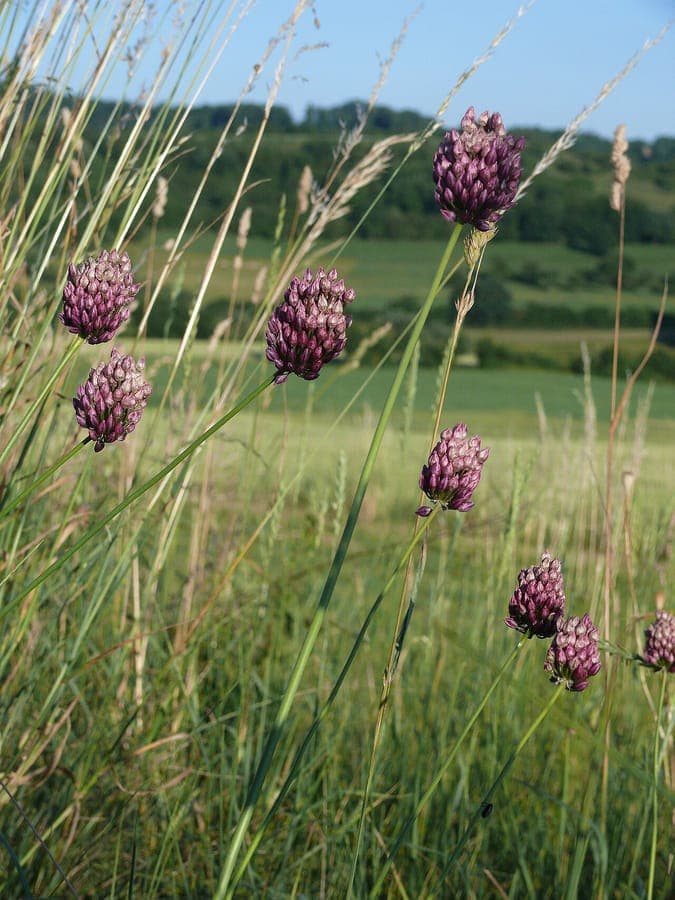
Bernd Haynold / CC BY-SA 3.0, via Wikimedia Commons
Purple-flower garlic: complete guide
Allium rotundum
¿Quieres ver Purple-flower garlic: complete guide en tu jardín?
1 minuto, sin tarjeta de crédito
Overview
Allium rotundum, commonly known as purple-flower garlic, is a compact, herbaceous perennial that brings quiet charm to any garden. Native to regions like Belarus, Bulgaria, and parts of France and Germany, this small allium thrives in USDA hardiness zones 5 to 8. It's a reliable performer in temperate climates, handling cold winters and dry summers with ease. Standing at just 20–30 cm tall, it's perfect for the front of borders, rock gardens, or tucked between paving stones. Don't expect culinary use-while it carries a faint garlic scent when bruised, it's not cultivated for cooking. Instead, its ornamental value lies in its neat growth and bold yet subtle presence.
One of the quiet strengths of purple-flower garlic is its resilience. Once established, it requires next to no care and can naturalize in well-drained spots. If you're planning a low-maintenance garden, consider using gardenworld.app to map out a design that highlights drought-tolerant species like this one. The platform helps visualize spacing, sun exposure, and companion planting for optimal growth.
Appearance & bloom cycle
The plant produces slender, grass-like leaves in early spring, reaching about 25 cm in length. These leaves start to yellow and die back just as the flowers emerge in June. The bloom period runs from late June through July, featuring dense, spherical flower heads about 1.5–2 cm across. Each head contains tiny star-shaped flowers in deep purple to violet, creating an eye-catching cluster atop thin, upright stems.
After blooming, the seed heads persist into autumn, adding texture and visual interest. The dried seed pods rattle slightly in the breeze, giving the plant a dynamic presence even when not in full flower. This long seasonal interest makes it a favorite among gardeners who appreciate plants with multiple phases.
Ideal location
Plant purple-flower garlic in full sun-aim for at least 6 hours of direct light daily. It tolerates light shade but may produce weaker stems and fewer flowers. Avoid deep shade or areas with heavy competition from tree roots. It shines in gravel gardens, dry slopes, or cottage-style borders. Because of its modest height, it works well in containers too, provided the pot is at least 20 cm deep and has excellent drainage.
To test placement ideas, try sketching a layout on gardenworld.app. You can drag and drop Allium rotundum into different zones to see how it interacts with sunlight and neighboring plants.
Soil requirements
Well-drained soil is non-negotiable. Purple-flower garlic hates wet feet. Heavy clay soils should be amended with sharp sand, fine grit, or perlite to improve drainage. A sandy loam or gritty mix with a pH between 6.5 and 7.5 is ideal. If growing in pots, use a mix of standard compost with 30% added drainage material. Avoid moisture-retentive soils-root rot is the main threat.
Diseño gratis
¿Quieres ver Purple-flower garlic: complete guide en tu jardín? Crea un diseño gratis ahora.
Watering
Water moderately during active growth (March to July). Once a week is usually enough unless conditions are unusually dry. Potted plants may need watering twice a week in hot summers. From August onward, reduce watering gradually. By September, stop watering altogether to allow the bulbs to enter dormancy. No supplemental water is needed in winter.
Pruning
No pruning is required. After flowering, you can remove the spent flower stalks for neatness, but leave the foliage until it dies back naturally. This allows the leaves to feed energy back into the bulb for next year's growth. If you want to prevent self-seeding-this species can spread by seed-cut off the flower heads before the seeds mature.
Maintenance calendar
- February–March: Check for emerging foliage. No action needed.
- April–May: Water occasionally during dry spells. Keep weeds under control.
- June–July: Peak bloom. Ensure consistent moisture if rainfall is low. Watch for flopping stems-this suggests poor drainage or insufficient sun.
- August: Stop watering. Trim flower stems if desired.
- September–October: Plant new bulbs 8–10 cm deep. Divide overcrowded clumps if needed.
- November–January: Dormant period. No care required. Protect potted plants from prolonged wet conditions by moving them to a sheltered spot.
Winter hardiness
Hardy in USDA zones 5–8, purple-flower garlic reliably survives winter in most of the UK, US, and central Europe. In areas with heavy, waterlogged soil, lift bulbs and store them in dry sand or peat-free compost, or grow them in containers that can be moved to a dry shed or greenhouse.
Companion plants
Pair Allium rotundum with other drought-tolerant perennials like Sedum spectabile, Thymus vulgaris, or Eryngium planum. Its purple tones contrast beautifully with yellow-flowering Rudbeckia or golden oregano. Avoid aggressive spreaders like mint or bindweed. In herb gardens, it fits well with sage, oregano, or lavender-plants that share its preference for dry, sunny conditions.
Closing
Purple-flower garlic isn't the flashiest allium, but it's a dependable, long-term resident in the garden. It asks for little and delivers structure, color, and texture across multiple seasons. Its compact size and tidy habit make it ideal for small spaces or detailed planting schemes. Look for bulbs in late summer or early autumn at garden centres like those found across the UK, and plant them right away for blooms the following summer.
¿Quieres ver Purple-flower garlic: complete guide en tu jardín? Crea un diseño gratis ahora.
Sube una foto, elige un estilo y obtén un diseño fotorrealista con lista de plantas en menos de un minuto.
Más de 10.000 jardines diseñados
Sin tarjeta de crédito


Plantas similares
Douglas' Onion: complete guide
Allium douglasii
Douglas' onion is a compact ornamental allium with purple flowers, perfect for rock gardens and sunny borders. Learn care, siting and hardiness.
Oblique onion: complete guide
Allium obliquum
The oblique onion is a hardy ornamental allium with chartreuse flower heads and blue-green foliage. Location, soil and care explained.
False hooded garlic: complete guide
Allium pseudocalyptratum
Discover false hooded garlic (Allium pseudocalyptratum): a rare ornamental onion from Lebanon for rock gardens and alpine troughs.