
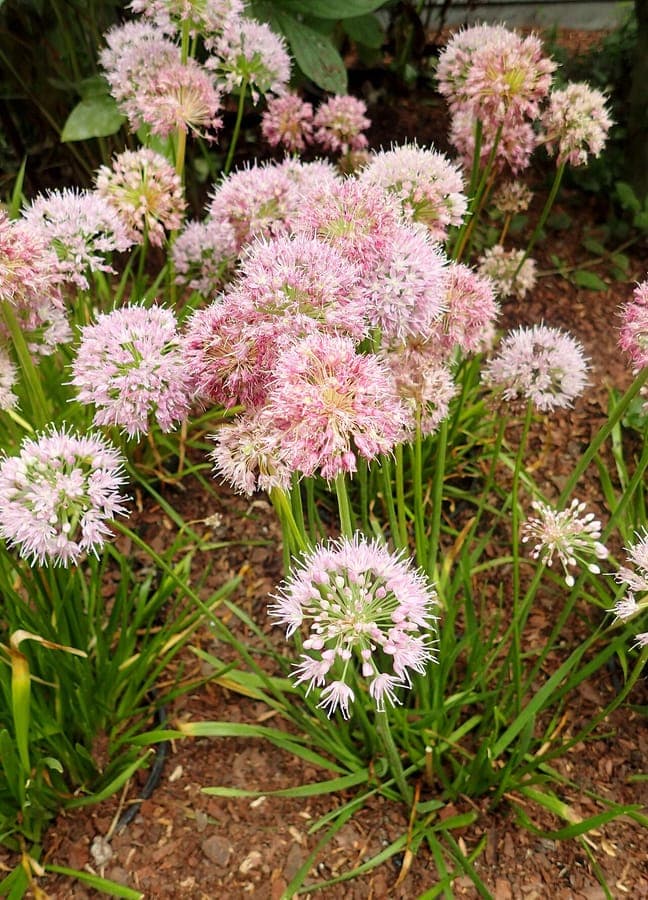
Krzysztof Ziarnek, Kenraiz / CC BY-SA 4.0, via Wikimedia Commons
Allium nutans: complete guide
Allium nutans
¿Quieres ver Allium nutans: complete guide en tu jardín?
1 minuto, sin tarjeta de crédito
Overview
Allium nutans, commonly called blue chives or Siberian garlic chives, is an intriguing garden plant originating from Siberian steppes. This culinary plant leads a double life - serving as both food crop and ornamental. With its unique blue flowers it stands apart from most other allium species.
The plant reaches 30 to 50 centimeters in height, blooming July through August with brilliant blue-violet flowers. It is hardy to extremely low temperatures and tolerates dry climates better than most other edible allium species.
Appearance and bloom
Allium nutans grows from small underground bulbs with flat, gray-green leaves reaching 15-25 centimeters long. The leaves have an interesting flattening - semi-cylindrical but not completely hollow. This is a characteristic feature distinguishing it from other alliums.
Flowers appear July through August on stems 30-50 centimeters tall. The inflorescence is compact and ball-shaped, with twenty to thirty small blue-violet flowers. This color is striking - many allium species are white or pink, so the blue tint is rare and valuable.
After blooming, seed capsules form which are also quirky and decorative. The entire plant is edible and tastes like onion with hints of garlic.
Ideal location
Blue chives thrive best in full sun with minimum 6 hours direct sunlight. The plant tolerates partial shade but produces fewer flowers there. The location must be well-drained - wetter soils are not appreciated.
Plant in borders, along pathways, or in groups for maximum visual effect. The compact growth makes it suitable for small gardens. It combines beautifully with Mediterranean herbs and lavender.
In the kitchen it can grow or in special herb gardens. Many gardeners grow it both for ornament and food.
Diseño gratis
¿Quieres ver Allium nutans: complete guide en tu jardín? Crea un diseño gratis ahora.
Soil
Blue chives is undemanding and accepts various soil types. Sandy, loamy and even rocky soils are suitable. pH between 5.5 and 7.5 is ideal.
Good drainage is important. In heavy clay, add sand and compost. The plant thrives in poor soils. Excessive feeding can lead to more leaf growth at the expense of flowers.
Plant bulbs 5-7 centimeters deep and 8-10 centimeters apart. When planted in groups they create strong visual effects.
Watering
Once established, blue chives is quite drought tolerant. Water regularly the first year to establish roots. Subsequently it requires very little water.
Even in Mediterranean gardens and dry climates it grows well. Extra water during very dry periods helps but is not essential. Avoid waterlogging.
After blooming no water is needed. The plant goes dormant.
Pruning
Minimal pruning needed. Spent flowers can be removed or left for seed. If you harvest the plant for food, pluck leaves as needed.
Allow dead material after blooming to stand until the plant yellows. This helps nutrients return to the bulb.
Maintenance calendar
March: Wait for new growth. Remove dead material.
April through May: Growth advances. Supporting water helps if needed.
June: Preparation for blooming.
July through August: Blooming period! Season highlight.
September: Seed collection possible. Otherwise no action.
October through February: Rest. Bulbs sleep.
Winter hardiness
Blue chives is hardy to USDA zone 3 or lower, extremely frost-resistant. No special protection needed.
Companion plants
Perfect with: Lavender, sage, thyme, oregano, other culinary herbs. The blue flowers harmonize beautifully with purple lavender.
Closing thoughts
Blue chives is a versatile plant - beautiful, nutritious and frost-resistant. For gardeners seeking both beauty and utility, this is a top choice. Plant bulbs in fall and enjoy flowers and possible harvests for years.
¿Quieres ver Allium nutans: complete guide en tu jardín? Crea un diseño gratis ahora.
Sube una foto, elige un estilo y obtén un diseño fotorrealista con lista de plantas en menos de un minuto.
Más de 10.000 jardines diseñados
Sin tarjeta de crédito


Plantas similares
Douglas' Onion: complete guide
Allium douglasii
Douglas' onion is a compact ornamental allium with purple flowers, perfect for rock gardens and sunny borders. Learn care, siting and hardiness.
Oblique onion: complete guide
Allium obliquum
The oblique onion is a hardy ornamental allium with chartreuse flower heads and blue-green foliage. Location, soil and care explained.
False hooded garlic: complete guide
Allium pseudocalyptratum
Discover false hooded garlic (Allium pseudocalyptratum): a rare ornamental onion from Lebanon for rock gardens and alpine troughs.