
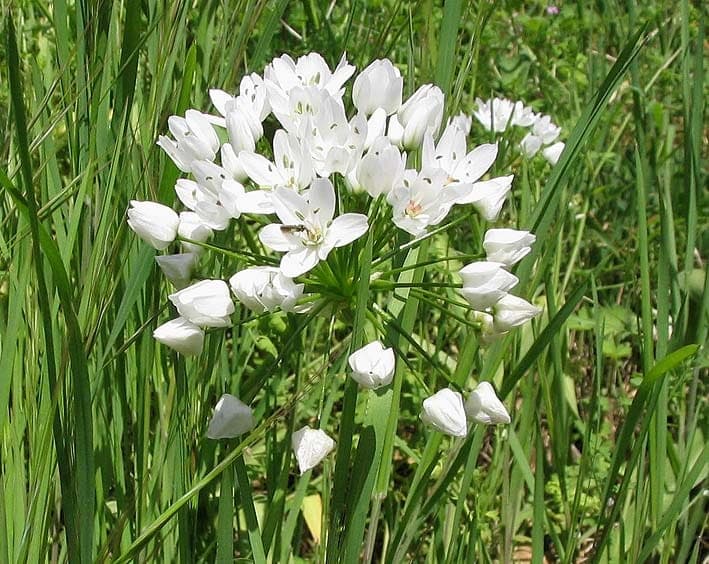
Jeantosti at French Wikipedia / CC BY-SA 3.0, via Wikimedia Commons
Daffodil garlic: complete guide
Allium neapolitanum
¿Quieres ver Daffodil garlic: complete guide en tu jardín?
1 minuto, sin tarjeta de crédito
Overview
Allium neapolitanum, commonly known as Daffodil garlic, is a charming bulbous perennial native to southern Europe and the Mediterranean basin. Despite the name, it's not related to daffodils-it earns its nickname from the bright, starry white flowers that resemble miniature Narcissus. This hardy allium thrives in sunny, well-drained spots and brings a delicate, airy presence to borders, rock gardens, and naturalised lawns.
At gardenworld.app, you can design a custom planting scheme where Daffodil garlic complements your existing bulbs and perennials, ensuring year-round visual interest.
Appearance & bloom cycle
Daffodil garlic reaches a modest height of 20–30 cm, making it ideal for front-of-border positions or as a naturalising element in grassy areas. It blooms from late April to early May, depending on local spring conditions. Each slender stem carries a compact, globe-shaped umbel of 15–25 small, six-petalled white flowers. The blooms are slightly fragrant, releasing a faint garlicky scent when brushed or crushed.
The foliage is narrow, hollow, and grass-like, emerging alongside the flower stems in early spring. After flowering, the leaves yellow and die back naturally by June. Never cut them prematurely-let them photosynthesise fully to fuel next year's bloom.
Ideal location
This allium loves full sun and performs best in locations receiving at least 8 hours of direct sunlight daily. Choose open, unshaded areas, preferably facing south or southwest. It's perfect for gravel gardens, sunny slopes, or containers on patios. Avoid heavily shaded spots under trees or large shrubs, as low light leads to weak stems and poor flowering.
In gardens with mixed planting, position Daffodil garlic where it won't be overshadowed by later-emerging perennials. A sunny rockery or a dry stone wall crevice offers ideal growing conditions.
Soil requirements
Allium neapolitanum thrives in well-drained, light to sandy soils with a pH of 7.5–8.0. It prefers alkaline conditions, so chalky or limestone-rich soils are perfect. Heavy clay or waterlogged ground is a major risk-bulbs will rot quickly. If your soil is dense, improve drainage by mixing in horticultural grit, coarse sand, or perlite.
For container planting, use a loam-based compost with added grit. Avoid overly rich soils-this plant prefers lean conditions and too much organic matter can encourage rot.
Watering
After planting bulbs in autumn (September to November), water lightly to settle the soil. Once established, Daffodil garlic is drought-tolerant and rarely needs supplemental watering, relying on winter and spring rains. During prolonged dry spells in April, a light soak can support bud development, but avoid overwatering.
Stop watering completely once foliage begins to yellow. This signals dormancy, and excess moisture at this stage increases rot risk.
Diseño gratis
¿Quieres ver Daffodil garlic: complete guide en tu jardín? Crea un diseño gratis ahora.
Pruning
No pruning is required for Daffodil garlic. You may deadhead spent flower heads for neatness, but it's not essential. The key is to leave the foliage intact until it fully withers-this usually takes 6–8 weeks post-bloom.
If propagating from seed, allow seed heads to dry on the plant, then collect and sow in autumn. However, seed-grown plants take 2–3 years to flower. Most gardeners prefer to buy fresh bulbs every few years for reliable results.
Maintenance calendar
- September–November: Plant bulbs 8–10 cm deep, spaced 10 cm apart.
- December–March: Minimal care. Check for bulb displacement or rodent damage.
- April–May: Peak bloom. Monitor for drought stress.
- June: Foliage dies back. No watering.
- July–August: Dormant period. Bulbs can remain in the ground or be lifted and stored in a cool, dry, ventilated space.
Use gardenworld.app to generate a personalised maintenance calendar based on your USDA zone (7–9) and local weather patterns.
Winter hardiness
Daffodil garlic is hardy in USDA zones 7 to 9. In zone 7, a light mulch of straw or leaf litter can help protect bulbs during wet, freezing winters. However, avoid thick, moisture-retaining covers-well-drained soil is your best defence against rot.
In colder zones (6 and below), grow in containers that can be moved to a sheltered spot or unheated greenhouse over winter.
Companion plants
Pair Daffodil garlic with other early-spring bulbs like Narcissus, Muscari, or Scilla. The white flowers contrast beautifully with yellow daffodils or deep blue grape hyacinths. Later-blooming drought-tolerant perennials like Sedum, Echinacea, or Lavandula make excellent companions, filling the gap once the allium foliage fades.
Avoid moisture-loving plants like Hostas or ferns-they clash in both water needs and growing conditions.
Closing
Daffodil garlic is a low-effort, high-reward plant for sunny gardens. It's bee-friendly, deer-resistant, and adds elegant texture in spring. Plant in clusters of 10 or more for a natural, drift-like effect. Buy firm, plump bulbs from trusted garden centres like those found at local nurseries or major retailers.
Whether you're refreshing a small border or designing a Mediterranean-style garden, Daffodil garlic delivers reliable beauty with minimal fuss. With gardenworld.app, you can visualise how this allium fits into your seasonal planting plan-no guesswork, just great results.
¿Quieres ver Daffodil garlic: complete guide en tu jardín? Crea un diseño gratis ahora.
Sube una foto, elige un estilo y obtén un diseño fotorrealista con lista de plantas en menos de un minuto.
Más de 10.000 jardines diseñados
Sin tarjeta de crédito


Plantas similares
Douglas' Onion: complete guide
Allium douglasii
Douglas' onion is a compact ornamental allium with purple flowers, perfect for rock gardens and sunny borders. Learn care, siting and hardiness.
Oblique onion: complete guide
Allium obliquum
The oblique onion is a hardy ornamental allium with chartreuse flower heads and blue-green foliage. Location, soil and care explained.
False hooded garlic: complete guide
Allium pseudocalyptratum
Discover false hooded garlic (Allium pseudocalyptratum): a rare ornamental onion from Lebanon for rock gardens and alpine troughs.