
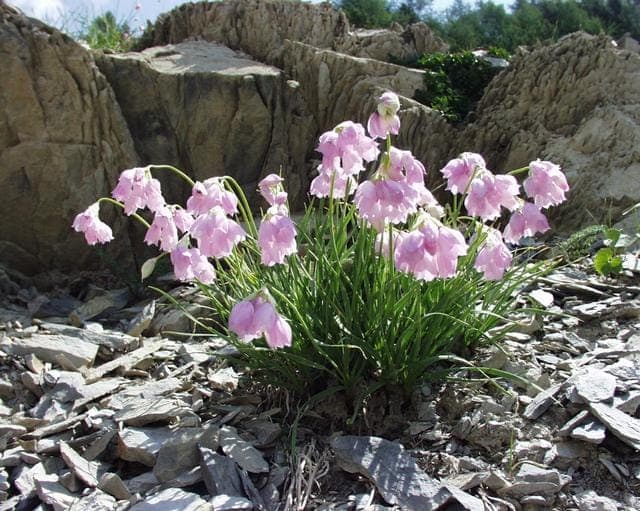
H. Brisse (upload by Abalg) / CC BY-SA 3.0, via Wikimedia Commons
Allium narcissiflorum: complete guide
Allium narcissiflorum
¿Quieres ver Allium narcissiflorum: complete guide en tu jardín?
1 minuto, sin tarjeta de crédito
Overview
Allium narcissiflorum, better known as Daffodil Garlic or Piedmontese Garlic, is a charming alpine plant from the Amaryllidaceae family. This rare and highly decorative plant is native to the Southern Alps and shines with its elegant, purple flowers. It is a true jewel for rock gardens, alpine collections and natural front gardens. Despite its fragile appearance, it is actually robust and easy to maintain.
Appearance & bloom
Daffodil Garlic grows compactly from 20-40 cm high with thin, grass-like green leaves. The real beauty lies in the flowers: elegant, purple-pink florets form spherical, airy flower clusters (umbels) that appear in July and August. These flowers have something refined about them and attract bees. The plant shines in containers, between stones and in alpine borders where it cannot be overwhelmed by more vigorous neighbors.
Ideal location
Daffodil Garlic thrives best in full sunlight. At least 6 hours of direct sun is needed for optimal flowering. In half shade it grows, but flowers less abundantly. This alpine plant feels at home on rocky, well-draining locations. Uncertain underground moisture regulation can easily kill this plant, so ensure perfect drainage.
Soil
Well-drained, slightly acidic to neutral soil is essential. Alpine soil mix with extra sand or gravel is ideal. Avoid heavy, moist clay soil. The plant tolerates nutrient-poor soil and actually prefers moderate fertility. For container cultivation, choose soil with fine structure that allows sufficient moisture passage without stagnation.
Diseño gratis
¿Quieres ver Allium narcissiflorum: complete guide en tu jardín? Crea un diseño gratis ahora.
Watering
During the growing season, water regularly, but ensure good drainage so water does not stagnate. Once flowering is over and the plant begins to die back, gradually reduce watering. During the dormant period (October-April), provide minimal water. Excessive water is more damaging than drought for this alpine plant.
Pruning
Daffodil Garlic requires no pruning. Leave the dead leaves on the plant until they are completely shriveled, then they can be gently removed. This helps feed the plant before it goes dormant. Leave all seed pods on the plant for natural seed dispersal.
Maintenance calendar
Spring (March-April): When new growth appears, provide gentle feeding with light fertilizer. Summer (May-September): Water regularly, enjoy blooms in July-August. Fall (October-October): Reduce watering significantly, dormancy begins. Winter (December-February): Minimal water, protection from extreme moisture.
Winter hardiness
Daffodil Garlic is very winter-hardy and tolerates temperatures down to -20°C without problem. The bulbs can tolerate mild frost. Winter moisture is, however, more damaging than cold. In wet winter areas, protection from excess water is sometimes needed. In well-draining soil, extra protection is usually unnecessary.
Companion plants
Daffodil Garlic combines wonderfully with other alpine plants such as Primula, Saxifraga and alpine Phlox. In rock gardens it works well with saxifrages and edelweiss. Avoid plants that need too much water. In a pot garden it can be used together with other alpines in one container. It grows well with evergreen alpine groundcover.
Closing
Daffodil Garlic is a precious addition to alpine collections and rock gardens. Gamma and other garden centers occasionally stock bulbs. Find more garden inspiration at gardenworld.app/en.
¿Quieres ver Allium narcissiflorum: complete guide en tu jardín? Crea un diseño gratis ahora.
Sube una foto, elige un estilo y obtén un diseño fotorrealista con lista de plantas en menos de un minuto.
Más de 10.000 jardines diseñados
Sin tarjeta de crédito


Plantas similares
Douglas' Onion: complete guide
Allium douglasii
Douglas' onion is a compact ornamental allium with purple flowers, perfect for rock gardens and sunny borders. Learn care, siting and hardiness.
Oblique onion: complete guide
Allium obliquum
The oblique onion is a hardy ornamental allium with chartreuse flower heads and blue-green foliage. Location, soil and care explained.
False hooded garlic: complete guide
Allium pseudocalyptratum
Discover false hooded garlic (Allium pseudocalyptratum): a rare ornamental onion from Lebanon for rock gardens and alpine troughs.