
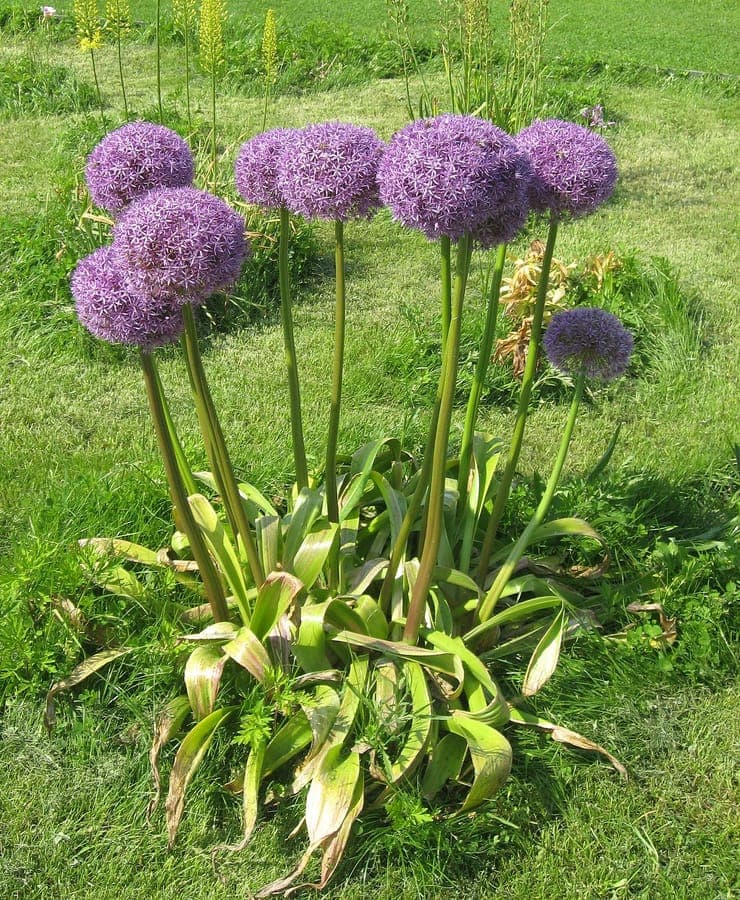
Нацку / CC BY-SA 3.0, via Wikimedia Commons
Persian onion: complete guide
Allium hollandicum
¿Quieres ver Persian onion: complete guide en tu jardín?
1 minuto, sin tarjeta de crédito
Overview
The Persian onion, scientifically known as Allium hollandicum, is a striking bulbous plant from the Amaryllidaceae family. Despite its name, this plant originates from Iran and has since spread to gardens throughout Europe.
The plant is renowned for its spectacular purple, almost spherical flower head. This makes Allium hollandicum a favorite among gardeners seeking to create dramatic spring effects in their gardens.
Appearance and bloom
Allium hollandicum grows from an underground bulb to approximately 60-80 centimeters in height. The plant features long, slender green foliage growing basally from the plant. At the stem's apex forms a beautiful purple flower head.
The flower head consists of many small flowers arranged in a perfect sphere or ball. This sphere can reach 4-6 centimeters in diameter. Flowers appear in May and June and maintain their bloom for extended periods. After flowering, seed formation attracts birds.
Ideal location
Persian onion grows best in full sun locations. The plant requires at least 6 hours of direct sunlight daily for optimal flowering. In zones with hot summers, light afternoon shade can be beneficial.
Ensure the location is well-ventilated and avoid very damp locations.
Soil
Persian onion thrives in well-draining, sandy soil. The plant tolerates various soils but prefers neutral to slightly acidic soil with pH 6-7. Heavy clay soils must be amended with sand, perlite, or compost. Good drainage is essential as water stagnation causes bulb rot. Plant bulbs 2-3 times their height deep.
Diseño gratis
¿Quieres ver Persian onion: complete guide en tu jardín? Crea un diseño gratis ahora.
Watering
Once planted, Persian onion requires minimal water during the growing season. Ensure soil never becomes waterlogged. During dry periods, water deeply. After flowering, reduce watering substantially. Once foliage yellows, stop watering entirely.
Pruning
Remove faded flowers to prevent seed formation and conserve energy. However, allow foliage to yellow naturally. This foliage returns nutrients to the bulb. If preserving the flower for cutting, use a sharp knife.
Maintenance calendar
Aug-Sep: Plant bulbs Oct-Nov: Root formation underground Dec-Mar: Foliage growth Apr-May: Flowering period Jun-Jul: Seed preparation, foliage yellows
Winter hardiness
Persian onion is hardy down to -15 degrees Celsius. The bulb can overwinter underground. Ensure the plant does not experience simultaneous wetness and freezing.
In regions with very wet winters, you can excavate bulbs and store them in a dry location.
Companion plants
Persian onion pairs well with:
- Other Allium species
- Tulips
- Daffodils
- Lavender
- Roses
These combinations create spectacular spring displays attractive to pollinators.
Conclusion
Persian onion is a spectacular bulb plant that elevates any spring garden to new heights. With its purple spheres and extended bloom, this is a must-have plant for serious gardeners. Visit gardenworld.app/en for more inspiration in spring garden design.
¿Quieres ver Persian onion: complete guide en tu jardín? Crea un diseño gratis ahora.
Sube una foto, elige un estilo y obtén un diseño fotorrealista con lista de plantas en menos de un minuto.
Más de 10.000 jardines diseñados
Sin tarjeta de crédito


Plantas similares
Douglas' Onion: complete guide
Allium douglasii
Douglas' onion is a compact ornamental allium with purple flowers, perfect for rock gardens and sunny borders. Learn care, siting and hardiness.
Oblique onion: complete guide
Allium obliquum
The oblique onion is a hardy ornamental allium with chartreuse flower heads and blue-green foliage. Location, soil and care explained.
False hooded garlic: complete guide
Allium pseudocalyptratum
Discover false hooded garlic (Allium pseudocalyptratum): a rare ornamental onion from Lebanon for rock gardens and alpine troughs.