
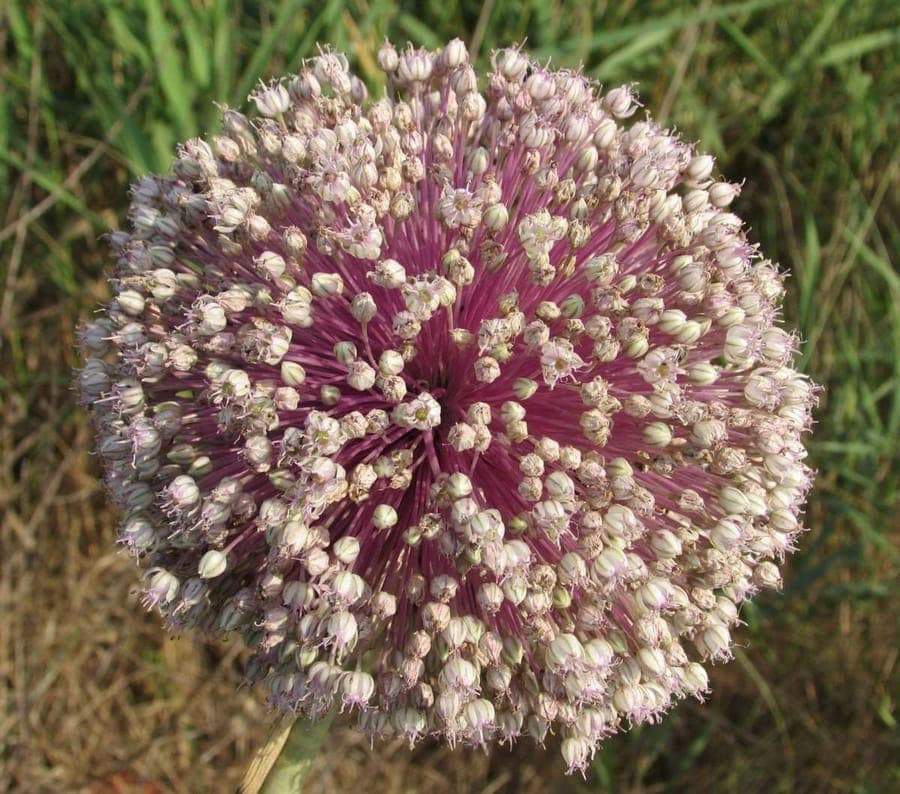
Hüseyin Cahid Doğan / CC BY-SA 4.0, via Wikimedia Commons
Sea garlic: complete guide
Allium commutatum
¿Quieres ver Sea garlic: complete guide en tu jardín?
1 minuto, sin tarjeta de crédito
Overview
Sea garlic (Allium commutatum) is an elegant ornamental plant from the Amaryllidaceae family, naturally occurring in the Mediterranean region. Known for its refined appearance and delicate pink flower clusters that last a month, this plant is prized for decorative garden use. Despite its name, sea garlic bears no relation to edible garlic.
Appearance and bloom
Sea garlic reaches 30-50 cm tall and forms elegant grass-like foliage. Flowers appear April through June as pale pink to rosy star-shaped blooms, grouped in spherical flower heads (umbels) atop tall stems. Each bloom is roughly 1 cm wide and highly attractive to pollinators. The flower heads are subtly scented and remain attractive for 3-4 weeks. After blooming, foliage disappears by June, initiating a dormancy period.
Ideal location
Sea garlic thrives in sunny to partially shaded spots with at least 6 hours of direct sunlight daily. It grows excellently in Mediterranean and xeriscape gardens. Plant bulbs in groups of 5-10 for visual impact. Perfect for flower borders, pathways or rock gardens.
Soil
This plant requires excellent drainage in sandy or loamy soil. Heavy clay can cause root rot. Mix in grit, perlite or sand. Soil pH should be neutral to slightly alkaline (6.5-7.5). For containers, use 1:1 garden soil and sand mix.
Diseño gratis
¿Quieres ver Sea garlic: complete guide en tu jardín? Crea un diseño gratis ahora.
Watering
Once established, sea garlic is drought tolerant. During growing season (April-June), water regularly but let soil dry between waterings. Stop watering once foliage withers (June). No water needed autumn-winter. Ensure soil never becomes waterlogged.
Pruning
Sea garlic requires no pruning. After flowering, remove dead flower stems. Wait until foliage completely withers before removing it, allowing energy to return to the bulb.
Maintenance calendar
March: Plant bulbs in temperate climates. April-May: Monitor and apply balanced fertilizer. June: Remove foliage after withering. July-September: Rest period with no maintenance. October-February: Bulbs remain undisturbed in ground.
Winter hardiness
Sea garlic is cold hardy in zones 8-11, tolerating temperatures to -12C. In colder regions (zones 6-7), dig bulbs in autumn and overwinter indoors in sand at 5-10C.
Companion plants
Sea garlic pairs beautifully with Mediterranean drought-tolerant plants including roses, lavender, thyme, sedum, santolina and ornamental grasses, creating harmonious water-efficient designs.
Final thoughts
Sea garlic offers elegance with minimal care for garden enthusiasts. With properly placed bulbs, suitable soil and restrained irrigation, you create annual recurring beauty. Visit gardenworld.app/en for inspiration or gardenworld.app/nl for Dutch tips.
Where to buy
Bulbs available at Intratuin and Gamma.
¿Quieres ver Sea garlic: complete guide en tu jardín? Crea un diseño gratis ahora.
Sube una foto, elige un estilo y obtén un diseño fotorrealista con lista de plantas en menos de un minuto.
Más de 10.000 jardines diseñados
Sin tarjeta de crédito


Plantas similares
Douglas' Onion: complete guide
Allium douglasii
Douglas' onion is a compact ornamental allium with purple flowers, perfect for rock gardens and sunny borders. Learn care, siting and hardiness.
Oblique onion: complete guide
Allium obliquum
The oblique onion is a hardy ornamental allium with chartreuse flower heads and blue-green foliage. Location, soil and care explained.
False hooded garlic: complete guide
Allium pseudocalyptratum
Discover false hooded garlic (Allium pseudocalyptratum): a rare ornamental onion from Lebanon for rock gardens and alpine troughs.