
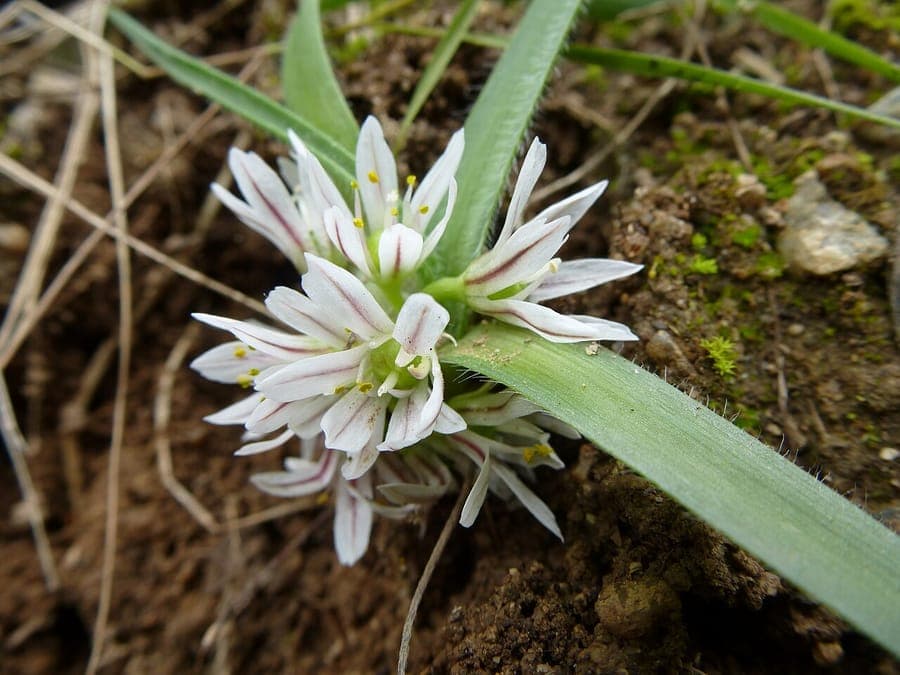
Bathyscapher / CC BY-SA 4.0, via Wikimedia Commons
Dwarf Garlic: complete guide
Allium chamaemoly
¿Quieres ver Dwarf Garlic: complete guide en tu jardín?
1 minuto, sin tarjeta de crédito
Overview
Allium chamaemoly, commonly known as dwarf garlic or small moly, is a charming miniature bulb in the Amaryllidaceae family. This tiny garlic species grows naturally in the Mediterranean region and is a unique addition to any rock garden or border edge.
The plant is renowned for its delicate, yellow flowers and light garlic scent. Allium chamaemoly is perfect for enthusiasts of miniature bulbs and alpine gardening. It combines botanical interest with practical growing pleasure.
Appearance and Bloom
Allium chamaemoly forms very small plants, reaching only 10-30 cm in height. The plant displays thin, cylindrical leaves that are green to grey-green. Growth is more compact than many other Allium species.
The flowers are the star attraction: small, yellow star-shaped flowers form in loose sprays at the tips of slender stems. Blooming occurs from February through April, making Allium chamaemoly a valuable herald of spring. The flowers possess a light, pleasant fragrance.
Ideal Location
Allium chamaemoly grows best in sunny positions. The plant appreciates 6-8 hours direct sunlight daily. In partial shade, it flowers less abundantly.
Choose an open, well-ventilated location. The plant handles dry conditions and strong winds well. It grows beautifully nestled between stones or in protected wall bases.
Soil Requirements
Allium chamaemoly grows well in poor to moderately fertile soils. The plant tolerates poor soils well. Well-drained soil is essential - waterlogging must be avoided.
Heavy clay can be improved with sand and gravel. Calcareous soils are ideal. pH 5.5-8.0 is acceptable. No special feeding required.
Planting and Spacing
Plant Allium chamaemoly bulbs in October-November for blooming the following spring. Plant them 8-10 cm deep and 10-15 cm apart. In containers, space them closer together.
Use as underplanting for other spring bloomers or as edging along pathways. The miniature format makes it ideal for containers and window boxes.
Watering
Allium chamaemoly requires no regular watering once planted. The plant is drought-tolerant. During spring growth, you can provide moderate moisture, but it's not necessary.
Waterlogging must be absolutely avoided. Ensure perfect drainage. During growth, rainwater may suffice.
Diseño gratis
¿Quieres ver Dwarf Garlic: complete guide en tu jardín? Crea un diseño gratis ahora.
Pruning and Maintenance
Allium chamaemoly requires virtually no maintenance. After blooming, leave the foliage standing until it naturally withers - this aids nutrient accumulation for next season.
You can remove spent flowers, but this isn't necessary. Only remove foliage once it's completely yellow. The plant naturally declines without special care.
Propagation
Allium chamaemoly propagates via small bulblets. After flowering, dig up bulbs, separate them, and replant. This is best done in June-July.
Seed propagation is also possible but will take several years before flowering occurs. Self-seeding also occurs in favourable conditions.
Maintenance Calendar
October-November: plant bulbs. February-April: blooming. May-June: foliage withering. June-July: bulb lifting and division (optional). August-September: dormancy.
Winter Hardiness
Allium chamaemoly is frost-hardy to -15 degrees Celsius and thrives in all Dutch climate zones. The plant is winter-hardy.
Ensure perfect drainage around bulbs. In extremely wet winters, bulbs may rot. Shelter is usually unnecessary.
Special Applications
Allium chamaemoly is ideal for rock gardens, alpine troughs, and container planting. The plant also works well as foreground planting before larger spring bloomers or as edging in borders.
In woodland gardens, this small bulb creates interesting details. Perfect for natural gardens that favour miniature effects.
Planting Combinations
Allium chamaemoly pairs beautifully with other early bloomers such as Crocus, Scilla, and small daffodils. It also looks lovely beside dwarf foliage plants like Saxifraga.
Health
Allium chamaemoly is usually healthy and pest-resistant. Diseases are rarely observed. Ensure good drainage to prevent rotting.
Final Thoughts
Allium chamaemoly is a miniature jewel for lovers of small flowers. This tiny garlic offers months of interest with its early, yellow blooms and light fragrance.
Need more information? Visit gardenworld.app for advice on alpine gardening and dwarf bulbs. Find bulbs at garden centres. Start your own alpine garden with this charming dwarf garlic.
For inspiration and combinations with other spring bloomers or rock garden plants, visit gardenworld.app. There you'll find ideas for miniature garden designs.
¿Quieres ver Dwarf Garlic: complete guide en tu jardín? Crea un diseño gratis ahora.
Sube una foto, elige un estilo y obtén un diseño fotorrealista con lista de plantas en menos de un minuto.
Más de 10.000 jardines diseñados
Sin tarjeta de crédito


Plantas similares
Douglas' Onion: complete guide
Allium douglasii
Douglas' onion is a compact ornamental allium with purple flowers, perfect for rock gardens and sunny borders. Learn care, siting and hardiness.
Oblique onion: complete guide
Allium obliquum
The oblique onion is a hardy ornamental allium with chartreuse flower heads and blue-green foliage. Location, soil and care explained.
False hooded garlic: complete guide
Allium pseudocalyptratum
Discover false hooded garlic (Allium pseudocalyptratum): a rare ornamental onion from Lebanon for rock gardens and alpine troughs.