
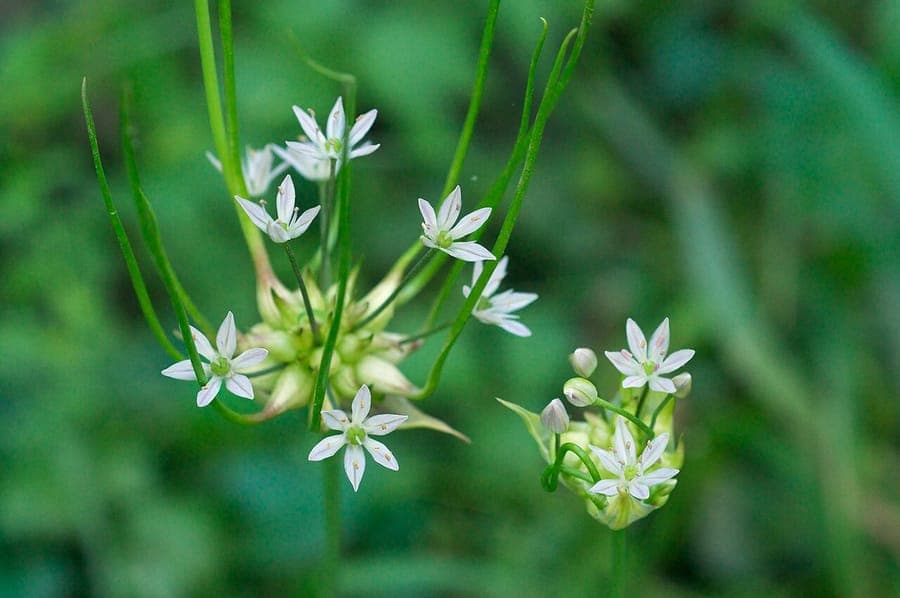
Eric Hunt / CC BY-SA 4.0, via Wikimedia Commons
Allium canadense: complete guide
Allium canadense
¿Quieres ver Allium canadense: complete guide en tu jardín?
1 minuto, sin tarjeta de crédito
Overview
Allium canadense, commonly known as Canada onion or wild garlic, is an elegant native plant from North America. This perennial is prized for its delicate purple flowers that emerge in late spring through summer. The plant naturally occurs from Eastern Canada through the Central and Eastern United States and is ideal for naturalizing gardens and wildlife-friendly planting schemes.
Appearance and bloom
Allium canadense grows as a low plant, typically 30-60 cm tall, with slender, cylindrical leaves that yellow after flowering. The characteristic inflorescence is a rounded to slightly flattened umbel with small pinkish-purple flowers, sometimes interspersed with tiny bulbils. Blooming extends from May to July, depending on climate zone. The plant attracts pollinating insects in abundance.
Ideal location
Canada onion thrives in full sun to partial shade. Plantings receiving 6 hours of direct sunlight show optimal flowering. In warmer climates, afternoon shade is welcome. The plant tolerates various conditions well, provided drainage is adequate.
Soil
This plant grows in well-draining, moderately fertile soil. Heavy clay should be amended with sand or humus. The soil may be moister than for agaves but must not remain constantly wet. Moderately fertile soil promotes better flowering than excessively amended ground.
Watering
Once established, this plant typically requires no supplemental watering. During very dry spells, occasional watering helps. Container plants need more regular watering. Ensure soil doesn't dry completely but also avoids becoming waterlogged. In autumn, soil may gradually dry.
Diseño gratis
¿Quieres ver Allium canadense: complete guide en tu jardín? Crea un diseño gratis ahora.
Pruning
Pruning is not required. Remove dead flowers and leaves as they naturally fall. To prevent seed formation and encourage continued blooming, spent flower clusters may be removed. The ornamental value of withered seedheads can provide attractive autumn and winter interest.
Maintenance calendar
Spring: Provide support where needed. Check for damaged leaves. Summer: Regular observation; occasional watering during dry spells. Autumn: Leaves turn red-yellow; remove dried parts. Winter: No maintenance needed; the plant rests.
Winter hardiness
Allium canadense is extremely cold-hardy, tolerating temperatures down to -30 degrees Celsius. The plant dies back above ground in winter and regrows in spring. Widely hardy throughout temperate climates, including northern regions, without extra protection.
Companion plants
This allium pairs beautifully with other spring-blooming wildflowers like Columbine, Trillium, and native ferns. The purple blooms create striking contrast with yellow spring bloomers. For garden design inspiration, visit gardenworld.app/en for personalized designs with native species that support local ecosystems.
Closing
Canada onion deserves a place in every naturally planted garden. With minimal care, this native plant provides years of pollen and nectar for pollinators. For personalized garden designs with native species, see gardenworld.app/en for designs that bring nature into your outdoor space.
¿Quieres ver Allium canadense: complete guide en tu jardín? Crea un diseño gratis ahora.
Sube una foto, elige un estilo y obtén un diseño fotorrealista con lista de plantas en menos de un minuto.
Más de 10.000 jardines diseñados
Sin tarjeta de crédito


Plantas similares
Douglas' Onion: complete guide
Allium douglasii
Douglas' onion is a compact ornamental allium with purple flowers, perfect for rock gardens and sunny borders. Learn care, siting and hardiness.
Oblique onion: complete guide
Allium obliquum
The oblique onion is a hardy ornamental allium with chartreuse flower heads and blue-green foliage. Location, soil and care explained.
False hooded garlic: complete guide
Allium pseudocalyptratum
Discover false hooded garlic (Allium pseudocalyptratum): a rare ornamental onion from Lebanon for rock gardens and alpine troughs.