
Wikimedia Commons / Public domain, via Wikimedia Commons
Blue Allium (Allium caeruleum): complete guide
Allium caeruleum
¿Quieres ver Blue Allium (Allium caeruleum): complete guide en tu jardín?
1 minuto, sin tarjeta de crédito
Overview
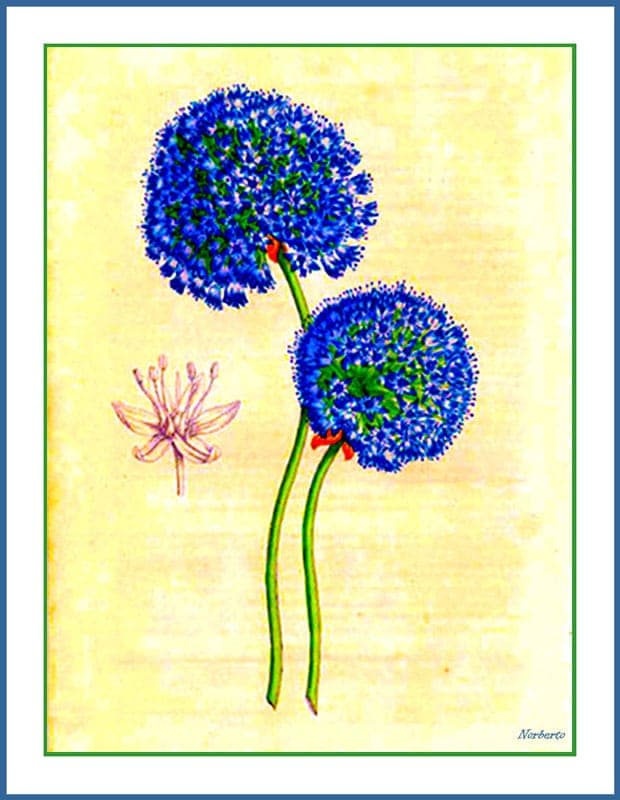
Allium caeruleum, known as Blue Allium or Sky-blue Garlic, is a striking ornamental flower native to the steppes of Asia. This elegant plant is celebrated for its perfect spherical clusters of celestial-blue flowers that appear from May through June. Despite its Allium name (related to garlic and onions), this plant carries only a subtle fragrance and is cultivated almost exclusively as an ornament rather than for culinary use.
Blue Allium grows to 30-50 centimeters tall and forms dense clusters of grassy foliage. It is a hardy perennial requiring minimal care and no special attention. The plant blooms early in the season, providing excellent nectar for honeybees and other pollinators, making it both beautiful and ecologically valuable. This dual purpose of beauty and pollinator support makes it an excellent choice for garden designs focused on sustainability and ecological benefit.
The plant originates from the steppe regions of Eastern Europe and Asia, where it grows in dry, open landscapes. This natural habitat indicates the plant is highly adaptable and functions well in various soil types. The flower buds develop during early spring and reach their peak in May, when thousands of tiny florets open simultaneously in a stunning floral display.
Appearance & bloom
The plant develops tall, slender stems topped with a perfect sphere of tiny star-shaped flowers in deep sky-blue. Each individual flower is merely 6 millimeters across, yet the dense arrangement of dozens of blooms per sphere creates a spectacular visual display. The foliage is narrow and grass-like, with a grey-green hue that complements the brilliant flowers beautifully.
The flowering period extends from May through June, depending on your location and climate. The flowers remain attractive for extended periods and dry beautifully for dried arrangements, making them valuable for florists and flower arrangers worldwide. Pollen production is abundant, making this plant particularly attractive to bees and other pollinators.
After flowering, interesting seed pods form that are also decorative. These can remain in place for added visual interest in autumn. The stems discolor to bronze and red while ripening, providing additional seasonal interest.
Ideal location
Blue Allium thrives in full sun, requiring at least 6 hours of direct sunlight daily. A south or southwest-facing position is ideal. The plant is extremely sun-loving and will produce far fewer blooms in shade. Ensure your chosen location has excellent drainage, as waterlogging is problematic.
Place the bulb in a border where it complements other early spring bloomers, or group multiple bulbs together for dramatic effect. Blue Allium works beautifully in rock gardens, mixed borders, and even containers on sunny patios. In Mediterranean gardens, this plant feels at home alongside other sun-lovers such as rosemary and lavender.
The plant can also be used well in cottage gardens with other early bloomers. Combining Blue Allium with yellow daffodils or red tulips creates a spectacular spring flower display. Grouping five to seven bulbs provides the best effect.
Diseño gratis
¿Quieres ver Blue Allium (Allium caeruleum): complete guide en tu jardín? Crea un diseño gratis ahora.
Soil
Blue Allium requires well-draining, sandy to loamy soil. The plant tolerates dry conditions well once established but dislikes heavy clay soils. Improve drainage in clay soils by adding sand or grit. The soil pH can be neutral to slightly alkaline, which suits this plant perfectly.
Recommended soil mix: 60% garden soil, 30% sand, 10% mature compost. Avoid fertilizing before planting; this plant actually grows better in less fertile soils. Too much nitrogen can lead to excessive leaf growth at the expense of flowers.
The plant also grows well in poor, gravelly soils. This makes it ideal for rock gardens and Mediterranean plantings. In very heavy clay soils, it is advisable to significantly enlarge the planting hole and add grit for improvement.
Watering
Blue Allium is a drought-tolerant plant requiring minimal watering once established. Water regularly during the first growing season to help the bulb develop a strong root system. After establishment, water only during extended dry spells. Allow the soil to dry between waterings.
Avoid waterlogging, especially during winter dormancy. Excessive moisture can cause bulb rot. In rainy regions, extra drainage layers may be necessary for success. Plant bulbs higher than usual and add extra grit around the planting hole.
Once established (after 6 weeks to 2 months), Blue Allium requires virtually no supplemental watering. Natural rainfall suffices in most years. Only in exceptionally dry periods can supplemental watering be beneficial.
Pruning
Blue Allium requires minimal pruning. Remove spent flower heads to maintain a neat appearance, though the dried seedheads are actually quite attractive. Leave the stems in place until completely withered, as the plant translocates nutrients from the stems back into the bulb.
Remove dead foliage in spring. The plant naturally dies back after flowering and enters dormancy until the next season. Nutrients are stored in the bulb for next season's blooming.
Seeds may self-sow naturally. This can be desirable, but if you don't want self-sown seedlings, remove seedheads before they open.
Maintenance calendar
- March: Inspect bulbs for rot, apply fresh mulch layer
- April-May: Water during dry periods, enjoy the blooms
- June: Remove spent flower heads
- July-August: Minimal care needed, plant rests
- September-October: Plant new bulbs
- November-February: No maintenance required
Winter hardiness
Blue Allium is very winter-hardy, tolerating temperatures down to -20 degrees Celsius. Bulbs can remain outdoors in most climates. In extremely cold regions, additional mulch protection helps. In more tropical areas, the plant may flower slightly earlier than expected.
The plant is highly suitable for European gardens with temperate winters. Even in severe continental climates, this plant thrives well.
Companion plants
Blue Allium combines beautifully with other early spring bloomers like tulips, daffodils, and primroses. The plant also pairs well with silver-foliage varieties such as Artemisia and Senecio. Grouping with other Allium species creates visually interesting compositions.
It also looks beautiful with grey-leaved plants like berberis and santolina. The blue flowers contrast beautifully against silver-leaved backgrounds.
Find bulbs: Intratuin stocks Blue Allium bulbs regularly, or check Gamma for local availability.
Closing
Blue Allium is a wonderful addition to any spring garden seeking ease of cultivation with stunning visual impact. With its ethereal azure flowers and straightforward care requirements, this plant delivers years of blooms with minimal effort. Learn more at gardenworld.app/en and explore plant combinations at gardenworld.app/en-design.
¿Quieres ver Blue Allium (Allium caeruleum): complete guide en tu jardín? Crea un diseño gratis ahora.
Sube una foto, elige un estilo y obtén un diseño fotorrealista con lista de plantas en menos de un minuto.
Más de 10.000 jardines diseñados
Sin tarjeta de crédito


Plantas similares
Douglas' Onion: complete guide
Allium douglasii
Douglas' onion is a compact ornamental allium with purple flowers, perfect for rock gardens and sunny borders. Learn care, siting and hardiness.
Oblique onion: complete guide
Allium obliquum
The oblique onion is a hardy ornamental allium with chartreuse flower heads and blue-green foliage. Location, soil and care explained.
False hooded garlic: complete guide
Allium pseudocalyptratum
Discover false hooded garlic (Allium pseudocalyptratum): a rare ornamental onion from Lebanon for rock gardens and alpine troughs.