
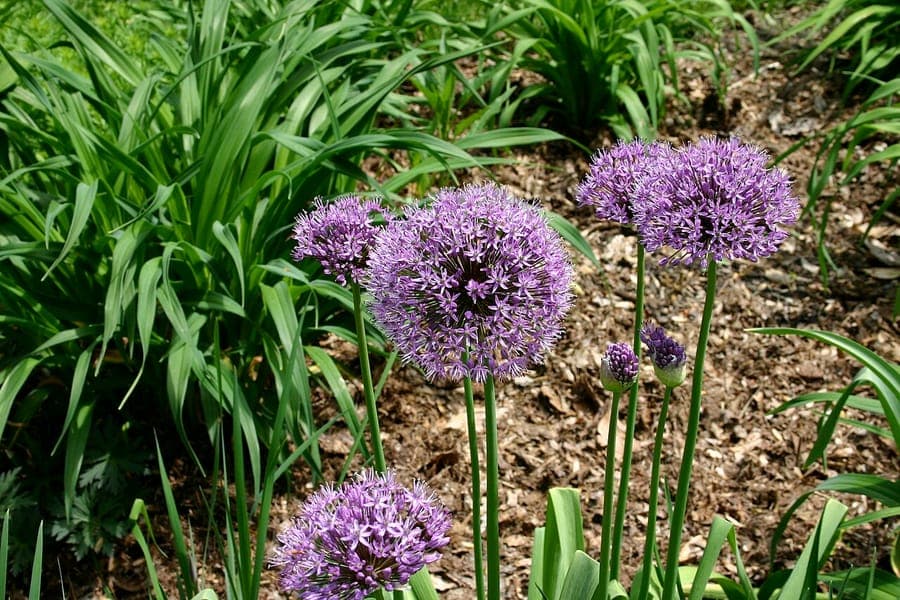
SB Johnny / CC BY-SA 3.0, via Wikimedia Commons
Aflatunense Onion (Allium aflatunense): complete guide
Allium aflatunense
¿Quieres ver Aflatunense Onion (Allium aflatunense): complete guide en tu jardín?
1 minuto, sin tarjeta de crédito
Overview
Allium aflatunense, known as Aflatunense onion or ornamental onion, is a remarkable bulbous perennial prized for its spectacular globe-shaped flower heads. This plant produces dense spheres of tiny star-shaped purple flowers rising from slender, grey-green foliage from May to June. Native to the Tian-Shan mountains of Kazakhstan and Kyrgyzstan, it thrives in temperate climates and is increasingly popular with gardeners seeking architectural plants.
Appearance and Bloom
The Aflatunense onion reaches heights of 60 to 90 centimetres and forms dense, perfectly round flower balls measuring 8 to 10 centimetres across. Each tiny flower is star-shaped and deep purple to purple-white. Together they create a striking visual effect that persists for two to three weeks, making excellent cut or dried flowers. Foliage emerges early in spring and typically fades by late June.
Ideal Location
Position plants in full sun, receiving at least six to eight hours of direct sunlight daily. Afternoon heat is welcome, as Allium aflatunense is heat-loving. Light shade allows growth but reduces flowering. Shelter from strong winds, especially when plants are fully established, as the stems can bend in gales.
Soil
Excellent drainage is paramount. This onion despises wet feet and will rot in heavy clay or consistently moist soil. Amend your garden soil with coarse sand or perlite before planting bulbs. A pH of 6.0 to 7.5 is ideal. Add compost for structure and modest nutrients, but avoid overfeeding - these plants thrive in lean soils.
Watering
During the growing season (March to May), water regularly, especially in dry periods, but allow the soil to dry between waterings. After flowering, gradually reduce watering. During dormancy (June to October), water sparingly unless exceptionally dry. In wet winters, ensure excellent drainage around plants.
Diseño gratis
¿Quieres ver Aflatunense Onion (Allium aflatunense): complete guide en tu jardín? Crea un diseño gratis ahora.
Pruning
Remove spent flower heads just below the globe to maintain appearance and prevent self-seeding, conserving bulb energy. Do not remove foliage until completely yellow, as it feeds the bulb. After bloom, foliage withdraws and vanishes by June.
Maintenance Calendar
March: Inspect bulbs for disease, prepare beds. April: Monitor growth, begin watering schedule. May-June: Enjoy blooms, remove faded flowers. July-September: Plant dormancy, minimal care. October-November: Check bulbs, verify drainage. December-February: Frost protection in extreme winters (below -15 degC).
Winter Hardiness
Aflatunense onion is exceptionally hardy, tolerating temperatures to -20 degC easily. In Netherlands, Belgium and Germany, bulbs overwinter without protection. In severe winters, additional mulch can help, especially in the first year. However, preventing wet conditions is far more critical than protecting from cold.
Companion Plants
Combine with spring bulbs like tulips and daffodils for layered bloom. Pair with low silver-foliage plants like lavender, sage and santolina. The stiff upright structure contrasts beautifully with rounded forms of other garden features. Extend seasonal interest with complementary perennials that bloom later in summer.
Closing
Allium aflatunense is for gardeners who appreciate sculptural forms and extended bloom periods. This is not showy flash, but architectural excellence. With proper drainage and minimal care, this Kyrgyz beauty flowers for years. Visit gardenworld.app for more plant guides and garden designs.
¿Quieres ver Aflatunense Onion (Allium aflatunense): complete guide en tu jardín? Crea un diseño gratis ahora.
Sube una foto, elige un estilo y obtén un diseño fotorrealista con lista de plantas en menos de un minuto.
Más de 10.000 jardines diseñados
Sin tarjeta de crédito


Plantas similares
Douglas' Onion: complete guide
Allium douglasii
Douglas' onion is a compact ornamental allium with purple flowers, perfect for rock gardens and sunny borders. Learn care, siting and hardiness.
Oblique onion: complete guide
Allium obliquum
The oblique onion is a hardy ornamental allium with chartreuse flower heads and blue-green foliage. Location, soil and care explained.
False hooded garlic: complete guide
Allium pseudocalyptratum
Discover false hooded garlic (Allium pseudocalyptratum): a rare ornamental onion from Lebanon for rock gardens and alpine troughs.