
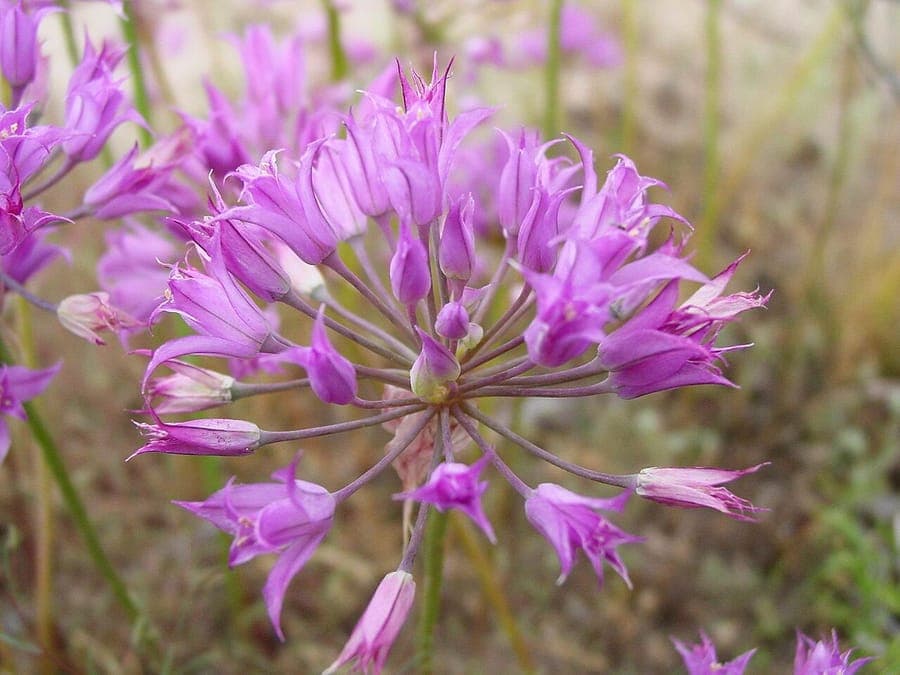
Wallace Keck / Public domain, via Wikimedia Commons
Allium acuminatum: complete guide
Allium acuminatum
¿Quieres ver Allium acuminatum: complete guide en tu jardín?
1 minuto, sin tarjeta de crédito
Overview
Allium acuminatum, commonly called Hooker's onion or tapertip onion, is a small, delicate wildflower native to western North America. This compact plant reaches just 20-30 centimeters in height, displaying charming purple to pink flowers on slender stems. The plant is ideal for alpine gardens, sunny borders, and drought gardens due to its remarkable tolerance for dry conditions.
Appearance and bloom
Allium acuminatum grows as a small, upright plant with fine, grass-like foliage. Flowers appear as small, purple to pink stars arranged in round umbels atop thin stems. Each globe contains dozens of tiny flowers, creating a delicate textured display against dark green foliage. Small seed capsules form after flowering concludes.
Ideal location
Plant Allium acuminatum in a warm, sunny location with at least 6 hours of direct sunlight. The plant thrives in dry to moderately moist conditions. It's perfect for rock gardens, alpine troughs, and sunny borders. The plant dislikes wet winters, so ensure excellent drainage in rainy climates.
Soil
Allium acuminatum demands excellently draining soil, preferably sand, gravel, and loam mixed. A combination of 60% coarse sand, 20% gravel, and 20% universal potting soil works well. Add perlite or slate chips for extra drainage. Heavy clay or waterlogged soils are unsuitable.
Diseño gratis
¿Quieres ver Allium acuminatum: complete guide en tu jardín? Crea un diseño gratis ahora.
Watering
Once established, Allium acuminatum is extremely drought-tolerant. Water only during extreme drought. Excessive moisture causes root rot. After planting, gentle watering helps establishment, but minimize thereafter. In wet climates, add coarse sand around plants.
Pruning
Allium acuminatum requires no pruning. Remove only dead foliage and seed pods after flowering ends. This helps the plant conserve energy for next season's growth. Some gardeners leave seed heads for wildlife interest.
Maintenance calendar
Spring: Plant new bulbs in early spring. Summer: Monitor flowering and enjoy. Fall: Plant bulbs if desired. Winter: No maintenance; plant lies dormant.
Winter hardiness
Allium acuminatum is cold-hardy to approximately -20 degrees Celsius. Bulbs enter winter dormancy and awaken with spring growth. In wet winter climates, extra coarse sand around bulbs prevents fungal issues.
Companion plants
Combine Allium acuminatum with other alpines such as sempervivum, saxifraga, sedum, and helleborus. Rock gardens with xerophytic plants create beautiful, low-maintenance landscapes.
Closing thoughts
Allium acuminatum offers elegant purple flowers with minimal maintenance requirements. Ideal for gardeners seeking drought-tolerant wildflowers. Visit gardenworld.app for more alpine plant ideas. Check specialty nurseries and garden centers for quality bulbs in the UK.
¿Quieres ver Allium acuminatum: complete guide en tu jardín? Crea un diseño gratis ahora.
Sube una foto, elige un estilo y obtén un diseño fotorrealista con lista de plantas en menos de un minuto.
Más de 10.000 jardines diseñados
Sin tarjeta de crédito


Plantas similares
Douglas' Onion: complete guide
Allium douglasii
Douglas' onion is a compact ornamental allium with purple flowers, perfect for rock gardens and sunny borders. Learn care, siting and hardiness.
Oblique onion: complete guide
Allium obliquum
The oblique onion is a hardy ornamental allium with chartreuse flower heads and blue-green foliage. Location, soil and care explained.
False hooded garlic: complete guide
Allium pseudocalyptratum
Discover false hooded garlic (Allium pseudocalyptratum): a rare ornamental onion from Lebanon for rock gardens and alpine troughs.