

Sticky pear leaves: honeydew and sooty mold
By the GardenWorld editorial team, updated on
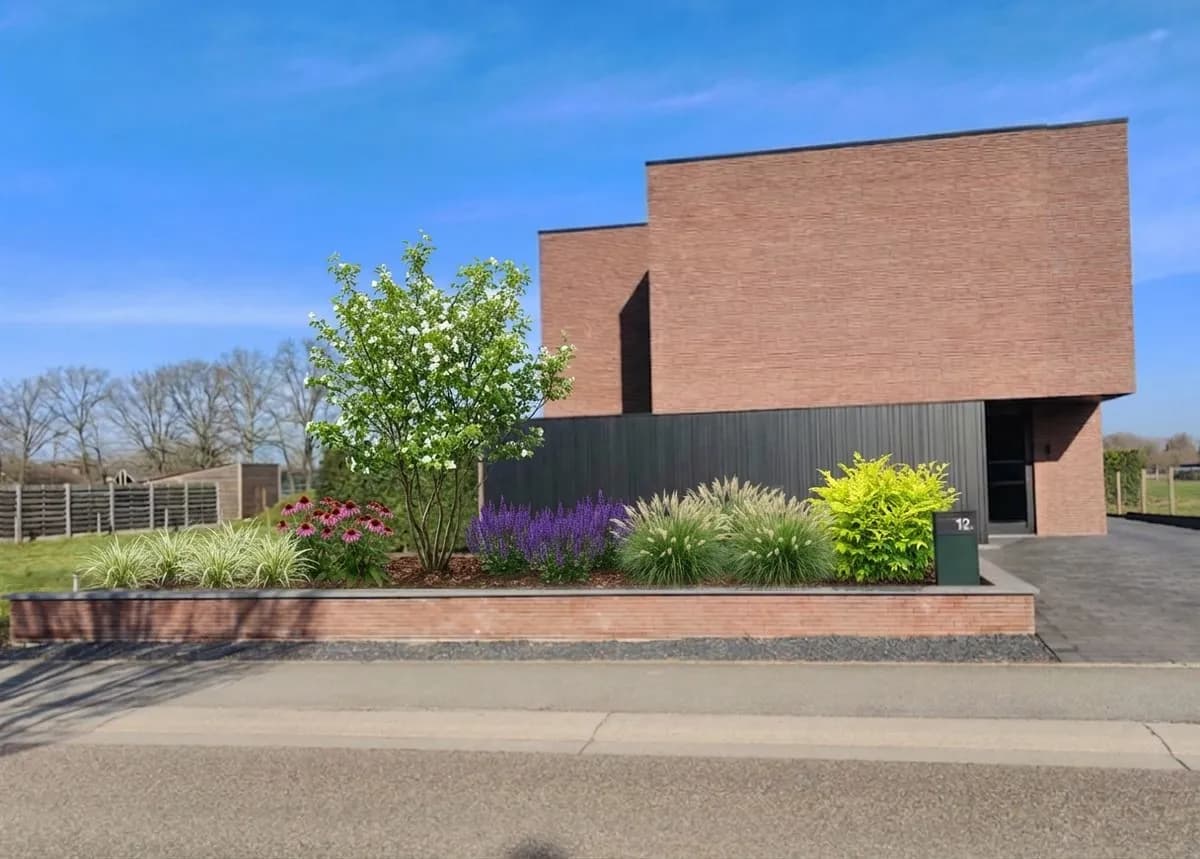
Want to see this in your garden?
Full design in HD: €7.99
Sticky leaves and black pears: what is going on?
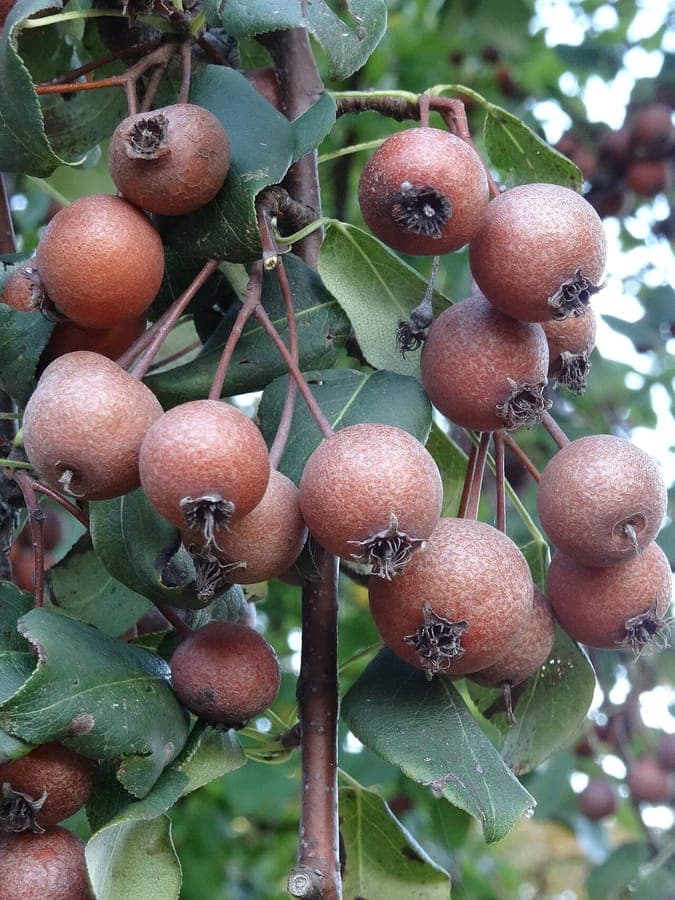
Sticky leaves on your pear tree and pears that turn black are almost always caused by honeydew from the pear psyllid (Cacopsylla pyri). This is a small jumping insect, 3 to 4 millimetres long, related to aphids, that feeds on the young shoots of your pear tree in spring. The nymphs suck sugar-rich sap from the leaves and excrete the surplus as honeydew: a sticky, shiny liquid. Sooty mold fungi grow on that honeydew, turning the leaves and the skin of the pears black.
Good news: it looks far worse than it is, and you can get it under control without chemicals. Predatory bugs do most of the work if you give them the chance, winter oil slows down the first generation, and you do not need broad-spectrum insecticides to deal with it.
How to recognise pear psyllid on your tree
The adult pear psyllid overwinters in the bark of your pear tree, in a nearby hedge or in fallen leaves. Once daytime temperatures stay above about 8 to 10 degrees for a few days in a row, usually from mid-January to March, it returns to the buds. From February to April it lays eggs around the flower and leaf buds.
Flat, sticky nymphs hatch from those eggs and hide between the young leaves and flower clusters. You recognise an infestation by sticky leaves that cling to your fingers, a shiny film on young fruit, and small white flakes, the shed skins of the nymphs, along the leaf veins. In May and June, when the population peaks, the leaves under the honeydew turn black with sooty mold. By summer, heavily affected leaves drop earlier than normal.
Winter oil in January and February: your first line of defence
Winter oil is your best weapon against the first generation. Spray the pear tree in late January or early February, in dry weather without frost and above roughly 5 degrees, with a mineral or plant-based winter oil such as paraffin oil or rapeseed oil. The oil coats the overwintering adult psyllids with a thin film and suffocates them before they can lay eggs.
One good treatment per winter is usually enough. Spray the branches and especially the buds all around, on both sides. Winter oil is not harmful to bees at this time of year, since they are not active yet in January, and it does not damage the leaves because there are none yet. Always follow the dilution rate on the label, usually 1 to 2 percent.
Predatory bugs: the natural enemy of pear psyllid
The main natural enemy of pear psyllid is the predatory bug Anthocoris nemoralis, a small brown bug that eats the eggs and nymphs of the psyllid. You often find it spontaneously in a garden with flowering herbs and hedges nearby, and you can also order extra bugs from a biological control supplier to give the population a boost in April or May.
Ladybirds, lacewings and hoverflies help too, although they are less specialised. Make sure something is always flowering near your pear tree: besides psyllid, these insects also need pollen and nectar to survive between meals.
Are you considering a calmer spot for a new pear tree, with some flowering underplanting for these useful insects? On gardenworld.app you see such a layout first in an example of your own garden.
Why broad-spectrum insecticides make things worse
If you reach for a broad-spectrum insecticide against pear psyllid, you also kill the predatory bugs, ladybirds and bees living in and around your tree. Two to three weeks later the psyllid is back, often in larger numbers than before, because its natural enemies are no longer there to keep the population in check. Many of these broad-spectrum products are no longer available to home gardeners in Belgium and the Netherlands anyway.
Choose winter oil in January and February instead, and let the predatory bugs do their work from April onward. It is cheaper, safer for your family and pets, and more effective in the long run.
Free preview
Create your own garden design
What to do each month against pear psyllid
December: clear fallen leaves from under the tree, nymphs and fungi overwinter there.
January-February: spray winter oil in dry weather above 5 degrees, before the buds open.
March-April: keep an eye on the young buds. If you already see sticky leaves, hold off: let the predatory bugs get going first.
May-June: this is the peak. Do not spray anything broad-spectrum, give the predatory bugs and ladybirds their chance. Rinse very sticky branches with the garden hose if needed.
July-August: check for sooty mold. Heavily affected leaves drop earlier on their own, which is not a disaster.
September-October: prune away water shoots and clear leaves so you start next year with a clean slate.
Stronger trees get less pear psyllid
A pear tree in full sun, with an airy, open crown, suffers less from pear psyllid than a tree pressed against a wall or hedge. Prune away water shoots in June: those long, upright shoots from old wood are soft and nitrogen-rich, exactly where the psyllid prefers to lay its eggs.
Do not over-fertilise with nitrogen in spring. Excessive feeding produces soft, sappy growth that psyllid loves. A layer of compost in March is enough for a healthy tree. During dry spells, water at the base of the tree, not on the leaves.
Step by step
Step 1: Clear fallen leaves in autumn
Remove leaves under the pear tree in October-November. This significantly reduces the overwintering population.
Step 2: Spray winter oil in January-February
Choose a dry day without frost, above 5 degrees. Spray branches and buds thoroughly, on both sides.
Step 3: Monitor the buds in March-April
Check weekly for sticky leaves. Do not intervene yet, give the predatory bugs a chance to get going.
Step 4: Let predatory bugs do their work in May-June
Do not spray anything broad-spectrum. Rinse very sticky branches with clean water if really necessary.
Step 5: Prune away water shoots in June
Remove upright shoots from old wood. Aim for an airy, open crown for next year.
Frequently asked questions
Are the blackened pears still edible?
Yes. The sooty mold sits on the skin, not in the flesh. Wash the pear well before eating it, or peel it. The taste does not change, only the appearance.
When do I see the first damage?
Usually from late April, when the first nymphs start producing honeydew on the young leaves around the blossom. The visible black sooty mold follows a few weeks later.
Does a simple soap solution work too?
A mild soap solution, no fragranced dish soap, can kill small numbers of nymphs if you spray them directly, but that is impractical on a full-grown tree. Winter oil and predatory bugs work better at tree scale.
How long do predatory bugs stay active?
From April into autumn, as long as there is food. Without psyllid or other small insects they move elsewhere, or they overwinter nearby if there are enough flowering plants around.
See it in your own garden first
Wondering whether your pear tree is in the right spot, with enough air and light to suffer less from pear psyllid? On gardenworld.app you see it first in an example of your own garden. View a free preliminary design with a chosen spot for your fruit tree; the detailed image with plant list costs 7.99, once only, no subscription.
Create your own garden design
Upload a photo, pick a style, and get a photorealistic design with plant list in under a minute.
Full design in HD: €7.99

Related articles
 Planting
How to prune pear trees against pear rust?
Pruning techniques to control pear rust (Gymnosporangium). Learn to form an open crown and remove affected branches.
 Planting
When exactly to prune fruit trees in January: timing and techniques
January pruning determines your harvest. Learn the exact week in January, cultivar-specific schedules and step-by-step pruning techniques.
PlantingWhat if apple tree has powdery mildew: white powder control
White powder on your apple tree? This is powdery mildew. Learn how to restore it quickly with practical steps.