
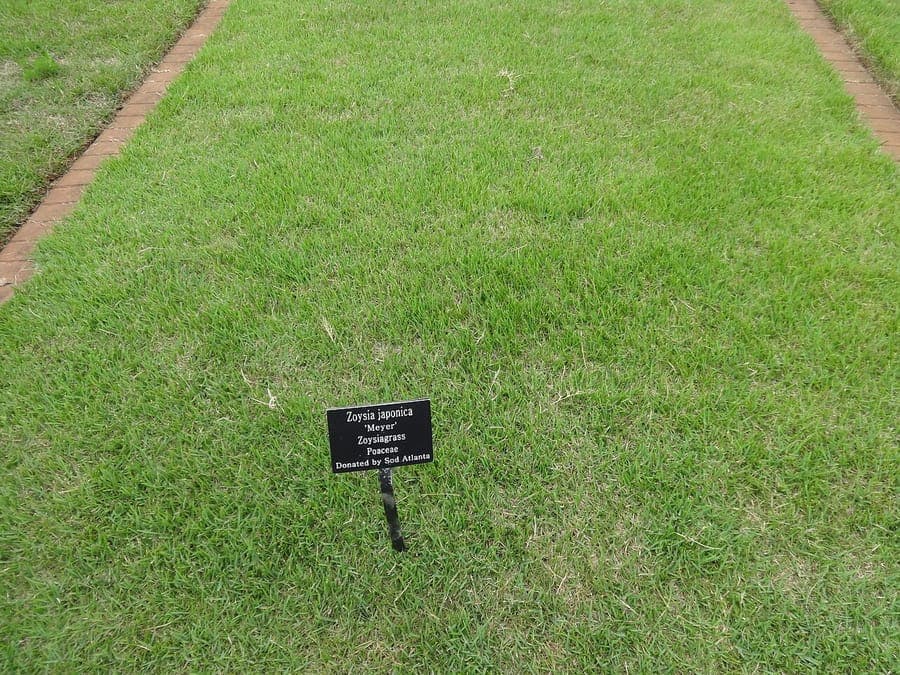
Michael Rivera / CC BY-SA 4.0, via Wikimedia Commons
Japanese lawn grass (Zoysia japonica): complete guide
Zoysia japonica
Want to see Japanese lawn grass (Zoysia japonica): complete guide in your garden?
1 minute, no credit card
Overview
Zoysia japonica, commonly called Japanese lawn grass or Korean lawn grass, is a rhizomatous, warm-season perennial from the Poaceae family, native to Japan, Korea, China, and adjacent parts of East Asia. This resilient species is used worldwide as a turf plant for home lawns, golf courses, and sports fields in warmer climate regions.
In Europe, Zoysia japonica is best known in southern countries such as Spain, Italy, and Portugal, but it is gradually gaining attention in Dutch and Belgian gardens as an alternative to conventional turf in dry, sunny spots. The plant spreads via rhizomes (underground stems) and stolons (above-ground runners), forming a dense, carpet-like cover that suppresses weeds effectively.
One important characteristic to understand is that Zoysia japonica is a warm-season species: it grows actively in summer but turns brown in autumn as temperatures fall and stays dormant and brown throughout winter. This seasonal browning is a key consideration for gardeners. At gardenworld.app, garden designs that incorporate turf alternatives are carefully assessed for their seasonal behaviour before being recommended.
Appearance and bloom cycle
Zoysia japonica forms a dense, low carpet of fine to medium-textured leaves. The blades are firm, pointed, and light to medium green, averaging 3-5 mm in width, with a characteristically stiff texture that tolerates foot traffic well. Left unmown, the plant reaches 5-15 cm in height; regular mowing keeps it shorter and more uniform.
Flowering is inconspicuous: small yellow flowers appear in summer but are barely visible in a regularly mown turf. The plant generally only flowers visibly during extended periods without cutting. Fruits are small and brown.
In autumn, the foliage gradually transitions from green to yellow-brown as temperatures drop. This is a normal and unavoidable feature of this warm-season species. In spring, when soil temperatures rise again above 15 degrees Celsius, the plant greens up and resumes active growth.
Ideal location
Zoysia japonica requires full sun to light partial shade for optimal performance. Unlike many European turf species, it thrives on hot, dry sites where other plants suffer from heat stress. An open, south-facing or sun-exposed position is the primary requirement.
In shade, the plant grows thin and patchy; in full shade it will thin out progressively and eventually fail. It is not suitable for gardens dominated by large trees or permanent overhead shade. A sloping site or raised planting area with maximum sun exposure provides excellent conditions.
In a warm, sheltered urban garden - such as a patio or courtyard that accumulates heat - Zoysia japonica can perform well in Dutch and Belgian conditions and survive the winter. In gardenworld.app designs for drought-tolerant gardens, this plant earns a prominent position on the sunniest part of the plot.
Soil
Zoysia japonica is remarkably undemanding in terms of soil type. It tolerates a wide pH range of 5.5-8.5, meaning both acidic and mildly alkaline conditions are acceptable. Sandy, loamy, or lightly clayey soils are all suitable; heavy clay with poor drainage is less ideal.
Good drainage is the key requirement. The plant tolerates brief waterlogging but dislikes prolonged wet roots. In gardens with compacted or wet soil, digging in sand or installing a draining substrate layer before sowing or planting Zoysia japonica is advisable.
Nutrient-moderate, freely draining soils produce the best results. Excessive nitrogen fertilisation leads to lush but weak growth that is more susceptible to disease. Lean to moderately fed soils produce a harder, more resilient turf.
Watering
One of Zoysia japonica's greatest assets is its excellent drought tolerance. Once well established, it requires significantly less water than conventional European turf species. It can endure short drought periods of two to three weeks without permanent damage, though it may show some temporary discolouration during dry spells.
During the establishment period - the first two to three growing seasons - regular watering is necessary to allow the rhizomes to root in properly. After establishment, supplemental irrigation is only needed during prolonged dry spells. Deep, infrequent watering is preferable to shallow, frequent watering: this encourages a deeper root system and greater long-term resilience.
During winter dormancy, no watering is needed. Excessive irrigation during cold months can weaken roots and increase the risk of root rot. Ensure that the soil does not remain permanently saturated in winter.
Free design
Want to see Japanese lawn grass (Zoysia japonica): complete guide in your garden? Make a free design now.
Pruning
Zoysia japonica is maintained with a standard rotary or cylinder lawn mower. The optimal mowing height is 2.5-5 cm. Avoid cutting too short (below 2 cm), as this stresses the plant and encourages weed invasion. Allowing the plant to grow too tall (above 7-8 cm) promotes the development of thick thatch that can cause problems.
Mowing frequency is lower than for European turf species: weekly to fortnightly cuts are sufficient during the growing season. Outside the growing season - when the plant is brown and dormant - mowing is not needed and is even inadvisable.
In spring, just before or at the time of green-up, a thorough dethatching (scarification) is recommended. This improves air and water penetration into the turf and stimulates new growth. Use a scarifier set to a moderate rather than aggressive depth to avoid damaging the rhizomes.
Maintenance calendar
January - February: Plant is dormant and brown. No maintenance required. Limit foot traffic on frozen turf.
March - April: Green-up begins as soil temperatures climb. At soil temperatures above 15 degrees Celsius, colour returns. Consider scarifying at the start of the growing season.
May - June: Active growing season begins. Start regular mowing at 3-4 cm height. Apply a starter fertiliser if desired.
July - August: Peak growing season. Mow as needed, typically weekly. Water during extended dry spells.
September - October: Growth slows. Mowing frequency can be reduced. Plant begins to discolour with the first autumn frosts.
November - December: Plant is brown and dormant. No action required. Avoid heavy traffic on the dormant turf.
Winter hardiness
Zoysia japonica is a warm-season species but is more tolerant of moderate cold than many other members of the Poaceae family. It survives frost down to approximately -15 degrees Celsius, provided the soil is well-drained. In USDA hardiness zone 5b and above, it is reliably perennial.
In Dutch and Belgian gardens - typically zone 7 to 8 - Zoysia japonica survives most winters outdoors, particularly in urban environments and sheltered positions. In severe winters with prolonged frost below -12 degrees Celsius, some damage and die-back can occur, especially in exposed, unprotected gardens.
A light covering of straw mulch or pine needles over the dormant turf can improve cold tolerance in exceptionally harsh winters. Remove the mulch cover as temperatures reliably rise in spring. For tailored advice on frost-resilient garden design, explore gardenworld.app.
Companion plants
Zoysia japonica functions primarily as a monoculture ground cover that occupies available space as a turf. As a ground cover, it works best in combination with structural elements such as hedges, borders, or trees that define clear boundaries to its spread.
Along the edges of a Zoysia planting, drought-tolerant perennials make excellent companions: lavender (Lavandula angustifolia), sedum, ornamental feather grass (Stipa), thyme, and rosemary all share comparable sun and drainage requirements. They provide contrasting texture and colour alongside the fine, uniform turf surface.
In a Japanese- or gravel garden-style setting, Zoysia japonica pairs well with decorative gravel, stepping stones, and occasional specimen plants. The clean, understated texture of the turf suits a minimalist garden aesthetic. Visit gardenworld.app for inspiring examples of how alternative turf plants are integrated into contemporary garden designs.
Closing
Zoysia japonica is a compelling choice for gardeners seeking a low-maintenance, drought-tolerant alternative to conventional turf in sunny, warm spots. Its resilience, low water needs, and good traffic tolerance make it attractive for patios, sloped gardens, and locations where standard turf struggles.
Bear in mind the seasonal rhythm: Zoysia japonica is brown in winter and green in summer. Those who embrace this characteristic have little reason for disappointment. Look for Zoysia products at specialist garden centres and explore gardenworld.app for professional inspiration in designing your drought-resilient outdoor space.
Want to see Japanese lawn grass (Zoysia japonica): complete guide in your garden? Make a free design now.
Upload a photo, pick a style, and get a photorealistic design with plant list in under a minute.
10,000+ gardens designed already
No credit card required


Similar plants
Sporobolus pungens: complete guide
Sporobolus pungens
Sporobolus pungens is a stoloniferous Mediterranean coastal grass with outstanding salt and drought tolerance, perfect for seaside and dry gardens.
Mediterranean aegilops: complete guide
Aegilops biuncialis
Everything about Aegilops biuncialis, a Mediterranean annual grass with ornamental spikes and outstanding drought tolerance for dry gardens.
Silver bluestem: complete guide
Bothriochloa saccharoides
Full guide to Bothriochloa saccharoides (silver bluestem): site, soil, watering, winter hardiness, pruning, and garden companions.