
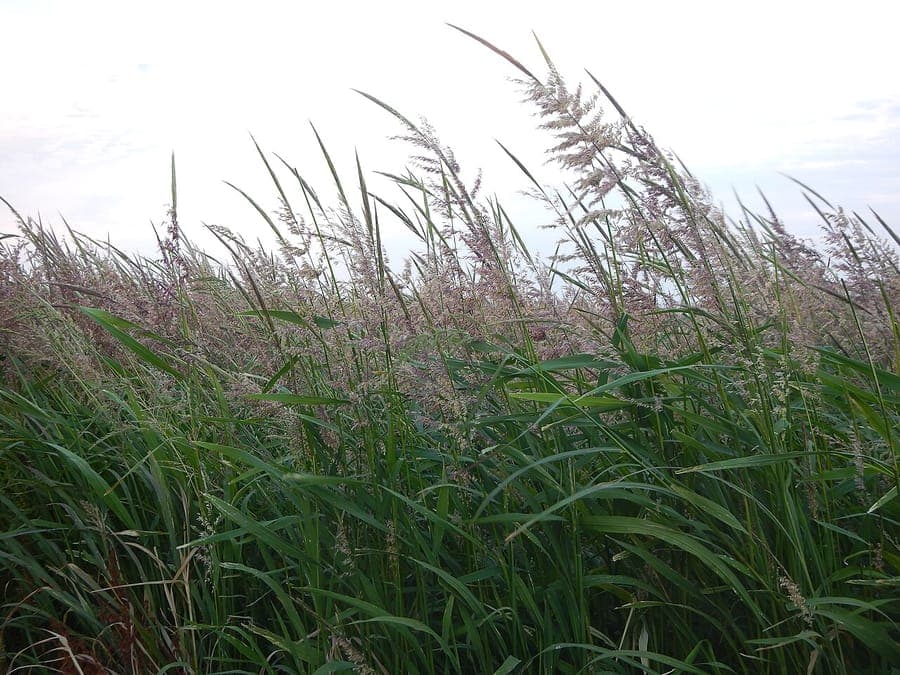
Matt Lavin from Bozeman, Montana, USA / CC BY-SA 2.0, via Wikimedia Commons
Wild rice: complete guide
Zizania aquatica
Want to see Wild rice: complete guide in your garden?
1 minute, no credit card
Overview
Wild rice (Zizania aquatica) is a remarkable annual aquatic grass from the Poaceae family, native to the lakes, rivers, and marshes of eastern Canada and the eastern United States. This majestic plant can reach heights of 1.5 to nearly 3 metres in a single growing season, making it one of the most architecturally impressive aquatic plants you can grow in a pond or waterside planting.
The plant carries enormous cultural significance for indigenous peoples of North America - particularly the Ojibwe and other First Nations communities who have harvested its dark, nutritious grains for centuries. In European gardens, wild rice is increasingly appreciated as a dramatic ornamental plant for large ponds and water features. At gardenworld.app, water garden designs are created with an eye for aquatic species that are both visually striking and ecologically valuable.
Scientifically the species is also known as Ceratochaete aquatica. It differs from its Asian relative Zizania latifolia (Manchurian wild rice) by its annual life cycle and its preference for the wetlands of the North American continent.
Appearance and bloom cycle
Zizania aquatica is a tall, fast-growing plant with broad, strap-like leaves of light green colouring, each reaching 60-90 cm in length, with a prominent central vein. The hollow, sturdy stems emerge directly from the water and grow vigorously through summer.
Towards the end of the growing season - typically August and September - large panicle-shaped inflorescences appear. The panicle is bisexual: female flowers sit at the top of the upright branches, while male flowers hang from the lower, drooping branches. The female flowers are green and inconspicuous; the male flowers have a purple tinge.
After pollination, the female flowers develop into elongated, dark brown to black grains measuring 1.5-2 cm in length. These grains are highly nutritious and eagerly consumed by waterfowl and migratory birds. The visual appeal of the plant lies primarily in its impressive stature and in the sweeping, feathery panicles that crown each stem.
Ideal location
Wild rice thrives in full sun to light partial shade. It requires ample light for vigorous growth and rich panicle development. An open position at the edge of a pond, lake, or slow-moving watercourse is ideal.
The plant grows in water 20-100 cm deep, with 30-60 cm being most productive. In too-shallow water the plant risks drought stress during summer dry spells; in very deep water, germination from seed can be problematic. Large garden ponds, ornamental lakes, and water parks provide excellent conditions.
In smaller private garden ponds, the plant's size can be overpowering unless you are deliberately seeking a bold vertical accent. At gardenworld.app, pond planting designs carefully account for the mature dimensions of all plants used to ensure a balanced result.
Soil
Zizania aquatica grows best in rich, silty, nutrient-dense pond sediment. Sandy or nutrient-poor substrates are less suitable - as a fast-growing annual, this plant needs large quantities of nutrients to reach its full height within a single season.
A pH of 6.4-7.4 is ideal - neutral to slightly acidic. In a natural pond, a silty, organically rich bottom is sufficient. If you are growing the plant in planting baskets or containers submerged in a pond, use specialist aquatic planting compost with a high clay content and no peat.
In marsh conditions where the roots anchor in deep silt, wild rice grows particularly well. Sandy, nutrient-poor bottoms produce disappointing results and lead to earlier senescence.
Watering
As a true aquatic plant, Zizania aquatica requires permanent water around its roots. It grows in still or slowly moving fresh water and cannot tolerate the planting site drying out. A minimum water depth of 20 cm is required; below this level, growth disruption or early die-back can occur.
The species tolerates some water level fluctuation, but extreme drought conditions during summer - as can occur in garden ponds during hot, dry spells - can cause damage. When designing a pond planting, choose a zone where the water level remains stable throughout the growing season.
For seed germination, shallow, warm, undisturbed water is essential. Seed germinates best at water temperatures of 15-20 degrees Celsius in a zone 5-20 cm deep.
Free design
Want to see Wild rice: complete guide in your garden? Make a free design now.
Pruning
As an annual plant, Zizania aquatica requires no pruning or cutting back during the growing season. The plant manages its own growth and forms a complete structure without any intervention needed from the gardener.
After the first autumn frost kills the above-ground portions, remove the dead stems to prevent them from rotting in the water and affecting water quality. If you want to harvest grain or encourage natural self-seeding, allow the panicles to ripen fully and let the grains fall into the water before cutting back the stems.
Remove dead material with a sickle or sharp secateurs. Avoid leaving large quantities of decomposing plant matter in the water, as this can deplete oxygen levels and harm other aquatic life.
Maintenance calendar
January - February: No action needed. The plant is annual and dead. Any seeds lie dormant on the pond bottom.
March - April: Germination begins as water warms. No action required in open water. Seeds in storage containers can be chilled-stratified.
May - June: Rapid vegetative growth begins. The plant shoots up quickly. No pruning or feeding required.
July: Maximum height reached. Enjoys the full summer sun and provides impressive vertical structure in the water garden.
August - September: Flowering and grain formation. Waterfowl visit for the ripening grains. Harvest seed if desired.
October: Plants die back after the first autumn frost. Remove dead stems once they have fully collapsed.
November - December: Clear up dead material. Store any harvested seed cool and moist over winter for next season.
Winter hardiness
Zizania aquatica is an annual plant and does not survive frost as a growing plant. After the first autumn frost the entire plant - stems, leaves, and roots - dies back completely. The species overwinters exclusively as seed lying dormant on the pond bottom.
In its native range in eastern Canada, seed overwinters reliably under ice and snow. The seed actually requires a cold period (cold stratification) to break dormancy and germinate effectively. Seed collected for use in the garden should be stored cool and moist throughout winter to maintain germination viability.
In USDA terms, wild rice is classified as an annual in all zones; the cold-tolerance of its seed makes it functional in zones 3-9. In Dutch and Belgian gardens, self-seeding from fallen grains may occur in milder winters, though this is not guaranteed in all circumstances.
Companion plants
Wild rice pairs beautifully with other large aquatic and marginal plants. Excellent companions include yellow iris (Iris pseudacorus), reedmace (Typha), bulrush (Schoenoplectus lacustris), and water mint (Mentha aquatica). All of these species thrive in similar water depths and conditions and complement the bold vertical form of wild rice.
For textural contrast, smaller floating or submerged plants work well as a lower layer: water lilies (Nymphaea), water crowfoot (Ranunculus aquatilis), and pondweed (Potamogeton) provide calming contrast to the tall, upright panicle stems.
For wildlife-focused planting, wild rice is outstanding. Waterfowl, ducks, herons, and migrating birds make full use of both the cover and the food supply this plant provides. Well-designed wildlife ponds incorporating wild rice create rich habitats for both birds and aquatic invertebrates. Visit gardenworld.app for design inspiration on ecologically minded water gardens.
Closing
Wild rice (Zizania aquatica) is a plant that enriches any large water feature through its bold scale and ecological generosity. As an annual it requires some forward planning - seed must be collected or purchased for each season - but the reward is a seasonal focal point that few other plants can match.
Whether you are dressing a large pond, greening up a waterside zone, or attracting wildlife to your garden: wild rice delivers results that stop people in their tracks. Explore gardenworld.app for professional water garden designs where aquatic plants are used thoughtfully and sustainably.
Want to see Wild rice: complete guide in your garden? Make a free design now.
Upload a photo, pick a style, and get a photorealistic design with plant list in under a minute.
10,000+ gardens designed already
No credit card required


Similar plants
Sporobolus pungens: complete guide
Sporobolus pungens
Sporobolus pungens is a stoloniferous Mediterranean coastal grass with outstanding salt and drought tolerance, perfect for seaside and dry gardens.
Mediterranean aegilops: complete guide
Aegilops biuncialis
Everything about Aegilops biuncialis, a Mediterranean annual grass with ornamental spikes and outstanding drought tolerance for dry gardens.
Silver bluestem: complete guide
Bothriochloa saccharoides
Full guide to Bothriochloa saccharoides (silver bluestem): site, soil, watering, winter hardiness, pruning, and garden companions.