
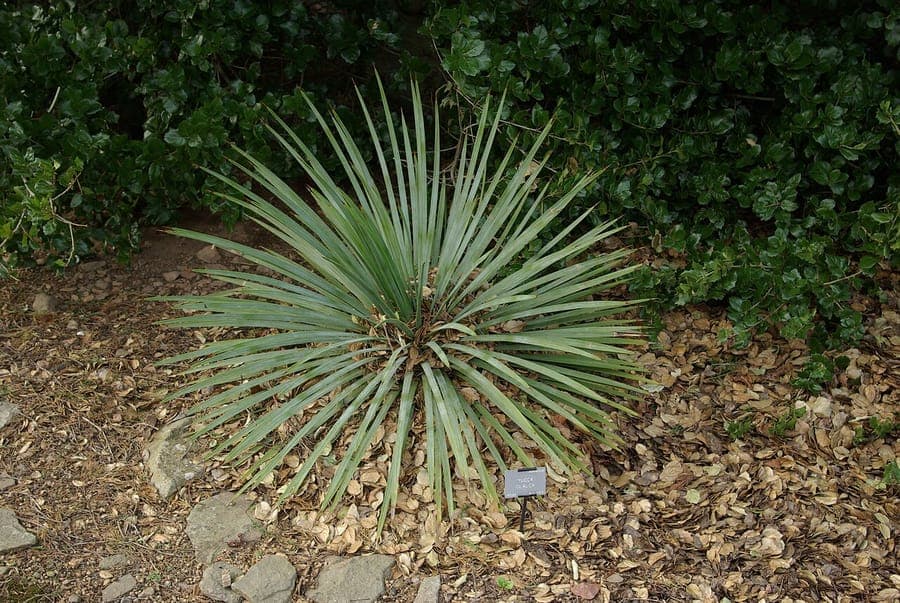
Nick / CC BY-SA 4.0, via Wikimedia Commons
Glaucous Yucca: complete guide
Yucca glauca
Want to see Glaucous Yucca: complete guide in your garden?
1 minute, no credit card
Overview
Glaucous Yucca (Yucca glauca), also known as Soapweed, is a remarkably cold-hardy Yucca species native to the American Great Plains, from southern Alberta to northern Texas. This plant is renowned for its slender, blue-green foliage arranged in compact rosettes and its striking white flowers appearing in late spring. Unlike many desert plants, Glaucous Yucca tolerates average winter temperatures in temperate climates without fussing.
What makes this species unique is its narrower footprint compared to Banana Yucca. Its slender growth habit suits smaller gardens and creates visual impact even when not flowering. With blue-gray leaves and abundant flowers, it commands attention year-round. For gardeners in colder regions, this is genuinely the ideal Yucca choice.
Appearance and Bloom
Glaucous Yucca forms a compact rosette of narrow, blue-green leaves. These leaves are considerably narrower than Banana Yucca specimens - typically 30 to 60 centimeters long but only 5 to 8 millimeters wide. A striking gray-blue waxy coating covers each leaf, earning the plant its name (glaucous means covered with a waxy bloom).
The plant typically grows 45 to 90 centimeters tall and equally wide. The flower spike emerges in May through June and can reach 2.5 meters tall - remarkably taller than the plant itself. The individual flowers are white to very pale pink, about 4 centimeters long, strongly fragrant, and highly attractive to pollinators.
Following pollination, triangular, dry fruits develop. Unlike Banana Yucca fruits, these are inedible and eventually desiccate and fall. Young offsets form naturally around the mother plant.
Ideal Location
Glaucous Yucca demands full sun. Position it where it receives six to eight hours of direct sunlight daily. Less sun results in slower growth and diminished flowering. This is not a shade-tolerant plant.
Air circulation is important, especially in humid regions. Plant on higher ground where air flows freely. In very windy locations, the plant actually grows somewhat more compact - which is aesthetically pleasing.
Soil
Drainage is essential. Glaucous Yucca thrives in exceptionally well-drained soil. It accepts poor, lean soils where many plants fail. Sand, gravel, and light loamy soils are ideal. A pH between 6 and 8 is acceptable.
It also performs excellently on slopes where water drains quickly. On heavy clay soils, raise beds are recommended or large container culture using sandy cactus mix. Incorporate substantial coarse material when planting.
Free design
Want to see Glaucous Yucca: complete guide in your garden? Make a free design now.
Watering
Once established, Glaucous Yucca is extraordinarily drought tolerant. In normal to dry weather, supplemental water is rarely necessary. Only during extreme droughts lasting more than two months without rain might you water once.
During the first growing season after planting, more frequent watering supports root establishment. After year one, water minimally. Excess moisture causes decline.
Pruning
Pruning is minimal. Remove the spent flower spike after blooming if desired. Damaged or dead leaves can be carefully trimmed. Many gardeners leave the flower spike standing - it dries attractively. Young offsets forming around the mother plant can be removed, or carefully severed and relocated elsewhere.
Maintenance Calendar
April: Inspect for winter damage. Begin cautious watering as growth resumes.
May-June: Peak flowering period. The year's highlight.
July-September: Minimal care required. Water only in extreme drought.
October: Reduce watering.
November-March: Winter dormancy. Virtually no watering. The plant tolerates severe frost.
Winter Hardiness
This is the species' major strength. Glaucous Yucca tolerates temperatures reaching -25 to -30 degrees Celsius. Yes, minus 30 degrees! This makes it one of the hardiest Yucca species available, suitable for USDA zones 3 through 10.
Even in northern Europe, this plant survives in protected, well-drained locations. Heavy snow poses no threat provided drainage remains excellent.
Companion Plants
Glaucous Yucca pairs well with other cold-hardy, low-maintenance species. Sedum varieties, fellow Yucca species, Opuntia cacti, and hardy ornamental grasses create pleasing combinations. For color contrast, add cold-hardy Lavender or Nepeta.
Think of it as a replacement for ornamental grasses in regions where those lack sufficient hardiness. In arid gardens, easily create a prairie theme around this spectacular plant.
Closing
Glaucous Yucca is an outstanding choice for gardeners appreciating frost-hardy, low-maintenance, distinctly architectural plants. With its elegant blue-green leaves, impressive flower spikes, and exceptional cold tolerance, it stands out in any garden. Purchase from local garden centres and bring this American prairie native into your landscape. Visit gardenworld.app for garden design inspiration. Once planted, this Yucca thrives for decades with minimal intervention, becoming a permanent landscape feature.
Want to see Glaucous Yucca: complete guide in your garden? Make a free design now.
Upload a photo, pick a style, and get a photorealistic design with plant list in under a minute.
No credit card required

