
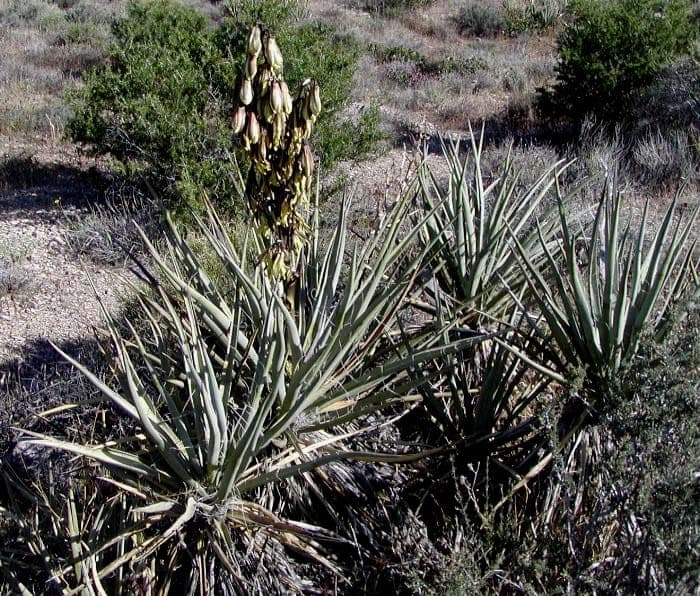
Stan Shebs / CC BY-SA 3.0, via Wikimedia Commons
Banana Yucca: complete guide
Yucca baccata
Want to see Banana Yucca: complete guide in your garden?
1 minute, no credit card
Overview
The Banana Yucca (Yucca baccata) is a rugged desert plant native to the southwestern United States, ranging from Nevada to northern Mexico. This striking plant is named for its distinctive edible fruits that resemble bananas, though the plant itself offers much more: spectacular white flowers, architectural form, and exceptional hardiness. It thrives in conditions that defeat most conventional garden plants.
The Banana Yucca's greatest strength is its near-zero maintenance requirement once established. The plant succeeds in poor, arid soils where virtually nothing else will grow. If you have a difficult corner of your garden characterized by drought and lean earth, this Yucca is your answer. It's the kind of plant that rewards you with beauty despite, not because of, your gardening efforts.
Appearance and Bloom
Banana Yucca forms a dense rosette of grayish-green, thick, leathery leaves. Individual leaves reach 60 to 90 centimeters in length and feature a wavy margin. Mature specimens typically measure 60 to 120 centimeters across, though ancient specimens can exceed these dimensions considerably.
Flowers appear from April through June, depending on your location and spring warmth. The flower spike emerges from the center of the rosette and can reach 150 centimeters tall. The individual blooms are white to creamy white, approximately 5 centimeters long, with a subtle pleasant scent that strengthens in evening hours. Following pollination, green fleshy fruits develop that resemble small bananas. As they mature, they turn dark green then black. These fruits are genuinely edible, with a mild flavor, and sustained Native American populations for generations.
Ideal Location
Position this plant where it receives intense, direct sunlight for at least six hours daily. More sun is always better. In hot desert climates, partial afternoon shade is acceptable, though flowering will be less prolific. The key is warmth and brightness.
Banana Yucca thrives in arid environments. In areas with summer rainfall exceeding 300 millimeters, leaf rot becomes a risk, particularly with suboptimal drainage. Ensure excellent air circulation around the plant to minimize fungal issues. Never plant in a low spot where water collects.
Soil
Drainage is non-negotiable. Banana Yucca cannot tolerate waterlogged conditions. Plant in exceptionally well-draining soil. Sand, gravel, and shale are excellent bases. Amend standard garden soil by incorporating 25 to 50 percent coarse sand or gravel. A pH between 7.0 and 8.5 is optimal.
On clay-heavy soils, building raised beds is essential, or grow in containers using cactus or succulent potting mix. The investment in proper preparation pays dividends in plant health and longevity.
Free design
Want to see Banana Yucca: complete guide in your garden? Make a free design now.
Watering
Once established, Banana Yucca is extraordinarily drought tolerant. During the growing season (May through September), water once every two to three weeks, increasing frequency only during extended drought. Winter irrigation is virtually unnecessary.
In the first year after planting, watering should be more frequent to encourage root establishment. Once roots develop sufficiently, reduce water accordingly. Overwatering is the primary cause of failure with this species.
Pruning
Pruning is minimal. Remove the dead flower spike after blooming concludes. Damaged leaves can be trimmed cleanly at the base. Young plants form naturally around the mother rosette - if you prefer a single rosette, remove the offsets with a sharp knife.
If harvesting fruit, allow it to remain on the plant until fully black, which indicates peak ripeness.
Maintenance Calendar
March-April: Inspect the plant for winter damage. Water cautiously if needed.
May-June: Flowering period. Enjoy the remarkable blooms and their evening fragrance.
July-September: Summer maintenance is minimal. Water only during extreme drought.
October-November: Begin dormancy. Reduce watering frequency substantially.
December-February: Winter rest. Provide minimal or no supplemental water.
Winter Hardiness
Banana Yucca ranks among the hardiest Yucca species. It tolerates temperatures reaching -15 to -18 degrees Celsius with some protection. In mild climates (USDA zones 5 through 10), it thrives outdoors year-round without special protection.
In regions with wet winters, apply mulch around (but not against) the plant base. In severe climates, consider containerizing autumn specimens and overwintering indoors in a cool, bright location.
Companion Plants
Banana Yucca combines beautifully with other desert inhabitants. Fellow Yucca species, Agave, Dasylirion, and Opuntia cacti create harmonious groupings. For color contrast, add Lavender, Santolina, or Zauschneria - they share identical cultural requirements.
For larger-scale schemes, create a xeriscaped environment layered with stone and sculptural plants that echo the Yucca's architectural character.
Closing
The Banana Yucca is an exceptional choice for gardeners who value low-maintenance, distinctive plants that also provide edible fruit. Its architectural form, spectacular spring bloom, and hardiness make it impossible to ignore. Whether you're establishing a full xeriscape garden or simply adding some frost-hardy exotics to your collection, Banana Yucca deserves your consideration. Purchase from local garden centres and start your adventure with this American desert beauty. Browse gardenworld.app for inspiration and design services. With basic site preparation, this Yucca will flourish for decades with minimal attention, becoming a garden landmark.
Want to see Banana Yucca: complete guide in your garden? Make a free design now.
Upload a photo, pick a style, and get a photorealistic design with plant list in under a minute.
No credit card required

