
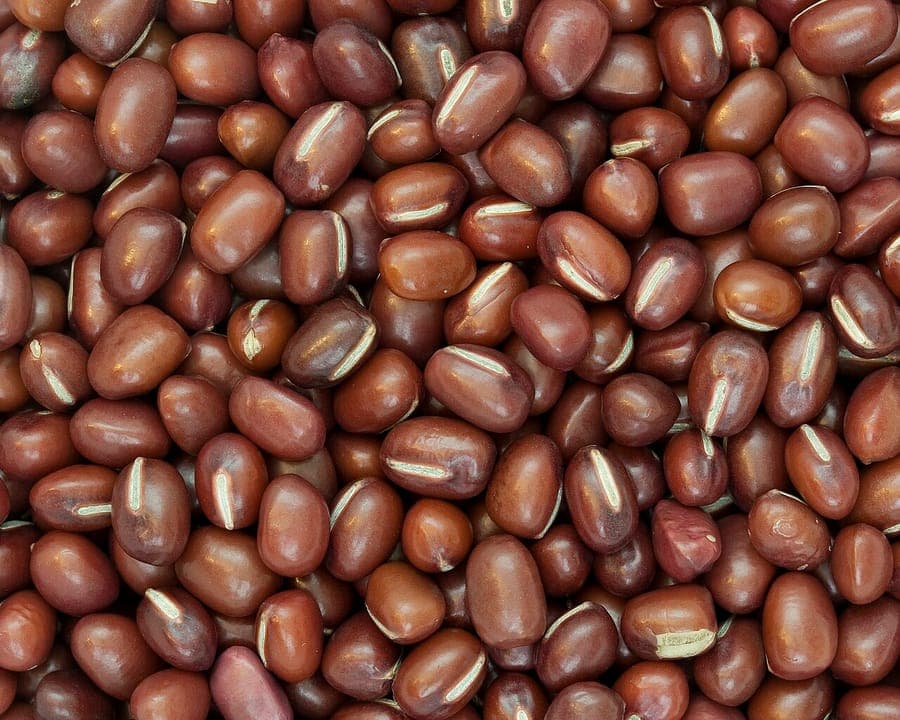
Sanjay Acharya / CC BY-SA 3.0, via Wikimedia Commons
Adzuki bean: complete guide
Vigna angularis
Want to see Adzuki bean: complete guide in your garden?
1 minute, no credit card
Overview
The adzuki bean (Vigna angularis) is a warm-season annual legume with a cultivation history stretching back thousands of years across East Asia. Native to China, Japan, Nepal, Myanmar and Vietnam, this small, deep-red bean has become popular worldwide for its mildly sweet flavour and impressive nutritional profile. In Japan it is the foundation of wagashi confections and anko (sweet red bean paste). In western Europe and North America, home gardeners are increasingly growing adzuki beans as part of a productive kitchen garden. The species name angularis refers to the angular ridge running along the seed. On gardenworld.app you can find inspiring kitchen garden designs that integrate legumes like adzuki beans into stylish outdoor spaces.
Appearance and bloom cycle
Adzuki bean plants are upright or semi-climbing annuals reaching 30 to 60 cm in height depending on the variety. The trifoliate leaves are mid-green and broadly oval, resembling those of other Vigna relatives. Small, pale yellow butterfly flowers appear from July onward and are followed by slender cylindrical pods measuring 7 to 13 cm long. Each pod contains 4 to 12 small, oval seeds. The classic adzuki bean is a rich dark red with a white hilum stripe, but yellow, green and black varieties also exist. The flowering period runs through July and August, with pods maturing between August and October depending on when seeds were sown and the summer temperatures experienced.
Ideal location
As a warm-season crop the adzuki bean demands a sunny position receiving at least 6 to 8 hours of direct sunlight daily. It thrives at air temperatures between 20 and 30 degrees Celsius and is completely frost-tender. In temperate climates (USDA zones 8-9) direct outdoor sowing should wait until all frost risk has passed, typically after mid-May. A sheltered spot against a south-facing wall gives the longest effective growing season. In cooler regions or those with shorter summers, starting seeds indoors 3 to 4 weeks before the last frost date on a warm sunny windowsill improves success rates considerably. Good air circulation around plants reduces fungal disease risk.
Soil
Adzuki beans perform best in light, free-draining soil with a pH between 6.0 and 6.8. Heavy waterlogged clay should be avoided because the roots are prone to rot in wet conditions. Like other members of the Fabaceae family, adzuki beans form a partnership with nitrogen-fixing Rhizobium bacteria in root nodules, which means that additional nitrogen fertiliser is generally unnecessary and can even reduce pod yields by promoting excessive leafy growth. Before sowing, incorporate a moderate amount of well-rotted garden compost to improve structure and moisture retention without creating waterlogging. Sandy soils benefit from extra organic matter to improve their water-holding capacity.
Watering
Adzuki beans have moderate water requirements. Consistent moisture is important from germination through to pod filling, but waterlogged soil must be avoided. During dry spells, water two to three times per week, directing water to the soil surface rather than the foliage to reduce disease risk. The most critical period for watering is during flowering and pod set - drought stress at this stage causes flowers and young pods to drop. Once pods begin to dry and turn papery, reduce watering gradually to encourage even drying of seeds before harvest. Applying a mulch of straw or grass clippings helps to retain soil moisture and suppress competing weeds between plants.
Free design
Want to see Adzuki bean: complete guide in your garden? Make a free design now.
Pruning
As an annual herb, the adzuki bean requires no conventional pruning. Climbing or semi-trailing varieties benefit from short support canes of 40 to 60 cm placed at sowing time. Once plants have formed 4 to 5 leaf nodes, pinching out the growing tip encourages side shoots and more pod-bearing branches overall. Yellowed or diseased leaves should be removed promptly to maintain airflow and limit fungal spread. Harvesting mature pods promptly encourages the plant to continue producing rather than directing all energy into seed ripening. Regular inspection for aphids and spider mites is worthwhile, especially during hot and dry spells.
Maintenance calendar
April: sow seeds indoors at 20-25 degrees Celsius, 1-2 per 9 cm pot. May (after 15th): transplant outdoors or direct-sow 5 cm deep, 15-20 cm apart in rows 40-50 cm apart. June: erect cane supports for climbing varieties; keep weed-free and apply mulch. July: first flowers open; water during dry spells; watch for aphids. August: pods begin to form; harvest first green pods if desired for fresh eating. September: harvest mature dry pods on dry days; spread out to continue drying indoors. October: collect final pods; remove spent plants and compost them.
Winter hardiness
Adzuki bean is an annual warm-season crop with zero frost tolerance. Plants are killed by the first autumn frost. In USDA zone 8 and colder they can only be grown as a summer annual. Dried beans can be stored for several years in airtight containers in a cool, dark, dry location and will remain viable for cooking or replanting. No perennial or winter-hardy forms exist within this species. The standard approach is to save some seeds from each harvest for the following year, selecting the largest and best-coloured beans to gradually improve your local strain over time.
Companion plants
As a nitrogen-fixing legume, adzuki bean is an excellent companion for crops that are hungry for nitrogen. Good neighbours include sweet corn (which provides natural support for climbing varieties), squash, cucumber, courgette and aromatic herbs like basil and dill. The classic Three Sisters combination of corn, beans and squash works well with adzuki as the bean component. Avoid planting adzuki beans near garlic or onions, which are believed to inhibit legume root bacteria. On gardenworld.app you will find design ideas for compact kitchen garden layouts where legumes like adzuki beans combine ornamental appeal with productive yields.
Closing
The adzuki bean is a rewarding and nutritious addition to any kitchen garden, offering both culinary versatility and soil-improving benefits. Given a warm, sheltered, sunny site, well-drained soil and consistent watering, it delivers generous harvests of high-protein beans that can be eaten fresh or dried and stored. Seeds are available from specialist online suppliers and selected garden centres. For colder climates, indoor starting is strongly recommended to make the most of a shorter summer season.
Want to see Adzuki bean: complete guide in your garden? Make a free design now.
Upload a photo, pick a style, and get a photorealistic design with plant list in under a minute.
10,000+ gardens designed already
No credit card required


Similar plants
Black gram: complete guide
Vigna mungo
Everything about growing black gram (urad dal): ideal site, soil preparation, watering and harvest of this nutritious Indian legume.
Vigna radiata: complete guide
Vigna radiata
Discover Mung Bean (Vigna radiata), a nutritious legume plant. Perfect for vegetable gardens and rural cultivation. Read our complete guide.
Common bean: complete guide
Phaseolus vulgaris
Learn how to grow common beans (Phaseolus vulgaris) in your vegetable garden. Varieties, sowing, harvesting and care for this nutritious crop.