
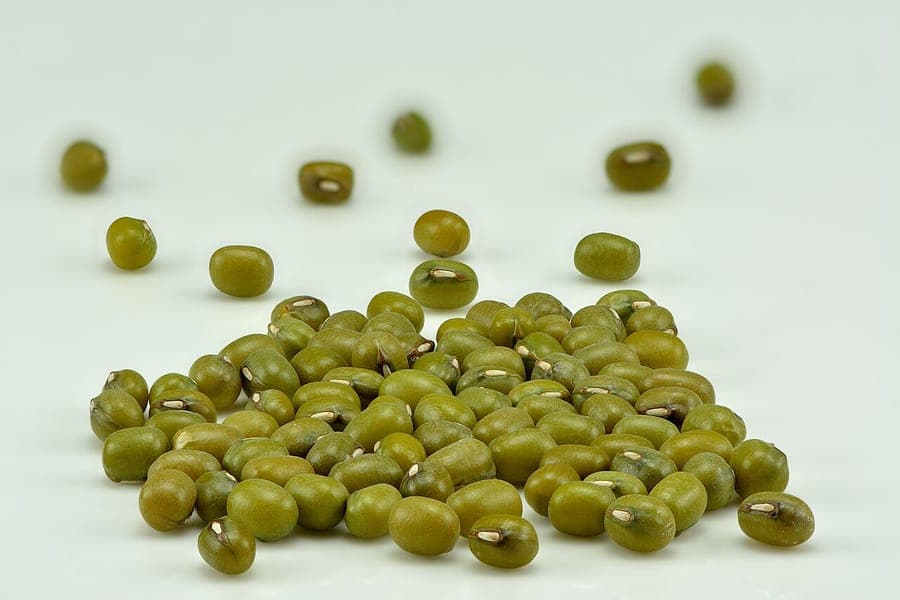
Ivar Leidus / CC BY-SA 4.0, via Wikimedia Commons
Vigna radiata: complete guide
Vigna radiata
Want to see Vigna radiata: complete guide in your garden?
1 minute, no credit card
Overview
Vigna radiata, better known as Mung Bean, is an important food crop originating from tropical and subtropical parts of Asia. This fast-growing herb belongs to the Fabaceae family (legumes) and is renowned for its nutrient-dense seeds, packed with protein and important minerals. In multiple cultures, mung beans are a vital part of local food culture, from soups to sprouts.
The plant is not only nutritious but also valuable for sustainable gardening. Through its nitrogen-fixing abilities, mung beans help enrich the soil. This makes it an excellent choice for gardeners seeking an ecological approach.
Appearance and bloom
Vigna radiata grows as an erect, fast-growing herb typically reaching 40 to 70 centimeters tall. The plant has trifoliate, long-petioled leaves with lance-like leaflets that are bright green. The stems are green and slightly delicate, emphasizing the youth of the plant.
The plant blooms with small, yellow-green to brown-yellow flowers in clusters. These flowers are very distinctive and attractive to pollinators. After blooming, thin pods form that are 5 to 10 centimeters long. The pods contain small, round bean-like seeds that are green (for fresh harvest) or yellow-dry (for storage).
Ideal location
Vigna radiata thrives best in sunny spots where the plant receives abundant light. Place the plant in a location receiving at least 6 to 8 hours of direct sunlight daily. Sun stimulates flowering and growth, leading to higher yields.
The plant is suitable for garden beds, vegetable greenhouses, or direct ground cultivation. Avoid shady corners and places where the plant cannot receive good ventilation. This prevents fungal infections. For optimal results, choose an open, well-ventilated location.
Soil
Vigna radiata makes moderate demands on soil, though well-drained soil is preferred. The plant grows well in soils with a pH value between 6.0 and 6.9. This range is ideal for absorption of essential nutrients.
Preparation of the seedbed is essential. Ensure good soil structure by incorporating organic matter (compost, manure). This improves water retention and nutrient value. For heavy clay soils, add sand for better drainage. The plant also grows in moderately nutrient-rich soils, so no excess fertilization is needed.
Free design
Want to see Vigna radiata: complete guide in your garden? Make a free design now.
Watering
Vigna radiata requires regular watering, especially after seeding and during growth. Moderate watering is important: the soil must remain moist but not waterlogged. Water directly at the plant base.
Prefer to use lukewarm water and avoid overhead watering, as wet foliage can promote fungal diseases. For optimal growth, water regularly during dry periods. If it rains, no supplemental watering is needed. Excessive watering can cause root rot.
Pruning
Vigna radiata requires minimal pruning. You can pinch the top of the plant when it reaches 15 to 20 centimeters. This stimulates lateral branching and bushier growth.
Regularly remove yellowing or diseased leaves and damaged stems. Dead flowers can also be removed, though this is not necessary. Avoid heavy pruning as this can reduce yields.
Maintenance calendar
Spring: Sow seeds directly in warm, prepared soil. Ensure regular watering. Summer: Monitor for weeds and diseases. Maintain watering. Provide extra feeding in poorer soils if needed. Fall: Harvest mature pods. Winter: Not relevant for this warm-season crop.
Winter hardiness
Vigna radiata is a warm-season plant sensitive to frost. The plant does not grow at temperatures below 15 degrees Celsius. In cooler climates, greenhouse or indoor cultivation is preferable.
Sow seeds in ground only after the last frost date. In temperate climates, sow in May. For extended season, sow seeds in succession (every 2-3 weeks).
Companion plants
Vigna radiata grows well with other vegetables such as Capsicum (pepper), Solanum lycopersicum (tomato), and various lettuce varieties. These combinations provide a diverse vegetable package.
Avoid companion plants with strong root competition. Ensure companion plants are also warm-season growers or that you cultivate them together.
Closing
Vigna radiata is a versatile food crop that thrives well in home gardens. With regular watering and sunny location, you can expect abundant harvests. For more vegetable and fruit growing tips, visit gardenworld.app. Enjoy fresh mung beans from your own garden and explore many culinary applications. Discover more food crops on gardenworld.app and build your own healthy food supply.
Want to see Vigna radiata: complete guide in your garden? Make a free design now.
Upload a photo, pick a style, and get a photorealistic design with plant list in under a minute.
No credit card required


Similar plants
Tall Silky Lupine: complete guide
Lupinus elatus
Tall silky lupine is a fast-growing Californian perennial with silvery foliage and blue-purple flower spikes, ideal for a prairie-style garden.
Garfield Lupine: complete guide
Lupinus garfieldensis
The Garfield lupine is a rare, fast-growing American perennial for alkaline, dry grassland gardens, with striking blue flower spikes.
Lupinus elegans: complete guide
Lupinus elegans
Lupinus elegans, the elegant lupine, is a spectacular blooming plant from Mexico with blue flower spikes. Care, cultivation and garden use.