
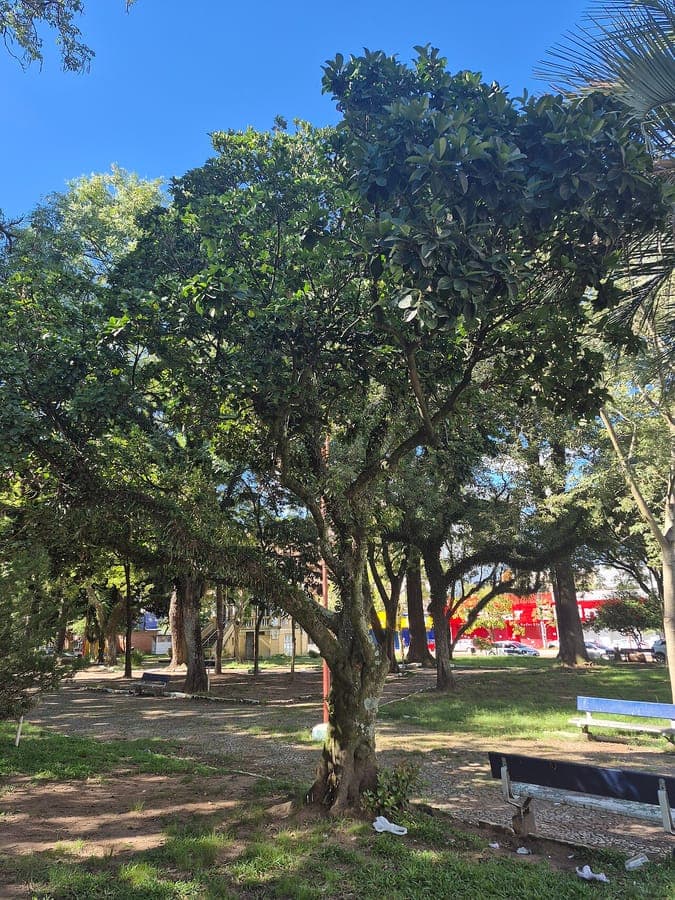
Gabriel Collares / CC BY 4.0, via Wikimedia Commons
Viburnum odoratissimum: complete guide
Viburnum odoratissimum
Want to see Viburnum odoratissimum: complete guide in your garden?
1 minute, no credit card
Overview
Viburnum odoratissimum, commonly called Sweet Arrowwood, is an elegant low-maintenance shrub originating from the mountain regions of Asia. This plant is widely appreciated for its intensely fragrant white flowers that appear in May and June. With its glossy dark green foliage and vigorous growth habit, it makes an excellent choice for creating an attractive hedge or as a specimen plant in any garden design.
This evergreen Viburnum species combines beauty with practical garden benefits. The strong growth pattern and naturally neat form suit both contemporary and traditional garden styles. At GardenWorld.app, we frequently incorporate this plant in garden designs because of its year-round interest and minimal maintenance requirements.
Appearance and Bloom
The plant develops into a dense, compact shrub with predominantly glossy, lanceolate leaves. The foliage is dark green, firm, and remains on the plant throughout the entire year, making Viburnum odoratissimum an excellent structural element for year-round garden interest.
White flowers appear in dense clusters and possess an intense, pleasant fragrance. The flowering period begins in late May and continues through June. The blooms attract pollinators and subsequently form small blue fruits that turn dark purple at full ripeness. These fruits remain on the plant for months, providing visual interest and food for birds.
Ideal Location
Viburnum odoratissimum performs best in full sun to partial shade. In regions with very hot summers, some afternoon shade is beneficial. The plant is adaptable and thrives in mixed borders, as a hedge, screening plant, or specimen shrub.
When positioning the plant, consider wind exposure: although robust, the plant thrives better with some wind protection, which also helps preserve the fragrance.
Soil
Sweet Arrowwood is not extremely demanding regarding soil type, but prefers well-draining, moisture-retentive soil. A pH around neutral to slightly acidic is ideal, between 6.0 and 7.0. The plant also tolerates calcareous soils well.
At planting time, it is advisable to incorporate generous amounts of compost or rich potting soil into the planting hole. This promotes better root development and faster establishment.
Free design
Want to see Viburnum odoratissimum: complete guide in your garden? Make a free design now.
Watering
Once the plant is well-established, Viburnum odoratissimum is fairly drought-tolerant. During the growing season (May to September), regular watering is important, especially for young plants. Water when the top layer of soil feels dry to the touch.
In periods with normal rainfall, supplementary watering is usually unnecessary. During extreme drought or heat periods, provide additional water. In winter, watering needs are much reduced.
Pruning
The plant naturally develops a neat form and requires little pruning. You can trim it to direct growth or maintain size. The best time is immediately after flowering, in July, allowing the plant to regenerate in autumn.
Remove dead wood and crossing branches. For hedge formation, prune two to three times per year.
Maintenance Calendar
Spring (March-April): Check for winter damage. Apply slow-release fertilizer.
Summer (May-July): Prune after flowering. Water regularly during dry periods.
Autumn (September-October): Apply autumn fertilizer. Prepare planting holes for new specimens.
Winter (November-February): No pruning. Check for snow or ice damage. Water only during dry spells.
Winter Hardiness
Viburnum odoratissimum is moderately hardy to approximately -10 to -12 degrees Celsius. In the Netherlands and Belgium, it grows without problems in most locations, except in the coldest mountain regions. In higher elevations or for extra protection, plant against a warm wall or under eaves.
In very cold winters, leaves may suffer minor damage, but the plant recovers well.
Companion Plants
Viburnum odoratissimum combines well with other evergreen shrubs such as:
- Ilex (Holly) for foliage contrast
- Euonymus for fine texture
- Lonicera (Honeysuckle) for additional fragrance
- Laurus nobilis (Bay Laurel) for classical combination
- Ligustrum (Privet) for dense screening
In mixed borders, it pairs well with flowering plants like roses, Lavatera, and Philadelphus.
Conclusion
Viburnum odoratissimum is an excellent choice for gardens seeking both beauty and fragrance. With its glossy foliage year-round, intense May to June bloom, and low maintenance needs, this plant deserves a place in many gardens. Available at major garden centers.
At GardenWorld.app, we regularly recommend this plant for garden renovations because of its reliability and elegant appearance.
Want to see Viburnum odoratissimum: complete guide in your garden? Make a free design now.
Upload a photo, pick a style, and get a photorealistic design with plant list in under a minute.
10,000+ gardens designed already
No credit card required


Similar plants
Squashberry: complete guide
Viburnum edule
Grow mooseberry (Viburnum edule): ultra-hardy North American shrub with fragrant white flowers and red autumn berries. Perfect for boreal gardens. Zone 3.
Witherod: complete guide to this elegant North American shrub
Viburnum cassinoides
Discover Viburnum cassinoides: an elegant North American shrub with white flowers, yellow fall foliage, and blue berries. Perfect for temperate garden zones.
Buddlejaleaf viburnum: complete guide
Viburnum buddleifolium
Elegant evergreen shrub with delicate foliage and white spring flowers. Perfect for sheltered borders in temperate gardens.