
Hectonichus / CC BY-SA 4.0, via Wikimedia Commons
Spiked Pyrenean speedwell: complete guide
Veronica ponae
Want to see Spiked Pyrenean speedwell: complete guide in your garden?
1 minute, no credit card
Overview
Spiked Pyrenean speedwell (Veronica ponae Gouan) is a striking mountain perennial in the plantain family (Plantaginaceae), native to the Pyrenees and adjacent parts of Spain and France. The French botanist Antoine Gouan described it in 1773, naming the species after its Pyrenean provenance. In France it is known as 'Veronique de Gouan', honouring its discoverer. The plant belongs to the large genus Veronica, which encompasses several hundred species across the northern hemisphere, most known for their small but cheerful blue flowers. Veronica ponae is a true alpine specialist: it grows on rocky mountain slopes, in subalpine meadows, and along the margins of upland streams at elevations ranging from a few hundred to over two thousand metres. In garden cultivation outside its native range it is uncommon, yet for enthusiasts of rock gardens, alpine troughs, and naturalistic mountain plantings, it offers a long and reliable flowering season in an intense shade of blue. For inspiration on creating alpine or rock-garden settings, gardenworld.app provides professional design tools and planting ideas suited to challenging, sloping terrain.
Appearance and bloom cycle
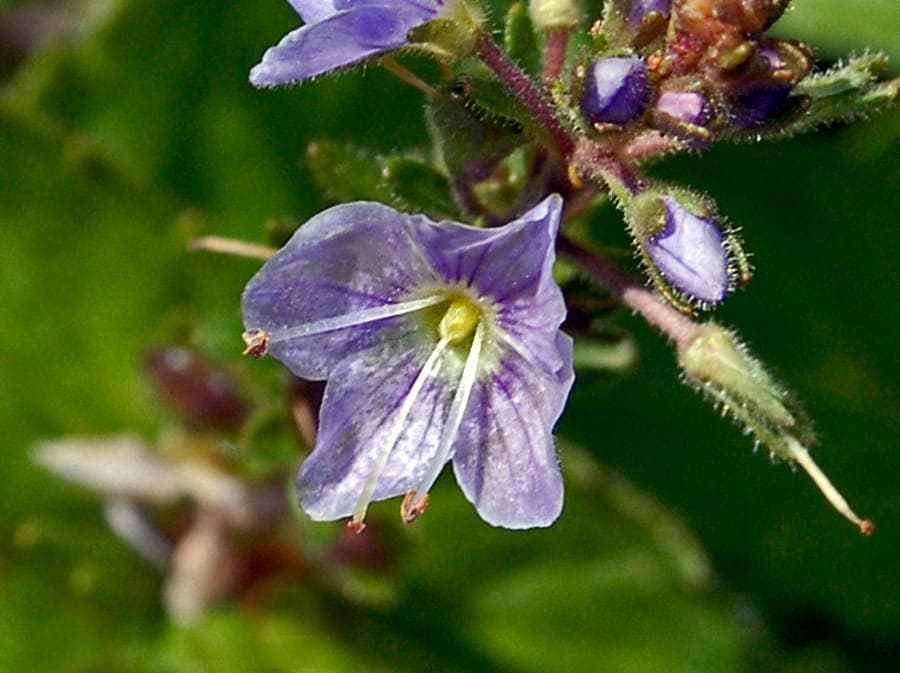
Spiked Pyrenean speedwell is an upright to slightly arching perennial reaching 20 to 40 cm in height. The stems are firm and lightly hairy. Leaves are opposite, oval to lance-shaped, with a toothed margin and a slightly rough texture from fine surface hairs. The flowers are a clean, clear blue and are carried in dense, erect terminal spikes - hence the common name 'spiked'. Each small flower has four petals, with the upper petal fractionally larger than the others, and two protruding stamens that add a delicate, whiskered appearance. The bloom period runs from June through September, an unusually long season for an alpine species. After flowering, small heart- to kidney-shaped seed capsules develop. The vivid blue of the spikes stands out against the mid-green foliage and makes the plant a strong focal point in any mountain-style border.
Ideal location
Veronica ponae thrives in full sun to light partial shade. In its natural habitat it occupies open, sunny mountain slopes as well as the sheltered edges of upland scrub, so it tolerates a range of light conditions. In the garden, a position in full sun to dappled shade is ideal - rock gardens, raised alpine beds, sloping borders, or the sunny face of a dry stone wall all work well. The plant is accustomed to high wind, intense daytime heat, and cool nights in its mountain home, making it robust in variable conditions. Avoid low-lying, frost-pocket positions where cold air and moisture accumulate. At gardenworld.app you can plan a complete rock garden or alpine border layout and see how Veronica ponae fits alongside other mountain plants through the full growing season.
Soil
Soil requirements for this species are specific and reflect its Pyrenean origins. The ideal pH is between 5 and 5.5, indicating a preference for gently acid to moderately acid ground. In the Pyrenees it grows on granite and schist-based soils that are naturally acid, free-draining, and low in nutrients. Prepare a mix of garden loam, coarse grit, and gravel in roughly equal parts for a rock bed. Though the plant receives ample rainfall in the mountains, it is never in standing water; drainage is therefore critical. Adding modest amounts of leaf mould or peat-free compost improves moisture retention without making the soil heavy. Avoid calcareous or chalky soils; if your garden is on chalk or limestone, acidify with sulphur chips or grow the plant in a raised bed filled with ericaceous compost mixed with grit.
Free design
Want to see Spiked Pyrenean speedwell: complete guide in your garden? Make a free design now.
Watering
Veronica ponae prefers consistently moist conditions and benefits from relatively high atmospheric humidity, in keeping with its mountain climate. Water regularly, especially during dry spells in summer, but ensure the soil never stays waterlogged. Water at the base of the plant rather than overhead, to reduce the risk of fungal disease on the foliage and flower spikes. Once established, the plant tolerates short dry periods but suffers in prolonged summer drought. In containers, check moisture every few days in warm weather and water before the compost dries out completely. A mulch of coarse grit around the crown moderates soil temperature and reduces moisture loss without causing waterlogging.
Pruning
This speedwell needs minimal cutting. Once the flower spikes have faded in late September or October, remove the spent stems to keep the plant tidy. If you want seeds to ripen for collection or natural spread, leave a few spikes in place until the capsules turn brown and begin to open. In early spring, clear away any dead stems from the previous year once new growth is visible. A very light trim of the longest shoots after flowering is optional. Avoid hard cutting back, which can remove dormant buds and reduce vigour the following year.
Maintenance calendar
March and April: remove dead stems from the previous year, top-dress with coarse grit, and inspect the crown for signs of winter damage. Early May: check that new shoots are emerging strongly and that drainage is sound after spring rains. June to September: the plant is in bloom; deadhead individual spikes as they fade if you want to encourage further flower production and limit self-seeding. October: cut back spent flower stems after the main flush; leave a few for seed if desired. November and December: no active maintenance needed; a thin layer of coarse grit around the crown offers some protection in cold snaps. Plants from specialist alpine nurseries and garden centres are the most reliable source.
Winter hardiness
As a mountain species, spiked Pyrenean speedwell is genuinely cold-hardy. It is classified in USDA hardiness zones 6 to 8, tolerating minimum winter temperatures of around -23 to -12 degrees Celsius. In most of northern and central Europe it overwinters reliably in the open garden, provided drainage is good. The combination of wet soil and hard frost is the most dangerous condition: prolonged waterlogging in winter leads to crown rot. On a raised, gritty rock bed, survival through hard winters is much better. A light covering of horticultural fleece in exceptional cold is optional but rarely necessary.
Companion plants
Veronica ponae associates naturally with other alpine and subalpine species. Good companions in a rock garden or alpine bed include alpine pink (Dianthus alpinus), heath speedwell (Veronica officinalis), mountain thyme (Thymus polytrichus), stonecrop (Sedum acre), wall rue (Asplenium ruta-muraria), and blue-eyed grass (Sisyrinchium angustifolium). Avoid vigorous, spreading groundcovers that would overwhelm this medium-sized perennial. In a naturalistic planting, combine it with harebells (Campanula rotundifolia) and mountain avens (Dryas octopetala) for an authentic alpine meadow feel.
Closing
Spiked Pyrenean speedwell is a rewarding choice for gardeners who want authentic mountain flora with a long, reliable flowering season. Its vivid blue spikes from June to September, its tolerance of cool and variable conditions, and its compact growth make it ideal for rock gardens, raised alpine beds, and sloping borders. Provide gently acid, free-draining soil, adequate moisture, and a sunny position, and this uncommon species will reward you with months of blue-flowered beauty. Explore design options for your own alpine garden at gardenworld.app.
Want to see Spiked Pyrenean speedwell: complete guide in your garden? Make a free design now.
Upload a photo, pick a style, and get a photorealistic design with plant list in under a minute.
10,000+ gardens designed already
No credit card required


Similar plants
False ivy-leaved speedwell: complete guide
Veronica sublobata
False ivy-leaved speedwell is a low European perennial with blue flowers, thriving in semi-shade under hedges and trees from March to October.
Bird's-eye speedwell: complete guide
Veronica chamaedrys
Explore bird's-eye speedwell (Veronica chamaedrys), a charming native wildflower with sky-blue blooms. Complete guide for natural gardens, meadows, and insect-friendly landscapes.
Spiked Speedwell: complete guide
Veronica spicata
Discover Spiked Speedwell (Veronica spicata): growing tips, ideal location, soil requirements, and winter hardiness. Your complete gardening reference for this striking perennial.