
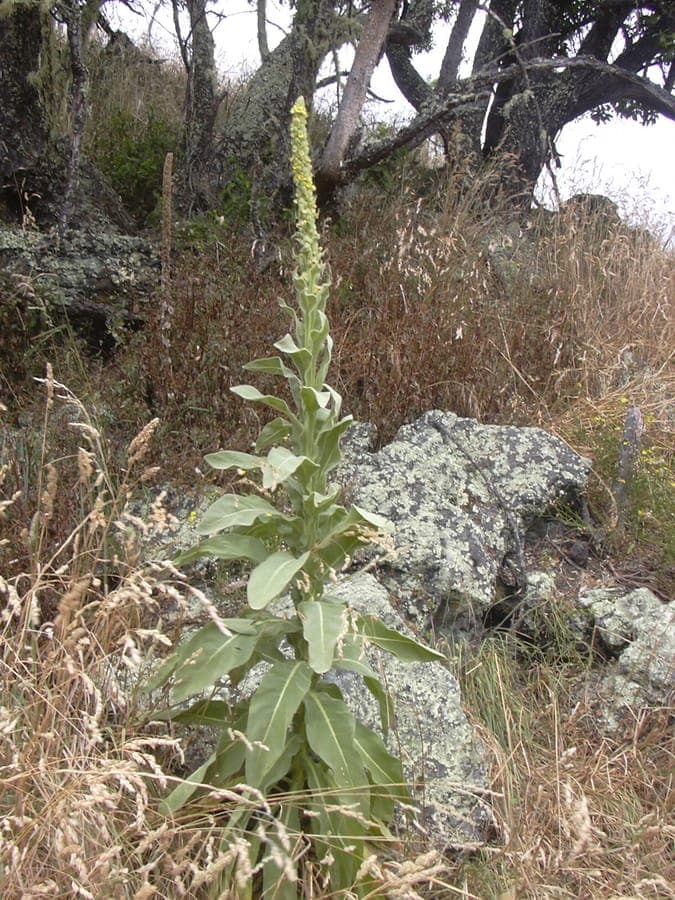
Forest & Kim Starr / CC BY 3.0, via Wikimedia Commons
Common mullein: complete guide
Verbascum thapsus
Want to see Common mullein: complete guide in your garden?
1 minute, no credit card
Overview
Common Mullein (Verbascum thapsus) is an impressive plant from the Scrophulariaceae family, native to Europe and western Asia. This plant is known for its striking height up to 200 cm and its dense yellow flower spikes. The plant has been used for centuries in herbal medicine and attracts bees, butterflies, and birds.
Appearance and Bloom Time
Common Mullein grows as an upright plant with dense, woolly leaves that form a basal rosette in the first year. In the second year, a thick, upright stem appears with yellow flowers that bloom from bottom to top. The plant can reach 150 to 200 cm tall, making it a striking presence. The blooming period runs from June to September.
Ideal Location
Common Mullein thrives best in sunny, dry locations. The plant needs at least six to eight hours of direct sunlight daily. This plant is highly adaptable and grows on many soil types. It is robust and fills unused corners of the garden well.
Soil
Common Mullein is very tolerant and grows well on almost any soil, including poor, sandy, or gravel-like soil. The plant prefers well-draining soils but also accepts moderately moist soil. A pH value between 6.5 and 8 is ideal.
Watering
Once established, Common Mullein is very drought-tolerant. In the first year, when the plant is establishing, regular watering is needed. After that, little additional watering is needed except during extremely dry periods.
Free design
Want to see Common mullein: complete guide in your garden? Make a free design now.
Pruning
Common Mullein requires minimal pruning. Some gardeners remove the flower stem after the blooming season, but the plant often self-seeds. The plant is biennial, meaning it dies after producing seeds.
Maintenance Calendar
Year 1 Spring: Sow seeds or plant seedlings. Start watering. Summer: Water regularly. Autumn: Plant grows larger. Winter: Plant may die off or overwinter as basal rosette. Year 2 Spring: Flower stem appears. Summer: Blooms. Autumn: Seed production. Winter: Plant dies off.
Winter Hardiness
Common Mullein is quite hardy and can tolerate temperatures down to -20 degrees Celsius. The plant is, however, biennial and will die after producing seeds.
Companion Plants
Common Mullein combines well with other wild plants and herbs. Try combinations with Wild Marjoram, Blanket Flower, and other bird-attracting plants. The tall flowers form a nice backdrop for lower plants.
Conclusion
Common Mullein is perfect for wild, cottage gardens where height and impact are desired. With its impressive stature and yellow flowers, it adds classic elegance. The plant often self-seeds, allowing it to become a permanent presence in your garden. Available at local garden centers. Discover on gardenworld.app how you can transform your garden.
Want to see Common mullein: complete guide in your garden? Make a free design now.
Upload a photo, pick a style, and get a photorealistic design with plant list in under a minute.
10,000+ gardens designed already
No credit card required


Similar plants
Naio: complete guide
Myoporum sandwicense
All about naio or bastard sandalwood (Myoporum sandwicense): a Hawaiian coastal tree, its uses, cultivation, and role as a tough windbreak in mild gardens.
Oriental Mullein: complete guide
Verbascum orientale
Complete guide to Oriental Mullein (Verbascum orientale): placement, soil, watering, pruning and garden design tips.
Buddleja marrubiifolia: complete guide
Buddleja marrubiifolia
Woolly butterfly-bush from Texas and Mexico. Shrub with soft, hairy leaves and orange-red flowers. Hardy to -5C. Blooms summer-fall. Drought-tolerant and low-maintenance plant.