
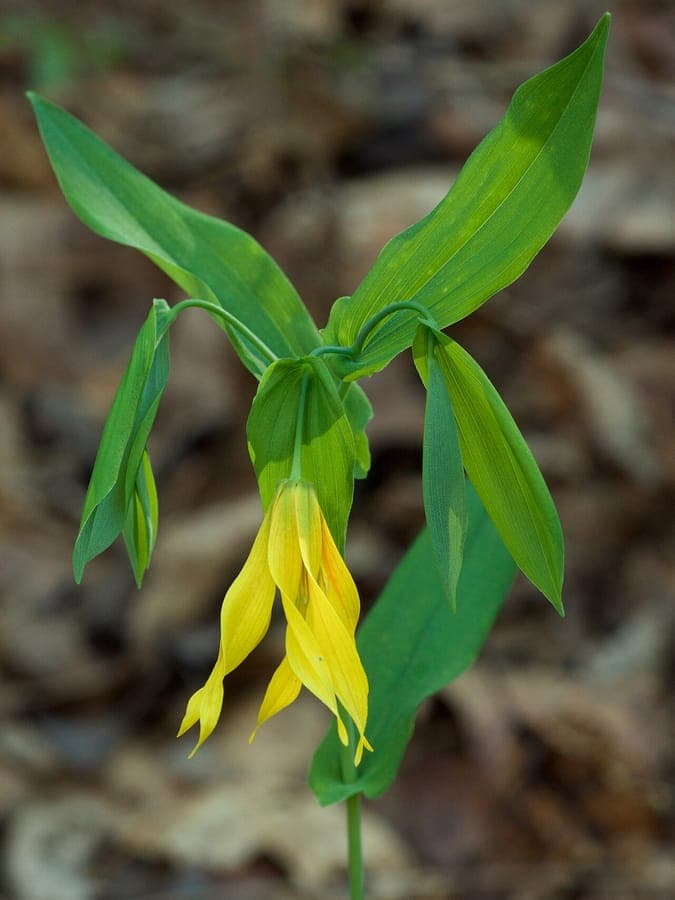
Eric Hunt / CC BY-SA 4.0, via Wikimedia Commons
Bellwort: complete guide
Uvularia grandiflora
Want to see Bellwort: complete guide in your garden?
1 minute, no credit card
Overview
Uvularia grandiflora, commonly known as bellwort or large-flowered bellwort, is an elegant understory plant belonging to the Colchicaceae family. This North American species grows naturally in moist woodlands from southeastern Canada to North Carolina. With mature heights reaching 75 centimeters, bellwort creates a sophisticated layer in shaded gardens.
The plant distinguishes itself through its unique flower presentation where yellow blooms dangle beneath the leaves. This subtle flowering habit makes it a pleasure to discover both in wild settings and cultivated gardens. For gardeners, bellwort offers a rare combination of elegance, hardiness, and visual intrigue.
Appearance and Bloom
Uvularia grandiflora features linear-lanceolate leaves that emerge gracefully from branching stems. These leaves create a striking silhouette when backlit by sunlight filtering through overhead canopies. The flowers are bright yellow and hang downward on slender, recurved pedicels.
The flowers display six perianth segments that reflex slightly, creating a delicate trumpet-like opening. Blooming occurs in early spring, typically April to May. The flowering period lasts two to three weeks, depending on temperature and moisture conditions. After bloom, the plant develops distinctive three-chambered seed capsules that mature through the summer.
Ideal Location
Bellwort performs best in moist, partially shaded locations that replicate its natural woodland habitat. Position this plant beneath deciduous trees or near shrubs where dappled sunlight filters through the canopy. The plant tolerates full shade, though this typically results in reduced flowering.
Protection from intense afternoon sun prevents leaf scorch in warmer climates. In North American zones, at least two to three hours of unobstructed morning sun provides ideal conditions. This offers sufficient light for photosynthesis without excessive heat stress.
Soil
Bellwort prefers moist, humus-rich soil with good drainage capacity. The plant performs best in slightly acidic soils with pH values from 5.5 to 6.5. Enhance soil with abundant compost or leaf litter to promote moisture retention and nutrient availability.
Heavy clay soils can cause waterlogging, leading to root rot. Improve such soils through sand and organic matter incorporation. A mixture of 40 percent compost, 30 percent soil amendment, and 30 percent native soil works effectively for most woodland situations.
Free design
Want to see Bellwort: complete guide in your garden? Make a free design now.
Watering
Maintain consistently moist soil during the growing season (spring and summer), but avoid waterlogged conditions. Regular watering proves essential during the first two years after planting until roots establish firmly. Mature plants tolerate moderate drought stress, though moist conditions promote optimal growth.
Some water management variation occurs when plants enter dormancy in autumn. Reduce watering after August. Winter rains typically provide sufficient moisture during the dormancy period. In dry climates, supplemental winter watering may prevent excessive desiccation.
Pruning
Bellwort requires minimal pruning. Remove only dead or damaged stems in early spring before new growth initiates. If plants become overgrown and lose their form, they can be carefully divided after flowering ends.
Light deadheading after bloom can encourage more compact growth. Avoid aggressive pruning that damages plant architecture. Many gardeners allow plants to grow according to their natural growth habits without intervention.
Maintenance Calendar
March to May: preparation and blooming period. Ensure adequate water before bloom. June to August: strong growth phase. Hydration remains important. September to November: dormancy preparation. Gradually reduce watering. December to February: full dormancy. Minimal care required.
Apply annual feeding in spring with slow-release fertilizer or compost. This provides nutrition throughout the growing season without excess nitrogen that promotes foliage at the expense of flowers.
Winter Hardiness
Uvularia grandiflora is fully hardy to USDA zone 3b (-35 degrees Celsius). This makes it excellent for autumn and winter gardens in cool to temperate climates. The plant tolerates snowfall and repeated freeze-thaw cycles without injury.
In very warm climates (zone 9 and above), bellwort can struggle due to insufficient dormancy during winter. In such regions, extra shade and mulch provide some relief, though these plants perform best in cooler climates.
Community Support
Seek guidance from local gardeners for cultivation tips specific to your region. Woodland plants often have very particular site preferences that can be adapted to local conditions. Many woodland gardening societies have extensive experience with this species.
Closing Thoughts
Uvularia grandiflora represents the sort of subtle beauty that proves so valuable in gardens. With minimal care, bellwort provides years of elegant spring bloom and interesting foliage texture. Plant this species in the shade garden and enjoy its delicate charm each spring.
Discover more woodland plants at gardenworld.app. For additional shade-loving species and woodland treasures, gardenworld.app helps you locate perfect combinations for your garden environment.
Want to see Bellwort: complete guide in your garden? Make a free design now.
Upload a photo, pick a style, and get a photorealistic design with plant list in under a minute.
10,000+ gardens designed already
No credit card required


Similar plants
Mountain autumn crocus: complete guide
Colchicum montanum
Grow Colchicum montanum successfully: planting depth, drainage, companion plants, and autumn blooming tips for this mountain bulb.
Corsican autumn crocus: complete guide
Colchicum corsicum
Everything about Colchicum corsicum: bloom time, ideal site, bulb care, toxicity and winter hardiness for gardeners.
Autumn Crocus Colchicum cupanii: complete guide
Colchicum cupanii
Complete growing guide for Colchicum cupanii: site requirements, soil preparation, watering, hardiness and companion planting ideas.