
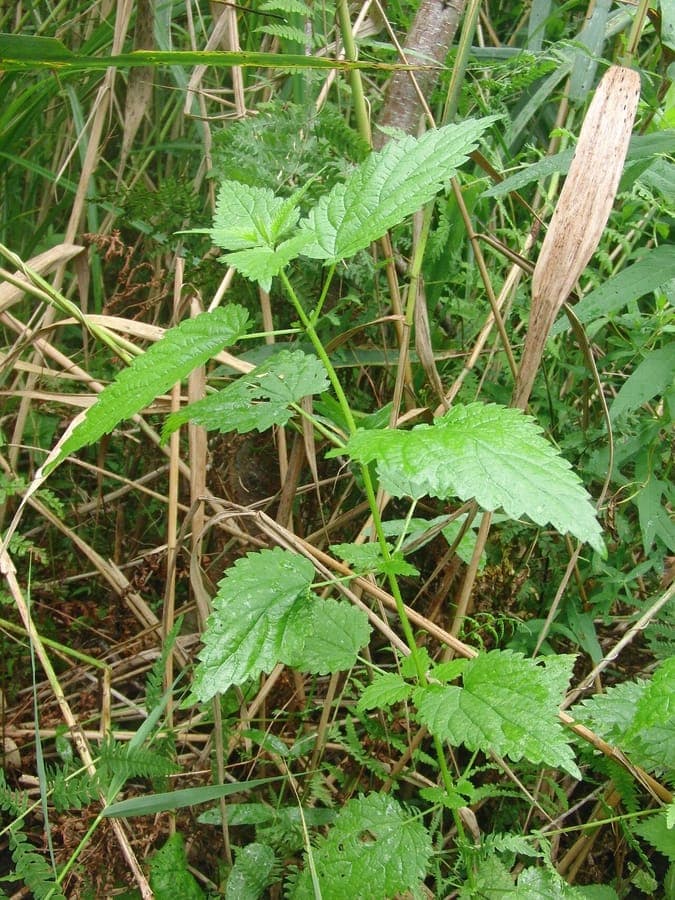
Akureyki / Public domain, via Wikimedia Commons
Kievan nettle: complete guide
Urtica kioviensis
Want to see Kievan nettle: complete guide in your garden?
1 minute, no credit card
Overview
Kievan nettle (Urtica kioviensis), also called marsh nettle, is an often misunderstood plant with impressive ecological benefits. Native to Central and Eastern Europe from Germany to Ukraine, this plant plays a crucial role in natural ecosystems. Many gardeners dismiss nettles as weeds, but this plant offers tremendous value as a host plant for butterflies and countless insects.
Appearance & bloom
Kievan nettle grows 60-100 centimeters tall with characteristic heart-shaped, coarsely serrated leaves. Stems and leaf undersides bear stinging hairs - the infamous "nettles" causing the characteristic sting. Flowers are inconspicuous, greenish-yellow, appearing June through September. These flowers provide crucial food for pollinators.
Ideal location
Kievan nettle thrives in half-shade to full sun, though it prefers damp locations. This makes it ideal for wetland areas, pond margins, or other wet garden corners. Ensure adequate moisture and avoid extremely dry sites.
Soil
This plant grows in virtually any soil but prefers moist, nutrient-rich earth. It tolerates poor conditions because it improves soil moisture content through decomposition. pH is not critical. For optimal growth, add compost for extra nourishment.
Free design
Want to see Kievan nettle: complete guide in your garden? Make a free design now.
Watering
Kievan nettle is a water lover and prefers consistently moist soil. Water regularly to keep soil wet, especially in summer. This is not drought-tolerant at all - quite the opposite. Regular moisture is essential for healthy growth.
Pruning
Pruning can be aggressive. Want to limit the plant? Cut it back regularly. Always wear gloves - those stinging hairs are no joke! In autumn, cut the plant right back to ground level. It regrows quickly in spring.
Maintenance calendar
Spring: New shoots emerge, begin watering. Summer: Regular watering, prune as needed. Autumn: Growth slows, maintain moisture. Winter: Plant may die back to rootstock.
Winter hardiness
Kievan nettle is extremely hardy, surviving temperatures to -20°C easily. It's actually a stubborn weed in cold climates due to its vigorous rootstock. Protection is unnecessary.
Companion plants
Combine with other moisture-loving plants: marsh speedwell, bugleweed, or hazel. This creates a butterfly and bee paradise. Perfect for natural wetland edges and wet garden corners.
Final thoughts
Kievan nettle isn't pretty for everyone's garden, but it offers incredible ecological value. If you have a wet corner or want to help insects, consider this plant. Protect yourself with gloves and enjoy knowing you support entire ecosystems. Learn more on gardenworld.app about ecological gardens and making your yard an insect paradise!
Want to see Kievan nettle: complete guide in your garden? Make a free design now.
Upload a photo, pick a style, and get a photorealistic design with plant list in under a minute.
No credit card required


Similar plants
False nettle (Boehmeria cylindrica): complete guide
Boehmeria cylindrica
Full guide to Boehmeria cylindrica, false nettle: origin, appearance, ideal location, soil, watering and care for this wetland perennial.
Pumpwood: complete guide
Cecropia schreberiana
Complete guide to Cecropia schreberiana: origins, appearance, care requirements and growing tips for this tropical pioneer tree.
Laportea canadensis: complete guide
Laportea canadensis
Discover Laportea canadensis (Wood-nettle), a fascinating woodland plant. Thrives in moist shaded areas. Complete growing and care guide for this unique species.