
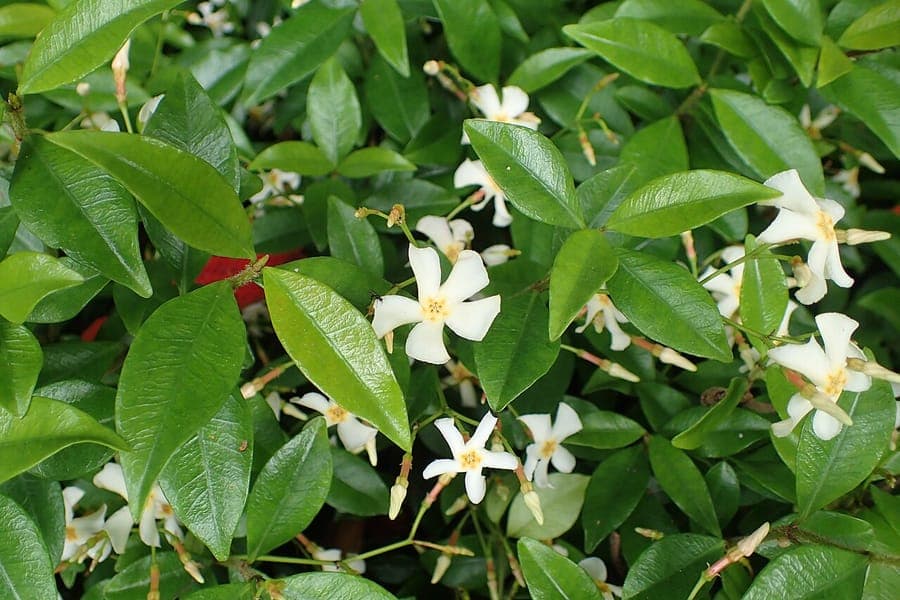
Krzysztof Ziarnek, Kenraiz / CC BY-SA 4.0, via Wikimedia Commons
Trachelospermum asiaticum: complete guide
Trachelospermum asiaticum
Want to see Trachelospermum asiaticum: complete guide in your garden?
1 minute, no credit card
Overview
Trachelospermum asiaticum, commonly known as Asiatic Jasmine or Japanese Star Jasmine, is a beautiful climbing plant from the Asian continent. This plant can climb up to 4-5 meters and forms dense, green walls of glossy foliage. The plant blooms from May to August with small, star-shaped flowers that emit a pleasant sweet aroma. Trachelospermum asiaticum is evergreen and retains its leaves year-round, making it a perfect choice for screens and privacy.
Appearance and Bloom
Asiatic Jasmine has very attractive, glossy green leaves that are small and firm. The plant grows densely and compactly, ideal for creating green screens. The leaves have a subtle, glossy finish. The flowers are small, cream-white to pale pink, appearing in clusters and emitting a pleasant sweet aroma. The blooming period extends from May to August, sometimes even to October in mild climates. Though small, the flowers are abundant and very attractive.
Ideal Location
Trachelospermum asiaticum grows best in full sun to partial shade. At least four to six hours of sunlight daily is needed. The plant also tolerates partial shade, though blooming may be lighter. This makes it ideal for tree shade or against wall sides. A south to southwest-facing growing medium is excellent. The plant is not very wind-sensitive.
Soil
The plant is not particular about soil types. It grows in well-draining, organic-rich soils. Both clay and sandy soils can function. pH between 5.5 and 7.5 is ideal. Add compost or peat when planting to increase moisture retention. Proper drainage is essential, especially in rainy periods.
Watering
Water requirements are moderate. Water regularly during the growing season, especially in dry periods. Once established, the plant is fairly drought resistant. However, regular moisture provides better growth and blooming. Water carefully in winter, only if the soil feels dry. Excessive wet feet cause root rot.
Free design
Want to see Trachelospermum asiaticum: complete guide in your garden? Make a free design now.
Pruning
Prune in early spring (March) to keep form and size in check. The plant tolerates aggressive pruning well and quickly forms new growth. Remove dead or weak branches regularly. After blooming, you can prune lightly. Using sharp scissors is essential to prevent damage.
Maintenance Calendar
January-February: Inspect for winter damage. March: Spring pruning. April-May: Growth peak, regular watering and feeding. June-August: Blooming period, ensure good watering. September-October: Reduce feeding. November-December: Minimal care, protect against extreme cold.
Winter Hardiness
Trachelospermum asiaticum is hardy down to approximately -3 to -5 degrees Celsius. In regions with mild winters (zones 8-11), it grows best. In temperate climates, plant against a south-facing wall or in protected locations. Protect in extreme winter with fleece or mulch. The plant can overwinter outdoors in warm regions.
Companion Plants
Trachelospermum asiaticum works perfectly as a solo climber but can also be combined with other climbing plants. Good companions are Clematis, Hydrangea petiolaris, and other climbers. At ground level, you can use Hedera helix or other groundcovers. This creates a full, interesting green wall.
Conclusion
Trachelospermum asiaticum is a versatile, beautiful climbing plant. With its glossy foliage and fragrant flowers, it offers beauty and utility. The plant is ideal for screens, walls, and pergolas. Once established, it requires minimal maintenance. Order your Trachelospermum asiaticum today from quality retailers and enjoy years of beauty from this magnificent climber. For more inspiration, visit gardenworld.app.
Want to see Trachelospermum asiaticum: complete guide in your garden? Make a free design now.
Upload a photo, pick a style, and get a photorealistic design with plant list in under a minute.
10,000+ gardens designed already
No credit card required


Similar plants
Asclepias speciosa: complete guide
Asclepias speciosa
Showy milkweed: striking pink-white flowers, fragrant blooms. Essential monarch butterfly host plant.
Plumeria obtusa: complete guide
Plumeria obtusa
Discover the Singapore graveyard flower: an exotic evergreen with mesmerizing white blooms and exquisite fragrance. Expert cultivation, care, and maintenance tips.
Wrightia arborea: complete guide
Wrightia arborea
Wrightia arborea, known as doodhi, is an elegant tree from South Asia with delicate white flowers. Discover how to cultivate this exotic plant.