
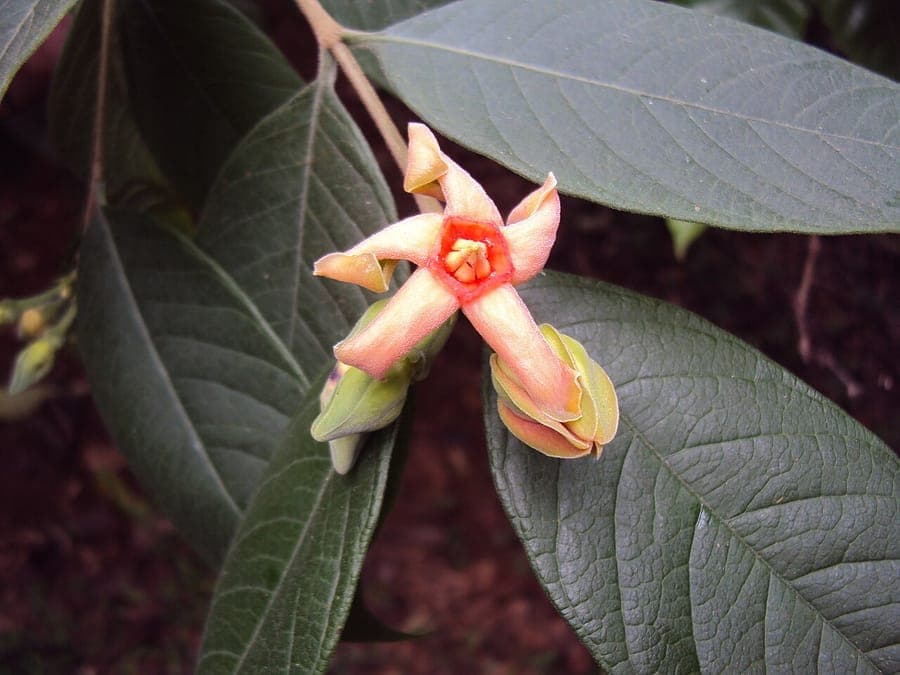
Vinayaraj / CC BY-SA 3.0, via Wikimedia Commons
Wrightia arborea: complete guide
Wrightia arborea
Want to see Wrightia arborea: complete guide in your garden?
1 minute, no credit card
Overview
Wrightia arborea, commonly called doodhi, is an elegant shrub to small tree native to South Asia. The plant naturally grows in tropical and subtropical regions of India, Myanmar, Thailand, and surrounding countries. This beautiful tree is known for its delicate white flowers and traditional medicinal uses.
Wrightia arborea belongs to the Apocynaceae family, the same family as oleanders and related plants. This is a plant that requires minimal maintenance yet provides significant visual value during the growing season.
Appearance and Bloom
Wrightia arborea is a medium-sized tree that typically grows 3 to 8 meters tall. The tree has a naturally compact growth pattern with multiple lateral branches. The leaves are elongated, lance-shaped, and dark green in color.
The flowers are small to medium, white in color, and appear in clusters during spring months. They are subtly fragrant and highly attractive to bees and butterflies. The flowers are followed by thin, elongated pods containing seeds.
This is a tree that adds a sensual garden element with its soft flowers contrasting against dark green foliage.
Ideal Location
Wrightia arborea thrives in full sun to partial light. The tree requires at least 5-6 hours of direct sunlight daily for optimal flowering. In very hot climates, light afternoon shade can improve the tree's well-being.
The tree prefers warm, sheltered locations. Strong winds can damage branches and cause flower drop. Plant the tree where it receives shelter from larger trees or structures.
In tropical and subtropical zones, it feels most at home. In more temperate climates, it can be grown in containers and moved indoors during winter.
Soil
Wrightia arborea prefers well-draining, fertile soil. A mixture of potting compost, sand, and compost is ideal. The plant tolerates a fairly wide pH range, from slightly acidic to neutral (pH 5.5-7.0).
Ensure drainage is excellent. Waterlogged soil quickly leads to root disease. If planting in heavy clay, amend it with sand and compost to improve structure.
Occasionally adding organic matter helps maintain healthy, nutrient-rich soil.
Free design
Want to see Wrightia arborea: complete guide in your garden? Make a free design now.
Watering
During the growing season, Wrightia arborea requires regular watering. Water well, but always ensure excess water can drain away. The soil should be moist but not waterlogged.
During dry periods, extra water may be necessary, especially for young trees. In winter, as growth slows, you can reduce watering. Mature, well-established trees can tolerate some drought.
Adjust watering according to weather conditions. During rainy seasons, the tree needs less water.
Pruning
Wrightia arborea responds well to moderate pruning. This encourages a fuller tree form and greater flowering output. Prune best in late winter, just before active growth begins.
Remove crossing branches, dead wood, and weak growth. This improves the overall tree structure. You can also lightly prune branch tips to encourage more branching.
Be cautious about pruning immediately after flowering, as this can result in fewer flowers the following season.
Maintenance Calendar
Spring (March-May): Begin regular watering. Perform moderate pruning if needed. Begin slow feeding.
Summer (June-August): Ensure adequate watering. Check for insect damage. Enjoy the flowers.
Fall (September-October): Gradually reduce watering. Stop feeding. Prepare for winter.
Winter (November-February): Minimal watering. No feeding. Protect from cold.
Winter Hardiness
Wrightia arborea is frost-sensitive. In zones with temperatures below 10 degrees Celsius, this tree needs protection or relocation. In Mediterranean zones, it can overwinter outdoors with protection.
In more temperate climates, this tree thrives best in containers, allowing indoor relocation during winter.
Companion Plants
Wrightia arborea pairs beautifully with other tropical or subtropical plants. Underplant it with shade-loving shrubs and groundcovers. Plants with complementary blooming periods create continuous garden interest.
On gardenworld.app, find inspiration for tropical garden design and plant combinations.
Closing
Wrightia arborea is an elegant, bird-friendly plant complement for warmer gardens. With minimal maintenance but maximum visual appeal, it remains a splendid choice for those wishing to exoticize their garden.
Want to see Wrightia arborea: complete guide in your garden? Make a free design now.
Upload a photo, pick a style, and get a photorealistic design with plant list in under a minute.
No credit card required


Similar plants
Asclepias speciosa: complete guide
Asclepias speciosa
Showy milkweed: striking pink-white flowers, fragrant blooms. Essential monarch butterfly host plant.
Plumeria obtusa: complete guide
Plumeria obtusa
Discover the Singapore graveyard flower: an exotic evergreen with mesmerizing white blooms and exquisite fragrance. Expert cultivation, care, and maintenance tips.
Beaumontia grandiflora: complete guide
Beaumontia grandiflora
Discover the Easter-lily-vine, an exotic climbing plant full of elegance. Learn how to care for this beautiful plant at home.