
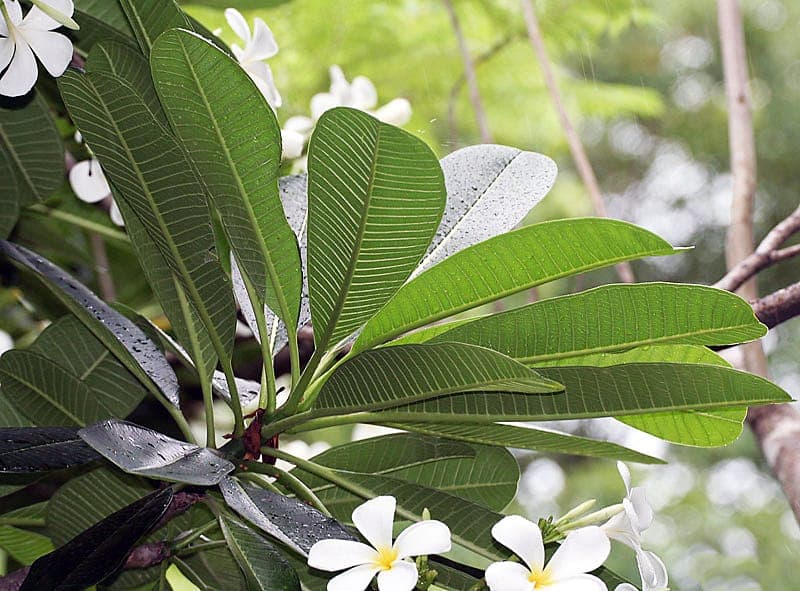
J.M.Garg / CC BY-SA 3.0, via Wikimedia Commons
Plumeria obtusa: complete guide
Plumeria obtusa
Want to see Plumeria obtusa: complete guide in your garden?
1 minute, no credit card
Overview
Plumeria obtusa, commonly known as the Singapore graveyard flower or frangipani, is a stunning evergreen tree from the Apocynaceae family. This exotic plant originates from the Caribbean region but is now cultivated in gardens worldwide. The tree is celebrated for its enchanting, strongly fragrant white flowers that bloom throughout the season. In temperate climates, this plant thrives as a container specimen indoors or in a heated greenhouse.
Plumeria obtusa distinguishes itself from other frangipani species through its compact growth habit and slender leaves. The tree reaches a height of 2 to 5 meters depending on conditions. This evergreen nature makes it a valuable element in semi-permanent indoor arrangements.
Appearance & Bloom
Plumeria obtusa grows as a compact, tree-like shrub with thin, narrow leaves. The foliage is lance-shaped, glossy green, and approximately 15 to 25 centimeters long. Leaves grow in clusters at the branch tips, creating a characteristic appearance.
The flowers are this plant's most spectacular feature. They are large, approximately 5 centimeters in diameter, and grow in panicles at the branch tips. Blooms are typically white to cream-colored, with a yellow center and often a pale pink tint. They possess an outstanding, almost sweet fragrance most pronounced in the evening. The flowering period extends from May to October, with peaks in summer and autumn.
Ideal Location
Plumeria obtusa is a light-loving plant that thrives in full sun. Provide at least 6 hours of direct sunlight daily, preferably 8 to 10 hours. In temperate regions, this is best achieved in well-placed greenhouses or conservatories.
For indoor cultivation, position near a south-facing window, ideally against the glass for maximum light exposure. During warm months, move the plant outdoors to a sheltered, sunny location.
Avoid drafty places and ensure good air circulation around the plant. In winter, as the plant enters dormancy and loses its leaves (which is normal), it requires less light, though ample bright light remains beneficial.
Soil
Excellent drainage is essential for Plumeria obtusa's healthy growth. Use high-quality potting soil based on coco coir or peat alternative, mixed with perlite or horticultural grit in a 2:1 ratio. This ensures optimal drainage while maintaining moisture retention.
A well-draining pot with drainage holes is non-negotiable. For container cultivation, recommend a minimum of 30 centimeters depth and width. Soil pH should be neutral to slightly acidic, ideally between 6.0 and 7.0.
Using well-composed potting medium keeps the plant healthy. Annual replacement of the top 5 centimeters of potting soil in spring supports sustained growth.
Free design
Want to see Plumeria obtusa: complete guide in your garden? Make a free design now.
Watering
Watering Plumeria obtusa requires care, as excessive water leads to root rot. Follow these guidelines: water when the top 2-3 centimeters of soil feel dry.
During the growing season (spring and summer), this may mean watering 2 to 3 times weekly, depending on temperature and humidity levels. Gradually reduce frequency in autumn and winter.
Never splash water on foliage, as this can lead to fungal infections. Water carefully at the plant's base. Use room-temperature water, preferably rainwater or distilled water to avoid salt accumulation.
In winter, as the plant becomes leafless, drastically reduce watering to once monthly or less, only preventing the root ball from completely drying out.
Pruning
Pruning helps Plumeria obtusa grow more compact and fuller. Perform pruning in early spring before the growing season begins. Remove dead branches with sharp, sterile pruners.
Light pruning of approximately one-third of the length encourages lateral branching and sets more flower buds. Prune just above an internal node or where two branches meet to promote natural growth.
Remove damaged, diseased, or crossing branches year-round. The plant recovers quickly from pruning and typically regrows vigorously at pruning sites.
Maintenance Calendar
January-March: Minimal watering. Plant is dormant. Monitor for pests and diseases.
April-May: Begin gentle pruning. Start moderate watering as temperatures rise. Repot if necessary.
June-September: Regular watering and feeding with potassium-rich fertilizer. Flowers bloom abundantly.
October-November: Gradually reduce watering. Plant prepares for dormancy.
December: Minimal watering; plant becomes leafless (normal).
Winter Hardiness
Plumeria obtusa is not winter hardy in temperate regions. Temperatures below 10 degrees Celsius damage the plant severely, and below 5 degrees can be fatal. In winter, maintain indoor temperatures of at least 12-15 degrees Celsius.
The plant is accustomed to tropical climates and requires warmth, humidity, and frost protection. Fortunately, it accepts dormancy gracefully and drops its leaves in response to lower temperatures - this is a natural phenomenon and not cause for concern.
Ensure good ventilation in winter quarters to prevent mold growth.
Companion Plants
Plumeria obtusa works well with other tropical specimens. Combine with airy Alocasias for leaf-form contrast. Layer palms underneath for a staggered effect. Small Begonias or fine-foliage plants at the tree's base can be attractive.
Avoid dense underplanting that impedes air circulation. Maintain at least 30 centimeters of open space around the trunk for healthy growth.
Closing Remarks
Plumeria obtusa is a distinctive plant that enhances any tropical greenhouse or conservatory. With proper attention to its specific needs - good drainage, abundant sunlight, careful watering, and warm winters - you'll enjoy its enchanting blooms and delightful fragrance for years. Start now and create your own tropical paradise indoors! Visit gardenworld.app for more plant-specific care information. Check gardenworld.app for personalized garden design tailored to your preferences.
Want to see Plumeria obtusa: complete guide in your garden? Make a free design now.
Upload a photo, pick a style, and get a photorealistic design with plant list in under a minute.
No credit card required


Similar plants
Asclepias speciosa: complete guide
Asclepias speciosa
Showy milkweed: striking pink-white flowers, fragrant blooms. Essential monarch butterfly host plant.
Wrightia arborea: complete guide
Wrightia arborea
Wrightia arborea, known as doodhi, is an elegant tree from South Asia with delicate white flowers. Discover how to cultivate this exotic plant.
Beaumontia grandiflora: complete guide
Beaumontia grandiflora
Discover the Easter-lily-vine, an exotic climbing plant full of elegance. Learn how to care for this beautiful plant at home.