
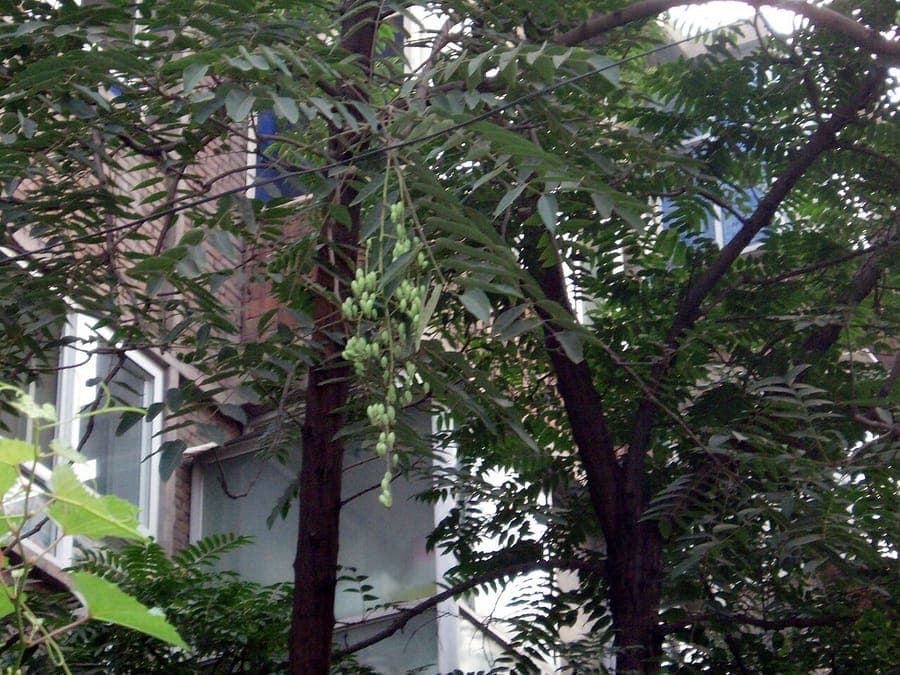
Fanghong / CC BY-SA 3.0, via Wikimedia Commons
Toona sinensis: complete guide
Toona sinensis
Want to see Toona sinensis: complete guide in your garden?
1 minute, no credit card
Overview
Toona sinensis, known as Chinese toon or red toon, is an ornamental deciduous tree from the Meliaceae family. Originally from China and India, this tree grows spectacularly in temperate climates. With its graceful, feathery compound leaves and spectacular red-orange autumn color, it is a stunning choice for larger gardens.
Appearance and bloom
Toona sinensis grows as a medium-sized tree, usually 10 to 20 meters tall in natural conditions but much smaller in temperate climates. The tree bears large, doubly compound leaves, up to 60 centimeters long, with numerous small leaflets. Summer foliage is green, transforming to magnificent red-orange in autumn.
The tree carries small, cream-white or greenish flowers in panicles, followed by brown seed capsules. Flowers are inconspicuous but attractive to pollinators.
Ideal location
Select a position with full sun to partial shade. Chinese toon grows optimally in sunny positions but tolerates partial shade. Place the tree where it has room to expand without smothering other plants.
Avoid strong wind positions; large leaves can suffer damage. A sheltered garden location or as a specimen tree in open space is ideal.
Soil
Toona sinensis prefers well-draining, moderately moist soils. A pH of 5.5 to 6.5 is suitable. The tree grows in poor soils but thrives better in moderately rich, well-drained earth. Heavy clay soils can be problematic; amend with organic matter.
A mulch layer helps retain moisture and keep roots cool during hot seasons.
Watering
Water regularly during the first growing season until the tree is well-established. Thereafter, watering can be moderated, but ensure sufficient moisture during dry periods. The tree prefers moderately moist conditions; avoid both drought and waterlogging.
Young newly planted trees require more water than established specimens. During dry summers, adjust watering to needs.
Free design
Want to see Toona sinensis: complete guide in your garden? Make a free design now.
Pruning
Minimal pruning needed; the tree forms an attractive shape naturally. Remove dead or damaged branches after winter or following damage. In spring, light pruning improves form if needed.
The tree does not require rigorous pruning. Natural growth leads to the most attractive shapes.
Maintenance calendar
May-June: Growth peak, regular watering. July-August: Summer growth continues, water as needed. September-October: Spectacular autumn color transformation, no watering needed. November-March: Winter rest, no supplemental watering. April: Dead branch removal, preparation for new season.
Winter hardiness
Toona sinensis is moderately winter-hardy. In Netherlands and Belgium, it can grow in milder-winter climates, but severe winters may require protection, especially young trees. The tree is not suited for all Dutch zones; in Groningen or North Friesland it may struggle.
In warmer winter zones (such as Limburg and South Holland), it thrives well.
Companion plants
Pair with other ornamental foliage trees such as Acer, Fraxinus, or Ginkgo for layered autumn colors. Underplanting with shade-tolerant species such as Hedera (ivy) or Asarum works well. Ensure adequate spacing for root development.
Closing thoughts
Toona sinensis offers gardeners a spectacular tree with attractive summer foliage and sensational autumn color. Perfect for larger gardens where the tree can reach full development. A genuine jewel in temperate gardens.
Stocks available at major garden retailers. Enjoy growing with gardenworld.app!
Want to see Toona sinensis: complete guide in your garden? Make a free design now.
Upload a photo, pick a style, and get a photorealistic design with plant list in under a minute.
No credit card required


Similar plants
Muskwood: complete guide
Guarea guidonia
Everything about muskwood (Guarea guidonia): tropical origins, appearance, cultivation in conservatories and warm gardens, care and companions.
Trichilia dregeana: complete guide
Trichilia dregeana
Trichilia dregeana is an African tree with beautiful foliage and striking flowers. Learn how to care for this exotic plant in your garden.
Swietenia macrophylla: complete guide
Swietenia macrophylla
Discover Honduran mahogany - a tropical timber tree with architectural beauty. Growing requirements, care guide and sustainability for warm climates.