
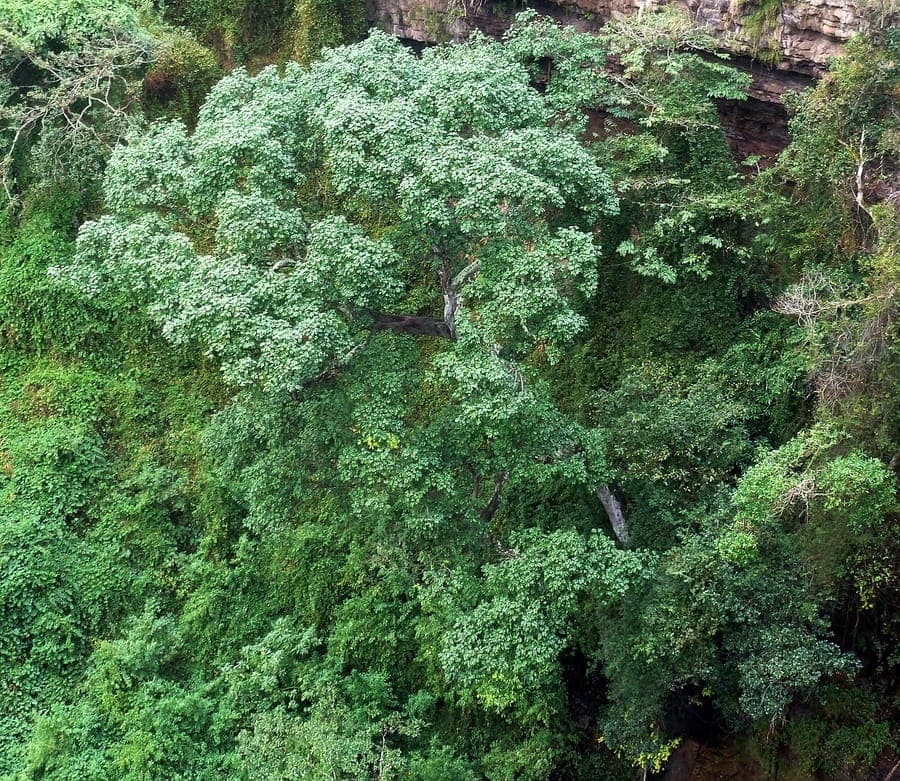
JMK / CC BY-SA 3.0, via Wikimedia Commons
Trichilia dregeana: complete guide
Trichilia dregeana
Want to see Trichilia dregeana: complete guide in your garden?
1 minute, no credit card
Overview
Trichilia dregeana, commonly known as Christmas-bells, Cape-mahogany or Bosrooi-essenhout in Afrikaans, is a beautiful tree from the Meliaceae family. This impressive tree originates from tropical and subtropical Africa, where it grows in forests and forest margins from Angola to Zimbabwe.
The tree is particularly valuable for its combination of features: elegant foliage, interesting flowers, attractive fruits and a noble, upright growth habit. In subtropical climates, it can become an impressive focal point for larger gardens.
Appearance and bloom
Trichilia dregeana grows into a slender, upright tree of 5 to 15 meters tall in its homeland, though in smaller climates it can remain more modest. The trunk has smooth, grayish-brown bark. The crown is broad and open with elegant, spreading branches.
The foliage is the highlight of this tree. The leaves are compound, pinnate (feather-like), 30-60 cm long, consisting of numerous small, glossy green leaflets. The foliage creates a light, elegant impression and makes soft rustling sounds in the wind.
Flowers appear in season and grow in elongated clusters. They are small, cream-colored to yellowish, very fragrant. The flowers attract many insects, especially bees.
After flowering, the tree produces impressive fruits: small, reddish to orange seed pods that burst open to reveal beautiful orange-red seeds.
Ideal location
Trichilia dregeana needs sunlight for optimal growth and flowering. Plant it in a location with full sun, especially for warmer climates. The plant can also grow in light shade but will be less vigorous.
In subtropical areas, some protection from extremely strong midday heat can be beneficial. In more temperate climates, full sun is essential.
Soil
Trichilia dregeana grows in many soil types, but prefers fertile, well-drained, deeply loose soils. The plant tolerates both acidic and neutral-alkaline soils.
Amend the planting hole well with plenty of compost and leaf mold. The plant benefits from nutrient-rich soil in young years.
Free design
Want to see Trichilia dregeana: complete guide in your garden? Make a free design now.
Watering
Once planted, Trichilia dregeana requires regular watering, especially during the growing season. Ensure the soil stays consistently moist but not waterlogged.
Once well-established, the tree can tolerate drought reasonably well. In extremely dry periods, extra watering may be needed, especially for young trees.
Pruning
Trichilia dregeana responds well to pruning for shaping. Pruning can be done after flowering. Remove dead or crossing branches and thin out where needed.
In young years, some pruning can help build a more attractive, balanced crown.
Maintenance calendar
Winter (November-February): Minimal watering in cold areas. Plant may become semi-dormant.
Spring (March-May): Begin regular watering once growth starts. Add compost. Enjoy flowering.
Summer (June-August): Water regularly. Watch for pests. Impressive fruit development.
Fall (September-October): Continue regular watering. Seeds disperse. Begin reducing watering in November.
Winter hardiness
Trichilia dregeana is frost-sensitive and grows better in warmer subtropical climates. In temperate climates it will only thrive in very protected locations or in containers that can be brought indoors in winter.
The tree tolerates frost spikes to about -5 to -8C but sustained frost will cause permanent damage.
Companion plants
Trichilia dregeana combines beautifully with other African or subtropical plants. Plant it with other foliage-attractive trees or in mixed forest-edge-like plantings.
Beneath the tree, shade-tolerant underplanting such as large ferns or layered shrubs can grow.
Closing thoughts
Trichilia dregeana is an exotic choice for gardens in warmer regions. With its beautiful foliage, aromatic flowers and interesting fruits, it deserves a place in any subtropical garden plan. For temperate climates, it can be used as a container tree. Plant it now and create a piece of Africa in your own garden. More information at gardenworld.app.
Want to see Trichilia dregeana: complete guide in your garden? Make a free design now.
Upload a photo, pick a style, and get a photorealistic design with plant list in under a minute.
No credit card required


Similar plants
Muskwood: complete guide
Guarea guidonia
Everything about muskwood (Guarea guidonia): tropical origins, appearance, cultivation in conservatories and warm gardens, care and companions.
Swietenia macrophylla: complete guide
Swietenia macrophylla
Discover Honduran mahogany - a tropical timber tree with architectural beauty. Growing requirements, care guide and sustainability for warm climates.
Toona sinensis: complete guide
Toona sinensis
Chinese toon (Toona sinensis) is an ornamental tree with spectacular red autumn foliage. Practical guide for cultivation and care.