
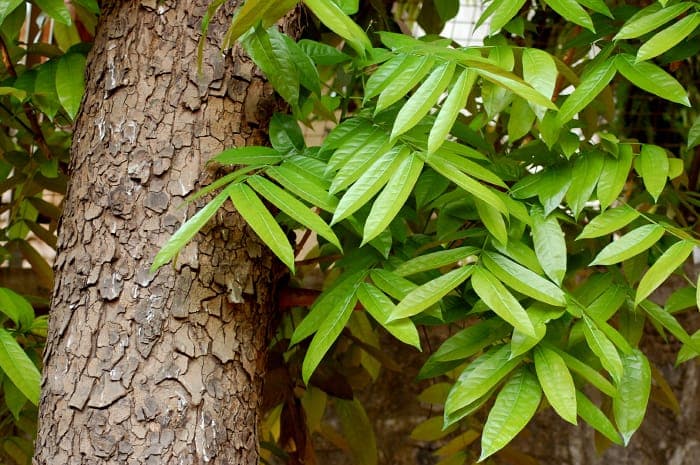
jayeshpatil912 / CC BY 2.0, via Wikimedia Commons
Swietenia macrophylla: complete guide
Swietenia macrophylla
Want to see Swietenia macrophylla: complete guide in your garden?
1 minute, no credit card
Overview
Swietenia macrophylla, commonly known as Honduran mahogany or big-leaf mahogany, is an impressive tropical tree native to Central America and the Amazon basin. This tree can reach 50 metres in height and is renowned for its valuable reddish-brown heartwood, prized for centuries by artisans and furniture makers worldwide.
Originally distributed from Mexico to Bolivia, Honduran mahogany has naturalized in warm climates globally. While primarily grown as a timber tree, any gardener appreciates its impressive growth rate, broad spreading crown and distinctive architectural form.
For gardenworld.app users in tropical and subtropical zones, Swietenia macrophylla offers a magnificent shade tree that will provide shelter and beauty for generations.
Appearance and Bloom
Honduran mahogany is immediately recognizable by its large pinnate leaves, which reach 30-50 centimetres in length. Each leaf is compound, with 5-10 pairs of smaller leaflets arranged along a central rib. Foliage is deep green, imparting a tropical atmosphere.
The tree grows as a single trunk with a broad, spreading crown. Bark is grey-brown, deeply furrowed and highly characteristic. Flowers are small, greenish-yellow and inconspicuous, appearing in spring months. Following bloom, wooden seed capsules develop, measuring 4-6 centimetres.
Growth rate is moderate to fast, potentially reaching 1-2 metres per year in young years under ideal conditions.
Ideal Location
Honduran mahogany grows best in full sun in warm, dry to semi-humid tropical regions. The tree thrives in USDA zones 10b to 11 (minimum 4 degrees Celsius). In cooler zones, greenhouse cultivation is the only option.
This tree requires ample space, as it becomes very large. Allow at least 10-15 metres distance from structures and other trees. Strategic positioning provides shade for south-facing exposures and wind protection.
Soil
Honduran mahogany prefers well-drained, deeply fertile soil. Once established, the tree tolerates drought, but thrives in deep, loose soil allowing root penetration. A soil pH of 4.0 to 7.5 is acceptable. Poor soils benefit from compost or organic matter at planting time. Heavy clay requires substantial amendment with sand and compost for adequate drainage.
Free design
Want to see Swietenia macrophylla: complete guide in your garden? Make a free design now.
Watering
Swietenia macrophylla requires regular watering, especially during the first 2-3 growing years and during dry seasons. Ensure soil is moist but never waterlogged. Deep watering to the root zone is preferable to frequent shallow watering.
Once established (after 3-4 years), this tree is very drought-tolerant and requires minimal supplemental water. In tropical regions with regular rainfall, no irrigation is necessary.
Pruning
Honduran mahogany requires minimal pruning once a strong central trunk has formed. Remove weak, damaged or crossing branches. Formal pruning is unnecessary and may damage the tree's natural form.
In young years, selective pruning helps establish a single, strong leader. This should be done carefully to avoid removing excessive energy from the developing tree.
Maintenance Calendar
Years 1-3: Regular watering, moderate pruning to prevent crooked growth. Years 4+: Minimal maintenance; emergency pruning only. Spring: Check for pest damage. Summer: Water during dry spells. Autumn-Winter: Observe growth patterns.
Winter Hardiness
Honduran mahogany is not cold-hardy. Temperatures below 4 degrees Celsius are harmful or fatal. This tree is suitable only for tropical and subtropical zones (USDA zones 10b-11). Greenhouse cultivation is necessary in cooler regions.
Companion Plants
In tropical landscapes, Honduran mahogany pairs well with other large trees such as Cedrela, Tabebuia and Ficus species. Understory planting with shade-tolerant plants like ferns, Anthurium and bergenia works well.
In park-like settings, the tree provides solid structure and shade for underplanting.
Closing
Swietenia macrophylla is an impressive choice for those in warm climates seeking a long-lived tree offering shelter, shade and aesthetic value. Though primarily grown as timber, its architectural form and impressive stature have ornamental value in any tropical front garden on gardenworld.app.
Provide deep, moist soil and full sun. Propagate from seed or young nursery trees. For sustainability, ensure timber sources are from responsibly managed forests.
Want to see Swietenia macrophylla: complete guide in your garden? Make a free design now.
Upload a photo, pick a style, and get a photorealistic design with plant list in under a minute.
10,000+ gardens designed already
No credit card required


Similar plants
Muskwood: complete guide
Guarea guidonia
Everything about muskwood (Guarea guidonia): tropical origins, appearance, cultivation in conservatories and warm gardens, care and companions.
Trichilia dregeana: complete guide
Trichilia dregeana
Trichilia dregeana is an African tree with beautiful foliage and striking flowers. Learn how to care for this exotic plant in your garden.
Toona sinensis: complete guide
Toona sinensis
Chinese toon (Toona sinensis) is an ornamental tree with spectacular red autumn foliage. Practical guide for cultivation and care.