
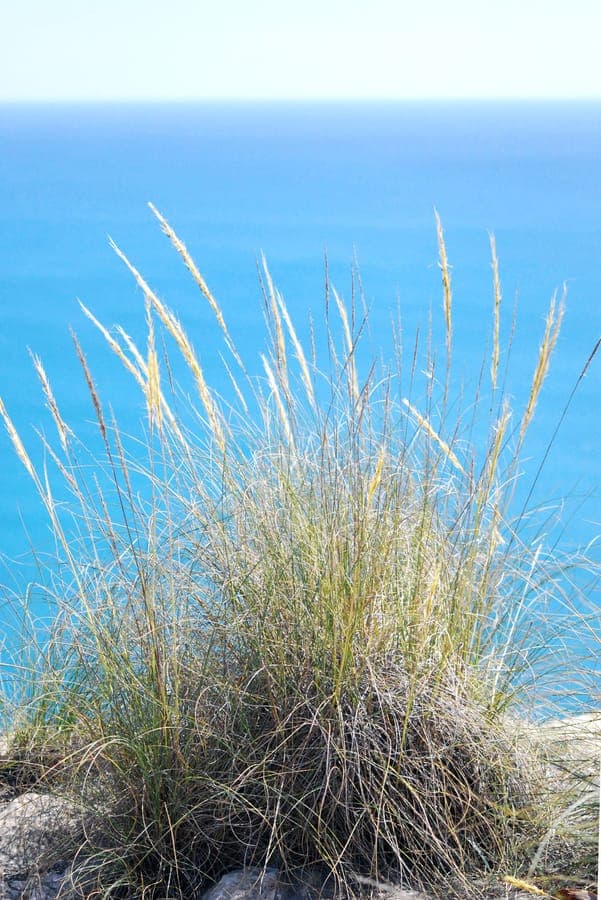
Arturo González / CC BY-SA 4.0, via Wikimedia Commons
Esparto (Alfa Grass): complete guide
Stipa tenacissima
Want to see Esparto (Alfa Grass): complete guide in your garden?
1 minute, no credit card
Overview
Esparto (Stipa tenacissima), also known as halfa or alfa grass, is a characteristic grass species from the Mediterranean region, particularly North Africa and southeastern Spain. This sturdy, architectural grass was historically used for rope, paper and craft production. In modern gardens, esparto is valued for structure, drought-tolerance and golden-brown autumn colour. The plant forms dense, elegant tufts reaching 60-90 cm high.
Appearance & bloom cycle
Esparto grows as a dense, tufted grass with stiff, wire-like foliage. The plant reaches 60-90 cm height and spreads evenly. May-June brings slender flower stems with silvery-white flower plumes, approximately 30 cm above the foliage. The flower plumes retain shape and colour remarkably long – remaining ornamental deep into winter and usable for dried arrangements.
Ideal location
Esparto thrives in full sun – at least 6-8 hours direct daily sunlight. Position in dry, well-drained locations; the plant cannot tolerate waterlogging. Wind is not a problem; rather, wind supports natural form. Locations along gravel paths, in gravelpits, or between paving are ideal. Esparto excels in water-wise gardens.
Soil requirements
Esparto makes minimal soil demands. Poor, dry, sandy or stony soils are actually ideal – the plant grows better there than in rich soil. pH 7.5-8 (slightly alkaline) is optimal. Only one requirement: ensure excellent drainage. In wet, clay soils the rootball rots. No compost needed; standard garden soil suffices.
Watering
Once established, esparto needs minimal water. The plant is very drought-tolerant and survives months without rain. Only in the first growing season (March-June) give occasional water to encourage establishment. Afterwards no watering needed – rainfall sustains the plant. Excessive water is actually harmful – avoid summer irrigation.
Free design
Want to see Esparto (Alfa Grass): complete guide in your garden? Make a free design now.
Pruning
Esparto requires minimal pruning. Remove only dead leaves/stems in March before new growth. Leave dead flower stems through February/March – they provide bird-food and create beautiful structure with living plant material. Comb out dead material from garden in spring. Otherwise no pruning needed – esparto naturally maintains neat form.
Maintenance calendar
Spring (March-May): Plant young esparto between March and May. Water well the first week after planting; afterwards minimally. Early March, clear last year's plants of dead material.
Summer (June-September): Esparto is practically maintenance-free. Flowering peaks June-July. Don't water unless extreme drought. Enjoy the blooms.
Autumn (October-November): Plant develops golden-brown colour. Flower plumes remain ornamental. Perfect time for photography. Still no water needed.
Winter (December-February): Rake and compost dead leaves/stems from February onwards. Protect plant from wind if needed – esparto tolerates wind well, but severe storms can break stems.
Winter hardiness
Esparto is winter-hardy to approximately USDA zone 7 (-12 to -18°C). In most of the Netherlands (zones 8-9) it grows without problem outdoors. Only in very cold areas can winter protection be useful. Better drainage in winter is preferred to extra protection.
Companion plants
Esparto fits perfectly in dry, Mediterranean gardens. Combine with other drought-lovers: lavender, sage, rosemary, agapanthus, grey-foliaged plants (Artemisia). It also provides beautiful background structure for spring bloomers (tulips, daffodils). Esparto works structure in gravel gardens, providing spatial division and movement.
Closing
Esparto brings Mediterranean ruggedness and water-saving value to any garden. The plant truly demands nothing – plant it and forget about it afterwards. Perfect for gardeners with limited water access or in dry climates. For dry garden design inspiration visit gardenworld.app. Esparto grows more beautiful year after year – it's an investment in lasting structure and elegance!
Want to see Esparto (Alfa Grass): complete guide in your garden? Make a free design now.
Upload a photo, pick a style, and get a photorealistic design with plant list in under a minute.
No credit card required


Similar plants
Sporobolus pungens: complete guide
Sporobolus pungens
Sporobolus pungens is a stoloniferous Mediterranean coastal grass with outstanding salt and drought tolerance, perfect for seaside and dry gardens.
Mediterranean aegilops: complete guide
Aegilops biuncialis
Everything about Aegilops biuncialis, a Mediterranean annual grass with ornamental spikes and outstanding drought tolerance for dry gardens.
Silver bluestem: complete guide
Bothriochloa saccharoides
Full guide to Bothriochloa saccharoides (silver bluestem): site, soil, watering, winter hardiness, pruning, and garden companions.