
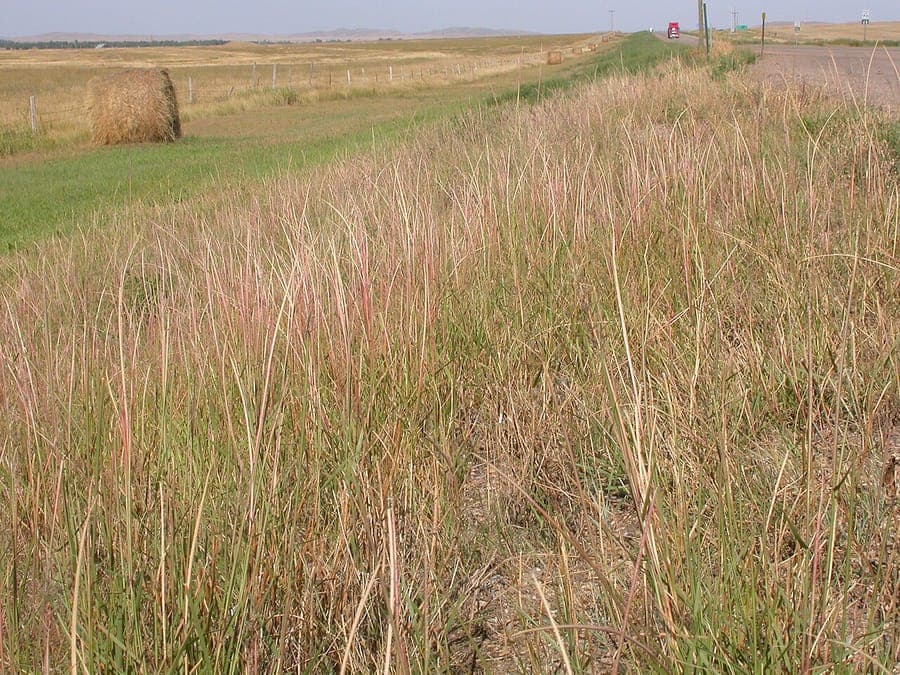
Matt Lavin / CC BY-SA 2.0, via Wikimedia Commons
Sand dropseed: complete guide to Sporobolus cryptandrus
Sporobolus cryptandrus
Want to see Sand dropseed: complete guide to Sporobolus cryptandrus in your garden?
1 minute, no credit card
Overview
Sporobolus cryptandrus, widely known as sand dropseed, is a warm-season grass native to North America, growing from southern Canada (Alberta, Saskatchewan, Manitoba, British Columbia) through virtually every US state down to northern Mexico. Described by the botanist A. Gray in 1848, its species name means 'hidden stamens' in Greek, referring to the small flowers that conceal their reproductive parts deep within the glumes.
In its native prairie and desert grassland habitats, sand dropseed occupies the driest, sandiest soils where more demanding grasses cannot compete. It is a key component of dry prairie plant communities across the Great Plains, providing erosion control, forage for wildlife, and seed for birds through winter. Its naturally spare, fine-textured appearance and extreme drought tolerance have made it increasingly sought after in contemporary garden design as interest in low-maintenance, ecologically informed planting grows.
In Europe it has naturalised as an introduced species in Germany, Austria, France, Spain and Italy, typically along railways or on disturbed sandy ground. As a garden subject it remains underused outside specialist circles, but that is changing as dry summers become more frequent. Gardenworld.app helps you design borders and planting plans that work with the climate rather than against it.
Appearance and growth cycle
Sand dropseed grows as a dense, clump-forming bunch grass, meaning it expands as a tight tuft from its crown rather than spreading via runners. Individual leaf blades are 20 to 40 cm long, narrow, and light to mid-green. Foliage texture is distinctly fine, with a slight roughness to the leaf surface.
As a C4 warm-season grass, it stays low and relatively quiet until the soil warms in late spring (May to June in Central European gardens), then puts on rapid growth. The flowering panicles are the great ornamental feature: open, airy structures 20 to 40 cm long containing hundreds of tiny spikelets that shift through lilac-silver to bronze-beige as they ripen through summer and into autumn. In a breeze these panicles shimmer with a gentle, continuous motion that few grasses can match.
Autumn brings a warm colour change to yellow and orange-beige before the plant enters winter dormancy. The standing dried panicles and persistent stems provide textural interest through winter and serve as a seed source for birds, particularly finches. Plant height including panicles typically reaches 60 to 90 cm; established clumps spread to 30 to 50 cm wide.
Ideal location
Full sun is non-negotiable. Sand dropseed evolved in open grasslands with no overhead canopy, and in garden conditions it needs at least six hours of direct sun daily for good flowering and dense, upright growth. In partial shade the plant grows more loosely and produces fewer panicles.
It handles exposed, windy sites well: the fine foliage and panicles bend in the wind without breaking, creating that signature undulating movement. Open, south- or west-facing borders, gravel gardens, raised beds and sunny rockeries are all well suited. Against a warm wall it will put on excellent growth even in regions where summers are cooler than ideal.
This grass is equally at home in naturalistic and more designed settings. Planted in drifts of three to five specimens in a prairie-style border it makes a strong impact; used singly as a textural accent in a gravel garden it provides a year-round focal point.
Soil requirements
Sand dropseed is one of the few ornamental grasses that actively prefers poor, sandy, well-drained soil. In its native habitat it thrives on the most nutrient-depleted, droughty substrates in the landscape. Soil pH tolerance is broad, from 6.6 to 8, making it suitable for both slightly acidic and moderately alkaline conditions.
In a fertile, nitrogen-rich garden border the plant grows but becomes lax, prone to flopping, and less structurally appealing. Do not add extra compost or fertiliser at planting or afterward. The ideal approach: choose your leanest, best-drained spot, remove existing turf, plant directly into the native soil (amended with grit if it is heavy clay), and apply a gravel mulch 3 to 5 cm deep around each plant.
Clay soils can be made workable for this grass if drainage is improved. On heavy clay, winter waterlogging is the main risk: water sitting against the crown for weeks can cause rot. Raised beds or mounded planting positions help significantly.
Free design
Want to see Sand dropseed: complete guide to Sporobolus cryptandrus in your garden? Make a free design now.
Watering
Once established, sand dropseed is exceptionally drought-tolerant. Established plants in average European summers need no supplemental irrigation, even during extended dry spells. This is one of its key selling points in an era of increasingly dry summers.
In the first growing season after planting, water weekly to help roots establish, allowing the soil to dry completely between sessions. From year two onward, rely on rainfall. If a summer drought exceeds six weeks with temperatures above 30 degrees Celsius, a single deep watering may be beneficial to prevent the plant entering full dormancy.
During extreme heat (above 35 degrees Celsius) leaves may roll inward slightly as a moisture-conservation mechanism. This is normal and the plant recovers quickly when conditions ease. Winter watering is unnecessary: the plant is dormant and its roots require no supplemental moisture.
Pruning
Sand dropseed is a warm-season grass and follows a cut-back-in-late-winter schedule. In February to March, before new growth begins, cut the entire clump back to 10 to 15 cm above ground level. A sharp pair of hedge shears or hand secateurs works well for smaller clumps; for larger established polles, loppers or even a cordless hedge trimmer make the job fast.
Do not cut back in autumn: the dried panicles are beautiful through winter, providing seed for birds and shelter for overwintering insects. Leave all top growth standing from October to late February. This is both ecologically sound and practically sensible, as the dead growth protects the crown from the worst frost.
Young plants in their first year do not need cutting back at all.
Maintenance calendar
January to February: Full dormancy. Panicles stand and provide bird food and insect shelter. No watering or feeding needed.
Late February to March: Cut back to 10 to 15 cm before growth resumes. Remove dead material from around the base of each clump.
April to May: Slow to emerge - do not panic. Warm-season grasses start late. First shoots appear when soil is consistently warm.
June to August: Peak growth and flowering. Panicles open from June to July; watch the shimmer effect in breezes. No watering needed for established plants except in prolonged extreme drought.
September to October: Autumn colour (yellow to orange-beige). Allow panicles to remain for winter effect and wildlife value.
November to December: Full dormancy. No maintenance required. Visit gardenworld.app to explore design ideas for prairie-style and dry borders where sand dropseed can take centre stage alongside complementary species.
Winter hardiness
Sporobolus cryptandrus is fully hardy across its broad native range from USDA zone 3 (Canada) to zone 9 (southern USA), tolerating winter lows far below -20 degrees Celsius. In the UK, Belgium and the Netherlands (USDA zones 7 to 8), it is completely hardy with no protection required.
The sole winter risk in European conditions is not cold but prolonged wetness: heavy clay soil that holds water around the crown through winter can cause crown rot. Good drainage is the single most important factor in keeping this grass healthy through our wetter winters.
Companion plants
Sand dropseed pairs naturally with other prairie natives and drought-tolerant perennials:
- Echinacea purpurea (purple coneflower): classic prairie combination, pink-purple flowers against fine panicles.
- Liatris spicata (blazing star): purple August bloom, same native range, same lean-soil preference.
- Agastache foeniculum (anise hyssop): long-flowering, drought-tolerant, magnetically attractive to bees and butterflies.
- Rudbeckia fulgida (orange coneflower): golden autumn flowers complement the ripening beige panicles beautifully.
- Achillea millefolium (common yarrow): low, spreading filler between larger clumps.
- Ratibida pinnata (yellow coneflower): airy yellow flowers at the same height, same ecological guild.
Avoid moisture-demanding companions such as hostas, astilbes or Japanese iris: their water needs are incompatible with sand dropseed's preference for lean, dry conditions.
Closing thoughts
Sporobolus cryptandrus is a grass for gardeners who want beauty without constant maintenance. Its extraordinary drought tolerance, fine-textured panicles that move in the lightest breeze, and year-round structural presence make it one of the more rewarding ornamental grasses for dry, sunny positions. Look for it at specialist grass nurseries or garden centres with a good perennial section; seed is also available from online native plant suppliers. Use gardenworld.app to plan the drought-resilient border where this North American native can finally show what it is capable of.
Want to see Sand dropseed: complete guide to Sporobolus cryptandrus in your garden? Make a free design now.
Upload a photo, pick a style, and get a photorealistic design with plant list in under a minute.
10,000+ gardens designed already
No credit card required


Similar plants
Sporobolus pungens: complete guide
Sporobolus pungens
Sporobolus pungens is a stoloniferous Mediterranean coastal grass with outstanding salt and drought tolerance, perfect for seaside and dry gardens.
Mediterranean aegilops: complete guide
Aegilops biuncialis
Everything about Aegilops biuncialis, a Mediterranean annual grass with ornamental spikes and outstanding drought tolerance for dry gardens.
Silver bluestem: complete guide
Bothriochloa saccharoides
Full guide to Bothriochloa saccharoides (silver bluestem): site, soil, watering, winter hardiness, pruning, and garden companions.