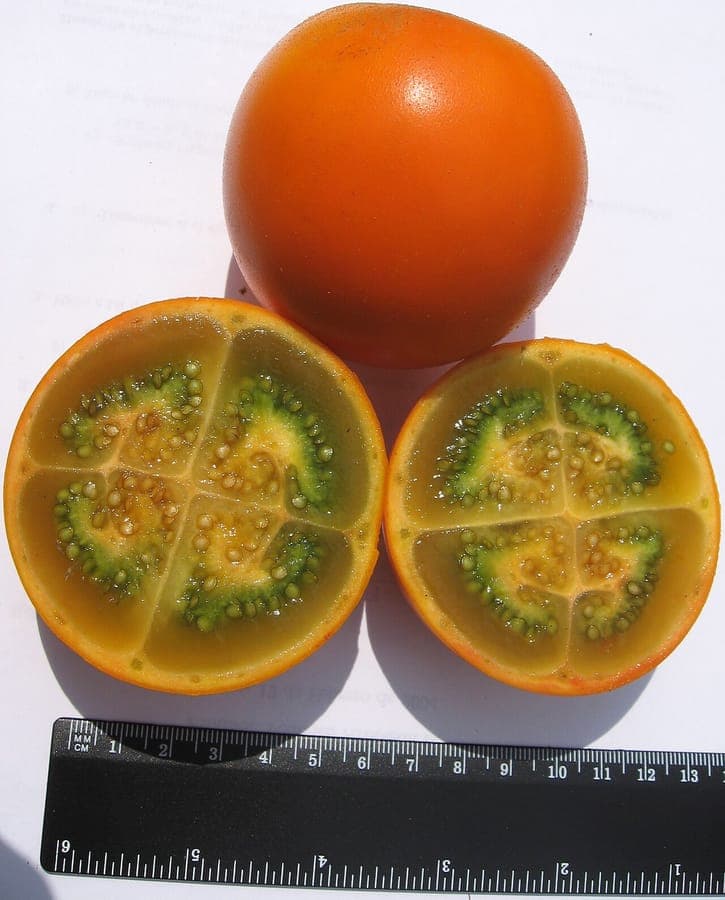
Picture taken by Fibonacci. / CC BY-SA 3.0, via Wikimedia Commons
Naranjilla (Lulo): complete guide
Solanum quitoense
Want to see Naranjilla (Lulo): complete guide in your garden?
Full design in HD: €7.99
Look after your Naranjilla with the GardenWorld app
Identify plants with your camera and get a care calendar with reminders for this plant.


Overview
The naranjilla or lulo (Solanum quitoense), native to mountain regions from Costa Rica through Venezuela and Peru, is a remarkable highland fruit shrub. The name 'naranjilla' literally means 'little orange' in Spanish, though the flavour resembles raspberry and pineapple with bright acidity. The plant produces distinctive orange-red, hairy fruits approximately the size of a cherry tomato.
Appearance & bloom cycle
Naranjilla grows as a semi-woody shrub, reaching 150-250 cm tall. The plant bears purple or white flowers (approximately 2-3 cm across) appearing May-July. Fruits mature 120-150 days after flowering and develop an orange-red hue. They're covered with soft hairs and contain characteristic chambers filled with numerous seeds. Foliage is large, oval and hairy.
Ideal location
Naranjilla thrives at elevation (600-2400 m in its native mountains) in cool mountain climate. In temperate regions, position in the coolest greenhouse section, not the warmest corner. 18-22°C is ideal; temperatures above 28°C reduce fruit-set. The plant appreciates humidity (60-70% atmospheric moisture) without waterlogging. Ensure good ventilation.
Soil requirements
Naranjilla demands fertile, acidic soil with pH 5.5-6.5. Incorporate plenty of organic material at planting – compost, leaf mould, peat. Soil must drain well yet remain consistently moist. In containers (40+ litres): blend peat, perlite and compost. Regular potassium application enhances fruit quality.
Watering
Naranjilla requires consistently moist soil, especially during growth and fruit-set. Water regularly but prevent waterlogging. Provide excellent drainage. The plant responds poorly to drought – dry periods halt fruiting. In containers: check moisture 2-3 times weekly. Naranjilla prefers cool water – even tap water is acceptable.
Free preview
Want to see Naranjilla (Lulo): complete guide in your garden? Make a free preview of your design.
Pruning
Naranjilla grows bushy and can become quite dense. Early spring pruning: remove congestion, dead wood and excess growth. Cut the plant to 60 cm in the first season for better structure. Prune lateral branches to 30-40 cm for improved form. Remove fruits below 20 cm height to concentrate energy upward.
Maintenance calendar
Spring (March-May): Plant in prepared warm greenhouse. Water very regularly; growth accelerates. Begin feeding April (weekly half-strength). Maintain high humidity – mist daily.
Summer (June-September): Flowering and fruiting intensify. Water very regularly – drought is now critical. Feed monthly (full strength). Harvest begins July/August. Ensure good ventilation against fungal diseases.
Autumn (October-November): Harvest peaks. Water still regularly but reduce feeding. Allow plant to establish for winter rest. Provide 14-16 hours daily light.
Winter (December-February): Naranjilla enters dormant rest. Minimize watering – only keep surface moist. Temperature can drop to 12-15°C. No feeding.
Winter hardiness
Naranjilla is not frost-hardy outdoors in temperate zones. Plants die below 8°C. However, you can preserve them: cut back to 50 cm in October, lower temperature to 12-15°C, minimize water. Plants can dormancy 3-4 months and reactivate in March.
Companion plants
Naranjilla fits well in a greenhouse highland-fruit corner with other mountain crops: passion fruit, small guava cultivars. Don't combine with intense heat-lovers like papaya. Grow alongside moisture-loving plants (fuchsia, impatiens) in the same greenhouse section to share humidity.
Closing
Naranjilla brings authentic highland fruit experience to your greenhouse. The intensely sweet-tart flavour is truly addictive and unavailable commercially. The plant demands more attention than pepino, but rewards with abundant harvests. For greenhouse design inspiration visit gardenworld.app. Within 2-3 seasons dedicated growers establish reliable naranjilla systems – and harvests justify every moment of care!
Frequently asked questions about Naranjilla
Is Naranjilla winter hardy?
Naranjilla is not frost-hardy outdoors in temperate zones. Plants die below 8°C.
When and how do you prune Naranjilla?
Naranjilla grows bushy and can become quite dense. Early spring pruning: remove congestion, dead wood and excess growth.
How much water does Naranjilla need?
Naranjilla requires consistently moist soil, especially during growth and fruit-set. Water regularly but prevent waterlogging.
Where does Naranjilla grow best?
Naranjilla thrives at elevation (600-2400 m in its native mountains) in cool mountain climate. In temperate regions, position in the coolest greenhouse section, not the warmest corner. 18-22°C is ideal; temperatures above 28°C reduce fruit-set.
What soil does Naranjilla need?
Naranjilla demands fertile, acidic soil with pH 5.5-6.5. Incorporate plenty of organic material at planting – compost, leaf mould, peat.

See it in your garden
See Naranjilla in your garden
One photo of your garden and a few questions. You see the result in about a minute.
Try it with a photoIdentify this plant in your own garden. Identify a plant
Similar plants
Petunia (Petunia × atkinsiana): complete guide
Petunia × atkinsiana
Everything about garden petunias (Petunia × atkinsiana): sowing, position, compost, watering, feeding and pruning for containers in bloom until autumn.
Chinese lantern: complete guide
Physalis alkekengi
Everything about the Chinese lantern (Physalis alkekengi): position, drying the orange lanterns, keeping its spread in check, toxicity and winter hardiness.
Solanum dolichosepalum: complete guide
Solanum dolichosepalum
Discover Solanum dolichosepalum, an Andean nightshade with striking long sepals. Growing tips, hardiness, and companion planting for your patio.
