
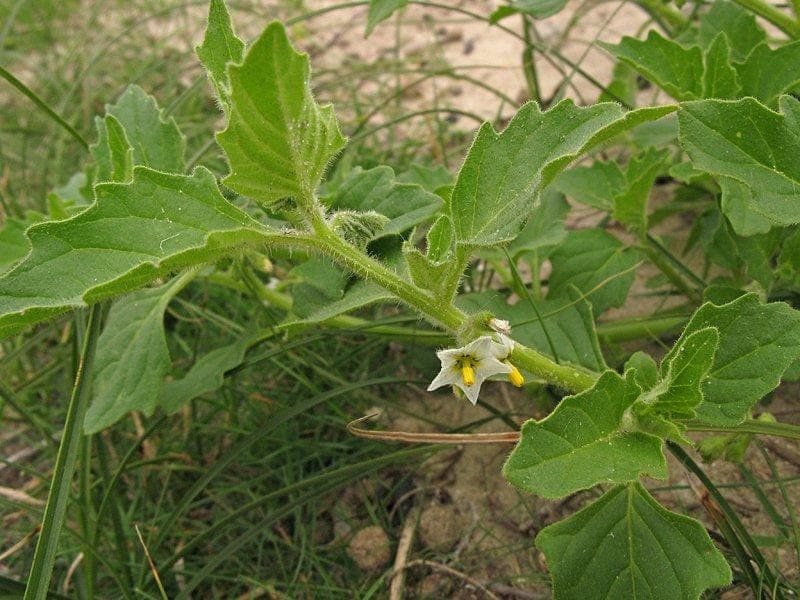
Quentin Groom / CC BY-SA 3.0, via Wikimedia Commons
Solanum nitidibaccatum: complete guide
Solanum nitidibaccatum
Want to see Solanum nitidibaccatum: complete guide in your garden?
1 minute, no credit card
Overview
Solanum nitidibaccatum, commonly known as glossy nightshade or hairy nightshade, is an intriguing plant belonging to the Solanaceae family. This South American species distinguishes itself through glossy fruits and distinctive growth habit. Although not commonly found in temperate gardens, this plant deserves attention from gardeners seeking experimental crops.
Appearance and Bloom
The glossy nightshade grows as an herb or small shrub with slender, delicate stems. Leaves are elongated with wavy margins. The plant produces small white to pink flowers appearing in clusters. After blooming, characteristic fruits develop: glossy berries changing from green to red or orange hues. These berries give the plant its scientific name and form an attractive part of the growing season.
Ideal Location
Position Solanum nitidibaccatum in a sunny location receiving at least six hours of direct sunlight daily. The plant thrives in warmth and benefits from shelter against strong winds. It succeeds in Mediterranean climates and can be grown in containers in temperate regions, typically as an annual plant.
Soil
Your plant requires well-draining soil. Use a mixture of peat, perlite and organic matter. pH should be slightly acidic to neutral. For container growing, use universal potting compost with extra perlite for improved drainage.
Free design
Want to see Solanum nitidibaccatum: complete guide in your garden? Make a free design now.
Watering
Keep soil evenly moist but not waterlogged. During dry periods, water at least twice weekly. Avoid wetting foliage to prevent fungal diseases. In autumn and winter, reduce watering as the plant's growth slows.
Pruning
Regular pruning encourages compact growth and more flowers. Remove yellowed leaves and dead stems. In early spring, cut the plant back to one-third height to achieve bushy form.
Maintenance Calendar
Sow seeds in March under glass. Plant out after final frost in May. Apply fertilizer twice monthly during growth. Harvest seeds in October before first frost. In temperate climates, grow this plant anew yearly.
Winter Hardiness
Solanum nitidibaccatum is not winter hardy in temperate climates. It does not tolerate frost well. In warm regions, it may be considered half-hardy. Growing outdoors in containers typically only possible during summer months.
Companion Plants
Combine Solanum nitidibaccatum with other heat-loving plants. Use as an accent in Mediterranean garden rooms. Grow alongside basil, lavender, and cloves for a southern atmosphere. The glossy fruits contrast beautifully with silver foliage.
Closing Thoughts
The glossy nightshade offers gardeners in temperate climates a fascinating experiment. Though not a classic garden plant, it stands out through unique appearance and interesting growth form. Available from specialized seed suppliers across Europe. Try this South American species and add botanical variety to your garden.
Available at major garden centers for specialized seed catalogues.
Want to see Solanum nitidibaccatum: complete guide in your garden? Make a free design now.
Upload a photo, pick a style, and get a photorealistic design with plant list in under a minute.
No credit card required


Similar plants
Solanum dolichosepalum: complete guide
Solanum dolichosepalum
Discover Solanum dolichosepalum, an Andean nightshade with striking long sepals. Growing tips, hardiness, and companion planting for your patio.
Solanum ripense: complete guide
Solanum ripense
Discover Solanum ripense, a moisture-loving Andean nightshade for pond edges and conservatories. Growing tips, hardiness, and companions.
Solanum tomentosum: complete guide
Solanum tomentosum
Discover Solanum tomentosum, a thorny South African nightshade with felted leaves. Growing tips, hardiness, and companion planting ideas.