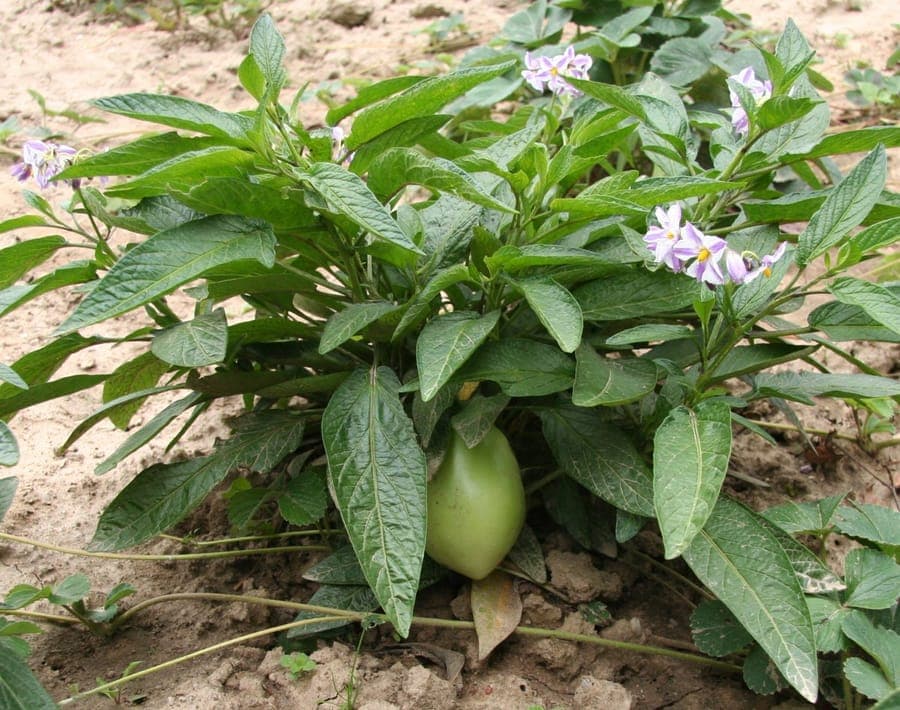
Michael Wolf / CC BY 2.5, via Wikimedia Commons
Peruvian Pepino: complete guide
Solanum muricatum
Want to see Peruvian Pepino: complete guide in your garden?
Full design in HD: €7.99
Look after your Peruvian Pepino with the GardenWorld app
Identify plants with your camera and get a care calendar with reminders for this plant.


Overview
The Peruvian pepino (Solanum muricatum), originating from the Andean regions of Colombia, Ecuador and Peru, is a remarkable fruit plant gaining popularity among growers worldwide. It produces pale yellow fruits with purple striping, roughly egg-sized, offering a delicate flavour somewhere between melon and cucumber. In cooler climates, pepino grows well in greenhouses or under protective covers.
Appearance & bloom cycle
Pepino develops as a semi-woody shrub reaching 60-90 cm in height. The plant bears pale flowers (approximately 1.5 cm across) appearing mainly between May and September. Fruits mature 60-90 days after flowering and turn golden-yellow with purple streaks when ready. The leaves are elongated and finely hairy.
Ideal location
Pepino demands substantial sunlight – at least 6-8 hours of direct sun daily. In temperate regions, position against a warm wall, or better yet, grow in a greenhouse or under row covers. Container culture (40+ litre pots) works excellently. As a tropical plant, pepino cannot tolerate frost: maintain minimum 10°C, ideally 18-25°C.
Soil requirements
Use rich, free-draining potting compost with pH 6.0-7.0. Avoid waterlogged soil; add sand or perlite for better aeration. Pepino thrives in nutrient-rich conditions – incorporate compost or leaf mould at planting. Container-grown pepino needs regular feeding.
Watering
Pepino needs consistent moisture, particularly during growth and fruit-set. Keep soil consistently moist but not waterlogged. Ensure excellent drainage to prevent root rot. Water daily during dry spells; reduce frequency in autumn. Allow only the top 2 cm to dry slightly between waterings in containers.
Free preview
Want to see Peruvian Pepino: complete guide in your garden? Make a free preview of your design.
Pruning
Pepino responds well to pruning. In the first season, pinch the main stem to encourage branching. Remove basal side-shoots below 20-30 cm height for better airflow. Regularly remove dead or damaged foliage. Pepino tends toward bushy, sprawling growth; vertical string support helps control shape.
Maintenance calendar
Spring (March-May): Sow seeds or plant transplants in prepared compost. Water cautiously as growth accelerates. Keep seedlings protected under glass until all frost danger passes.
Summer (June-September): Water regularly, especially during dry periods. Begin monthly feeding from June-July onwards. Harvest ripe fruits; first fruits typically appear July onwards.
Autumn (October-November): Harvesting peaks. Reduce watering and feeding from October. Move plants indoors for frost protection.
Winter (December-February): Pepino cannot survive outdoors. For overwintering, cut plants back to 20 cm and store in a cool (5-10°C), dry location with minimal water. Reactivate gently in March.
Winter hardiness
Pepino is not frost-hardy in temperate zones. Plants die at -2°C or lower. However, you can preserve them: cut back to 20 cm and store in cool (5-10°C) dry conditions. Water sparingly. They'll regrow vigorously in March.
Companion plants
Pepino thrives alongside other warm-season fruits in greenhouse conditions. Pair with tomatoes, aubergines and peppers in the same warm environment. In containers, pepino combines well with heat-loving herbs like oregano and rosemary, which also help prevent fungal disease through good airflow.
Closing
Growing pepino brings tropical flavour to your garden. The taste vastly exceeds shop-bought fruit, and you control harvest timing perfectly. Try this summer in your greenhouse; visit gardenworld.app for design inspiration and more growing ideas. Within 2-3 seasons you'll have established a reliable pepino harvest and neighbours will marvel at this exotic addition to your kitchen garden!
Frequently asked questions about Peruvian Pepino
Is Peruvian Pepino winter hardy?
Pepino is not frost-hardy in temperate zones. Plants die at -2°C or lower.
When and how do you prune Peruvian Pepino?
Pepino responds well to pruning. In the first season, pinch the main stem to encourage branching.
How much water does Peruvian Pepino need?
Pepino needs consistent moisture, particularly during growth and fruit-set. Keep soil consistently moist but not waterlogged.
Where does Peruvian Pepino grow best?
Pepino demands substantial sunlight – at least 6-8 hours of direct sun daily. In temperate regions, position against a warm wall, or better yet, grow in a greenhouse or under row covers.
What soil does Peruvian Pepino need?
Use rich, free-draining potting compost with pH 6.0-7.0. Avoid waterlogged soil; add sand or perlite for better aeration.

See it in your garden
See Peruvian Pepino in your garden
One photo of your garden and a few questions. You see the result in about a minute.
Try it with a photoIdentify this plant in your own garden. Identify a plant
Similar plants
Petunia (Petunia × atkinsiana): complete guide
Petunia × atkinsiana
Everything about garden petunias (Petunia × atkinsiana): sowing, position, compost, watering, feeding and pruning for containers in bloom until autumn.
Chinese lantern: complete guide
Physalis alkekengi
Everything about the Chinese lantern (Physalis alkekengi): position, drying the orange lanterns, keeping its spread in check, toxicity and winter hardiness.
Solanum dolichosepalum: complete guide
Solanum dolichosepalum
Discover Solanum dolichosepalum, an Andean nightshade with striking long sepals. Growing tips, hardiness, and companion planting for your patio.
