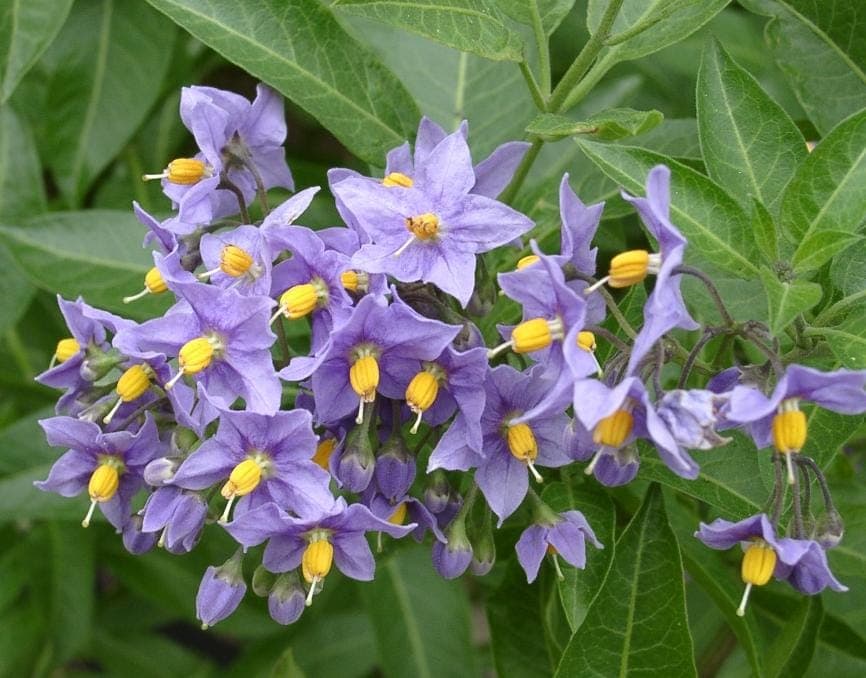
The original uploader was Ramin Nakisa at English Wikipedia. / CC BY-SA 3.0, via Wikimedia Commons
Solanum crispum: complete guide
Solanum crispum
Want to see Solanum crispum: complete guide in your garden?
Full design in HD: €7.99
Look after your Solanum crispum with the GardenWorld app
Identify plants with your camera and get a care calendar with reminders for this plant.


Overview
Solanum crispum, known as Chilean nightshade or Potato tree, is a semi-evergreen climber native to the mountain forests of Chile and Argentina. This beautiful plant belongs to the Solanaceae family and is renowned for its stunning blue flowers that appear for months. In temperate climates, it is an exceptionally valuable wall plant that provides both architectural interest and annual floral display.
Appearance and Bloom
Solanum crispum grows as a vigorous climber to approximately 4-5 meters high and equally wide. The leaves are elongate, dark green, and remain largely throughout the year, although they may drop in severe winters. The flowers are the highlight: small, star-shaped flowers in a beautiful light to deep blue color, sometimes with yellow stamens, appear in large clusters from June to October. The flowers attract bees and other pollinators and give way to small yellow berries in autumn.
Ideal Location
This plant thrives best in a sunny, sheltered location receiving at least 4 hours of direct sunlight daily. A wall or trellis facing south is ideal. Although the plant tolerates some shade, full sun exposure produces more flowers. Protection from cold and strong winds is important, especially in the first growing year. The plant is semi-hardy and tolerates temperatures to about -5 to -10C with protection, but grows best in milder climates.
Soil
Use nutrient-rich, well-draining garden soil. The plant is not particularly fussy about pH, but prefers neutral to slightly acidic. Add copious amounts of compost or aged manure when planting. Ensure the soil is not waterlogged, especially in winter. Well-prepared planting soil will ensure years of growth without major interventions.
Watering
Provide regular moisture supply during the growing season, especially in the first two years after planting. Deep watering is better than superficial. Water when the top 3-5 cm of soil feels dry. Once established, the plant is moderately drought-tolerant and can endure dry periods. In winter, reduce watering considerably but avoid complete dryness. Mulch around the base helps retain moisture and protects against frost.
Free preview
Want to see Solanum crispum: complete guide in your garden? Make a free preview of your design.
Pruning
Regular pruning and shaping stimulates more branching and consequently more flowers. After winter (early March), remove weak, damaged, or excessive stems. Pruning to one-third of the height gives an attractive form. During the growing season, side shoots can be shortened to encourage denser growth. After flowering, seed-bearing shoots can be cut back. Ensure the plant remains well-tied to its support.
Maintenance Calendar
Spring: Prune in March, start watering, begin feeding in April. Summer: Regular moisture supply, monthly feeding, tie shoots to support. Autumn: Gradually reduce watering, stop feeding, remove dead foliage. Winter: Minimal water, no feeding, provide frost protection with burlap or matting.
Winter Hardiness
Solanum crispum is semi-hardy, reasonably frost-resistant to about -8C with protection. In areas with severe winters, protection against harsh winds and heavy snow is necessary. In very cold winters, above-ground parts may die back, but roots usually survive and will recover. In warm southern areas, the plant can develop permanent structure. Otherwise treat as a tender plant requiring protection in cooler climates.
Companion Plants
An attractive composition around Solanum crispum can consist of low-growers such as Heuchera, Barberry, or other climbers like ivy. Dwarf conifers or Carpinus betulus also form good background plants. For color coordination with the blue flowers, choose pink or purple flowers like Clematis, Mandevilla, or Passiflora.
Closing
Chilean nightshade offers years of enjoyment and is an indispensable addition to temperate gardens where prolonged flowering is desired. With the right location, regular care, and careful pruning, this plant will reward you with beautiful blue flowers and an attractive appearance. Looking for beautiful climbers? Visit major garden centers for information about available cultivars.
Gardenworld.app helps you select climbers that suit your house design and garden style. Plan your vertical flower garden with our online design tools!
Frequently asked questions about Solanum crispum
Is Solanum crispum winter hardy?
Solanum crispum is semi-hardy, reasonably frost-resistant to about -8C with protection. In areas with severe winters, protection against harsh winds and heavy snow is necessary.
When and how do you prune Solanum crispum?
Regular pruning and shaping stimulates more branching and consequently more flowers. After winter (early March), remove weak, damaged, or excessive stems.
How much water does Solanum crispum need?
Provide regular moisture supply during the growing season, especially in the first two years after planting. Deep watering is better than superficial.
Where does Solanum crispum grow best?
This plant thrives best in a sunny, sheltered location receiving at least 4 hours of direct sunlight daily. A wall or trellis facing south is ideal.
What soil does Solanum crispum need?
Use nutrient-rich, well-draining garden soil. The plant is not particularly fussy about pH, but prefers neutral to slightly acidic.

See it in your garden
See Solanum crispum in your garden
One photo of your garden and a few questions. You see the result in about a minute.
Try it with a photoIdentify this plant in your own garden. Identify a plant
Similar plants
Petunia (Petunia × atkinsiana): complete guide
Petunia × atkinsiana
Everything about garden petunias (Petunia × atkinsiana): sowing, position, compost, watering, feeding and pruning for containers in bloom until autumn.
Chinese lantern: complete guide
Physalis alkekengi
Everything about the Chinese lantern (Physalis alkekengi): position, drying the orange lanterns, keeping its spread in check, toxicity and winter hardiness.
Solanum dolichosepalum: complete guide
Solanum dolichosepalum
Discover Solanum dolichosepalum, an Andean nightshade with striking long sepals. Growing tips, hardiness, and companion planting for your patio.
