
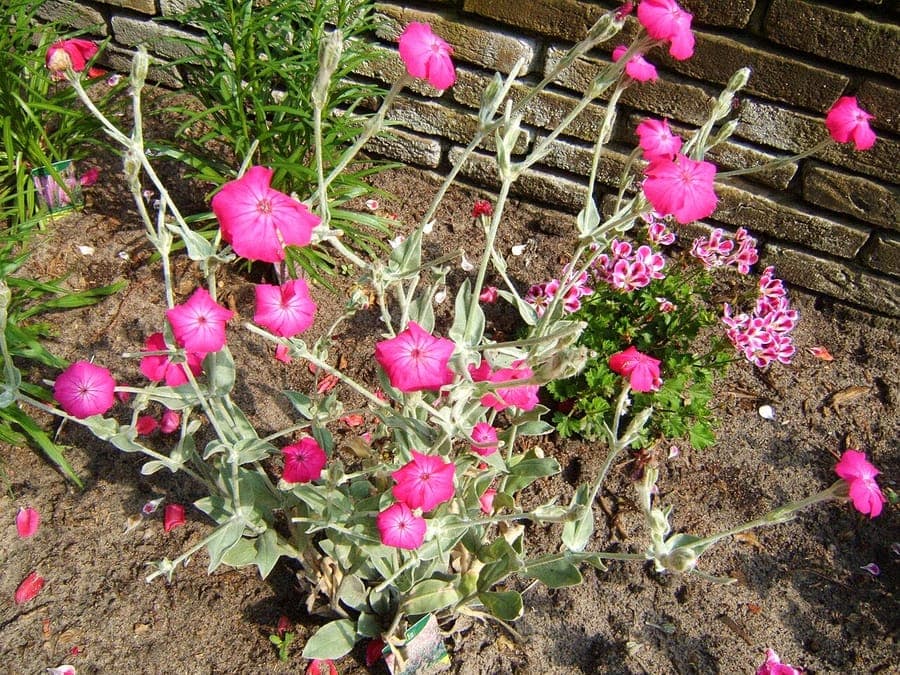
nl:Gebruiker:Algont / CC BY-SA 3.0, via Wikimedia Commons
Silene coronaria: complete guide
Silene coronaria
Want to see Silene coronaria: complete guide in your garden?
1 minute, no credit card
Overview
Silene coronaria, commonly known as rose campion, is a stunning biennial to perennial plant from the carnation family (Caryophyllaceae). Native to south and south-eastern Europe, this plant is prized for its brilliant magenta flowers that create a striking contrast against the silvery-grey foliage. Rose campion typically reaches 60-90 cm in height and forms an upright, well-branched specimen.
This plant is extremely popular in cottage gardens and romantic landscapes for its abundant summer flowering from June to August. Rose campion attracts bees, butterflies and other pollinators, making it a valuable addition to pollinator-friendly gardens. The characteristic silvery appearance comes from fine hairs covering the stems and leaves.
Appearance and bloom
The flowers of Silene coronaria are approximately 2-3 cm in diameter, consisting of five deeply notched magenta petals that create a distinctive crown-like appearance. Blooms are produced abundantly throughout summer in loose clusters. The silvery-grey, hairy foliage provides stunning contrast with the vibrant flowers.
The plant reaches approximately 60-90 cm in height with thin, well-branched stems that naturally orient toward light. Leaves are lance-shaped and soft-hairy. After flowering, small seed capsules develop containing numerous seeds, making the plant easy to self-seed or propagate.
Ideal location
Silene coronaria thrives in full sun to partial shade. For maximum color and prolific blooming, full sunlight (at least 6 hours daily) is essential. In hot, dry climates, afternoon shade can prevent flowers from wilting prematurely.
The plant is extremely hardy and tolerates severe frost without damage. It flourishes in full summer sun as the silvery foliage reflects abundant light. Avoid locations with strong winds, as the thin stems can become flattened or broken.
Soil
Rose campion grows best in well-draining, moderately fertile soil. The plant actually prefers poor, lean soil over rich garden soil. Heavy clay or waterlogged soils should be amended with sand or compost to improve drainage.
A pH between 6.5 and 7.5 is ideal, though the plant tolerates slightly acidic soils. Excess fertilizer promotes excessive foliage at the expense of flowers. In containers, use well-draining potting compost.
Watering
Once established, Silene coronaria is reasonably drought-tolerant. Young plants, however, require regular watering until strong roots develop. During dry periods, especially in full sun, daily watering may be necessary.
After establishment (3-4 weeks), gradually reduce watering frequency. The plant tolerates drought better than excess moisture. Overwatering, particularly in winter, can lead to root rot. Water at the base of plants to prevent fungal issues.
Free design
Want to see Silene coronaria: complete guide in your garden? Make a free design now.
Pruning
To encourage bushy growth and extend flowering, pinch young plants when they reach 20 cm height. This stimulates branching and more flower clusters. Deadhead faded blooms to encourage continued flowering throughout summer.
At season's end in autumn, leave dead stems standing as they contain nutrients for overwintering. In spring, remove all dead wood to make way for new growth.
Maintenance calendar
Spring: Sow indoors in March, transplant outdoors in May. Established plants can be planted in April. Water regularly until well-established.
Summer: Monitor for drought stress, especially in hot periods. Deadhead regularly. Provide support if plants lodge under wind or rain.
Autumn: Allow seed capsules to mature if you wish to collect seed. Cut all aboveground portions in November.
Winter: Roots remain dormant underground. This period requires minimal maintenance. Protect against excessive rain using appropriate covering.
Winter hardiness
Silene coronaria is extremely hardy, tolerating temperatures as low as -15 degrees Celsius. The plant occurs throughout much of Europe and grows wild in mountainous regions with snow cover. In northern climates, it is completely winter-hardy.
The plant survives severe winters, but may succumb in extremely harsh, prolonged winters with heavy wet snow. Good soil drainage is important in winter to prevent root rot. In very wet gardens, planting slightly higher in the bed can help.
Companion plants
Rose campion combines beautifully with other Mediterranean plants. Try it with lavender, sage, thyme and roses. Also effective with softer plants like delphinium and garden mallow. The silvery foliage provides attractive backdrop for purple-flowering plants.
In borders, it pairs well with Echinacea, Rudbeckia and Veronica. The plant fits well in wildflower mixes. Group in odd numbers (3, 5 or 7) for best effect.
Conclusion
Silene coronaria is an easy, spectacular plant providing abundant summer color with minimal maintenance. With its silvery-grey foliage and brilliant magenta flowers, it adds elegance to any garden plan. The plant thrives in full sun on moderately draining soil and readily self-seeds for future seasons.
Discover more plant choices at gardenworld.app/en for complete garden inspiration and design ideas!
Want to see Silene coronaria: complete guide in your garden? Make a free design now.
Upload a photo, pick a style, and get a photorealistic design with plant list in under a minute.
No credit card required


Similar plants
Dianthus karami: complete guide
Dianthus karami
Dianthus karami is a rare Lebanese mountain pink with fringed pink blooms on limestone cliffs, ideal for rock gardens and troughs.
Sicilian pink: complete guide
Dianthus siculus
Discover Dianthus siculus, an elegant purple bloomer from Sicily. Cultivation, June-September flowering and garden combinations.
Alpine mouse-ear chickweed: complete guide
Cerastium pedunculatum
Full growing guide for Cerastium pedunculatum: ideal location, soil, watering, winter hardiness, and companion plants for rock gardens.