
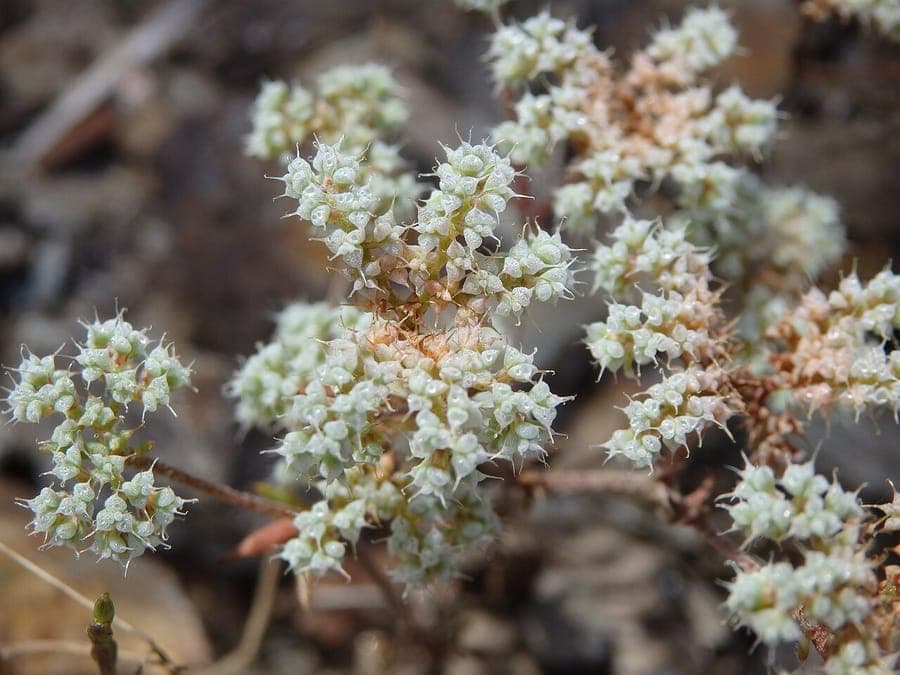
Carminda Santos / CC BY 4.0, via Wikimedia Commons
Chaetonychia cymosa: complete guide
Chaetonychia cymosa
Want to see Chaetonychia cymosa: complete guide in your garden?
1 minute, no credit card
Overview
Chaetonychia cymosa is a small Mediterranean annual belonging to the family Caryophyllaceae. Originally described by Carl Linnaeus as Illecebrum cymosum, it was reclassified by Robert Sweet in 1839 into the monotypic genus Chaetonychia - a genus with only this single species. The name cymosa refers to the cymose (cyme-shaped) inflorescence that is characteristic of the plant. In its native western Mediterranean range - Algeria, Corsica, France, Morocco, Portugal, Sardinia, Spain and Tunisia - the plant grows in dry, sandy, and rocky environments: coastal dunes, weathered rocky shores, thin grasslands and disturbed soils on light substrates. Outside its natural range the plant is virtually unknown in cultivation, but it holds genuine botanical interest as the sole representative of its genus. Gardeners interested in drought-tolerant and Mediterranean planting styles can find inspiring design ideas at gardenworld.app.
Appearance and bloom cycle
Chaetonychia cymosa is a low-growing, spreading annual with strongly branched stems that hug the ground or rise only slightly. The plant rarely exceeds 5 to 10 cm in height, spreading horizontally over 10 to 20 cm. The leaves are small, oval to lance-shaped, arranged oppositely and greyish-green due to fine hairs. The flowers are tiny - barely visible to the naked eye individually - but numerous and gathered in cymose clusters. The five petals are white and surrounded by bracts that are noticeably papery and silvery in texture, a feature that distinguishes Chaetonychia from related genera such as Paronychia. Flowering runs from June to August. The fruits are small, ovoid nutlets. As an annual, Chaetonychia cymosa completes its entire life cycle in a single growing season: germination in early spring, vegetative growth, flowering and seed set before summer ends.
Ideal location
This Mediterranean annual has a strong preference for warm, sunny, dry locations. In its natural range it thrives where other plants struggle: nutrient-poor, dried-out sand, calcareous scree and weathered rocks in full sun. In garden settings it does best in a south-facing, sheltered position with no shade at all. A spot at the foot of a warm wall, in a gravel or paving crack planting, or on an arid bed works well. It is also suitable for extensive green roofs with lean substrates. In temperate climates outside the Mediterranean zone, some care is needed: the plant self-seeds under favourable conditions but thrives most reliably during long, warm summers.
Soil
Soil requirements are clear: extremely poor, very free-draining, preferably sandy or gravelly. On rich, compact or moisture-retaining soils the plant declines rapidly. A mix of sharp sand and fine grit in roughly a two-to-one ratio by volume gives the best results. Chalk or limestone content in the soil is no problem - the plant naturally grows on calcareous substrates. Never add manure or rich compost; this encourages excessive leafy growth at the expense of flowering. A soil pH of 7.0 to 8.0 is perfectly tolerable.
Free design
Want to see Chaetonychia cymosa: complete guide in your garden? Make a free design now.
Watering
As a typical Mediterranean plant, Chaetonychia cymosa is well adapted to drought. Once established it needs little or no supplementary water during normal rainfall years. During exceptional dry spells, a fortnightly watering can carry the plant through the worst periods. Overwatering is counterproductive: the roots are sensitive to sustained moisture and damp conditions encourage fungal problems. After planting, water weekly for the first two to three weeks until the plant is established. After that, intervene as little as possible.
Pruning
As an annual, Chaetonychia cymosa does not require pruning in the conventional sense. If you want self-seeding for the following season, leave the ripe seed heads on the plant until they open naturally and disperse their seeds. If you prefer a neater appearance or want to prevent unwanted spread, remove the spent stems after flowering. In this case the plant will leave no offspring for the following year and the area will need to be re-sown or replanted.
Maintenance calendar
January to February: no action; the annual has not survived as a perennial but seeds are resting in the soil. March to April: germination of self-sown seeds when soil temperature rises above 10 degrees C; protect seedlings from late frosts. May: vegetative growth, keep the bed weed-free. June: flowering begins, avoid overwatering. July to August: peak flowering and seed set, keep conditions dry. September: seeds ripen, allow dispersal for self-seeding. October: plants die off; remove remains or leave as mulch. November to December: overwintering seeds in the soil.
Winter hardiness
Chaetonychia cymosa is a warmth-loving annual and is not frost-hardy in the conventional sense. The mature plant is killed by the first frost. However, the seeds can withstand brief light frosts and survive winter in the soil to germinate the following spring. In USDA hardiness zone 8 and warmer, self-seeding is generally successful. In colder climates (zone 7 and below), it is advisable to collect ripe seeds and store them dry in a frost-free location for sowing in early spring. The plant is not suited to permanent outdoor cultivation in harsh north-western European winters.
Companion plants
In a Mediterranean-style garden or on a dry gravel bed, Chaetonychia cymosa pairs well with other low-growing annuals and perennials with similar soil preferences. Consider Scleranthus (knawel), Corrigiola (strapwort), Spergularia (sandwort-spurreys), and low Euphorbia species. Small ornamental grasses such as Festuca glauca (blue fescue) provide attractive textural contrast. For colour, low-growing Portulaca or Mesembryanthemum can be planted nearby. On gardenworld.app you can commission a bespoke garden design that cleverly combines Mediterranean dry-garden plants like Chaetonychia in your front yard planting scheme.
Closing
Chaetonychia cymosa is a plant for the genuinely botanically curious gardener: not spectacular in an obvious way, but fascinating for its unique standing as the sole member of its genus and its remarkable adaptation to extreme Mediterranean conditions. Those with a dry, sunny corner and an appetite for the unusual and rare will find this small annual a rewarding addition to any collection. Its modest white flowers and papery bracts have a quiet elegance that reveals itself slowly to anyone patient enough to look carefully and take the time to appreciate it.
Want to see Chaetonychia cymosa: complete guide in your garden? Make a free design now.
Upload a photo, pick a style, and get a photorealistic design with plant list in under a minute.
10,000+ gardens designed already
No credit card required


Similar plants
Dianthus karami: complete guide
Dianthus karami
Dianthus karami is a rare Lebanese mountain pink with fringed pink blooms on limestone cliffs, ideal for rock gardens and troughs.
Sicilian pink: complete guide
Dianthus siculus
Discover Dianthus siculus, an elegant purple bloomer from Sicily. Cultivation, June-September flowering and garden combinations.
Alpine mouse-ear chickweed: complete guide
Cerastium pedunculatum
Full growing guide for Cerastium pedunculatum: ideal location, soil, watering, winter hardiness, and companion plants for rock gardens.