
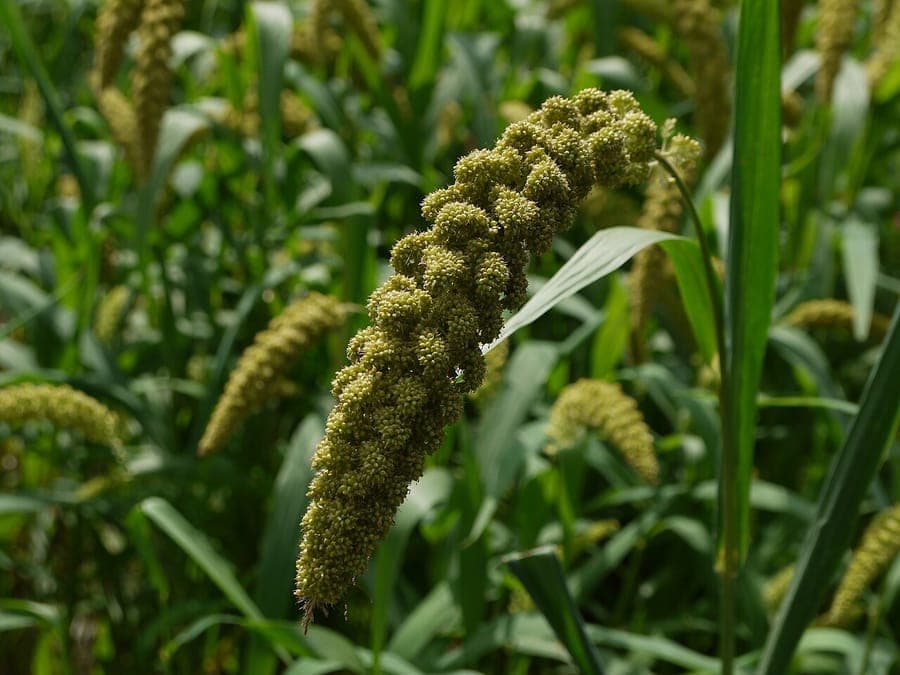
STRONGlk7 / CC BY-SA 3.0, via Wikimedia Commons
Italian Millet: complete guide
Setaria italica
Want to see Italian Millet: complete guide in your garden?
1 minute, no credit card
Italian Millet (Setaria italica): Complete Guide
Overview
Italian Millet, scientifically Setaria italica, is an important forage crop and ornamental grass originating from China. This annual grass species is known for its compact, upright flower spikes and is widely cultivated. In garden contexts, it is valued for its decorative appeal and ease of cultivation.
Appearance & Bloom
Italian Millet typically grows 60-90 cm tall with narrow, linear leaves. The flower spikes are compact and upright, ranging from yellowish to reddish-brown. The spikes display a characteristic feathery structure that is visually interesting. Bloom starts in July and continues until the first frost.
Ideal Location
This grass species grows optimally in full sun locations. It is heat-loving and thrives best in warm summers. Italian Millet is suitable for borders, backgrounds, and large containers. It can also be planted in groups for dramatic effect.
Soil
Italian Millet is not soil-demanding and grows well in most garden soils. Well-drained soil is essential. The plant grows faster in slightly richer soils but survives on poor ones. Mulching aids moisture and nutrient retention.
Free design
Want to see Italian Millet: complete guide in your garden? Make a free design now.
Watering
Once established, Italian Millet is fairly drought-tolerant. Water regularly in the first growing season. Provide supplemental water during dry summers. Overwatering should be prevented.
Pruning
As an annual species, the grass does not require pruning for shape. Withered flower spikes can be removed. However, many gardeners leave the spikes for autumn-winter interest. Everything can be removed at season's end.
Maintenance Calendar
- April-May: Direct sow seeds
- June: Regular watering
- July-August: Bloom reaches peak
- September-October: Full bloom display
- November: Cleanup or allow self-seeding
Winter Hardiness
Italian Millet is not winter-hardy as an annual species. It dies after the first frost. Self-seeding is possible if seeds are not removed.
Companion Plants
Italian Millet combines well with other heat-loving summer bloomers. Plant beside cosmos, zinnias, and sunflowers. Use as background plant for shorter-growing border species.
Final Thoughts
Italian Millet is a reliable, easy grass for gardeners wanting height and interesting blooms. It gracefully adds movement to summer gardens. Discover more plant inspiration at gardenworld.app/en for annual planting schedules.
Explore Further
Want to learn more about annual grasses and summer bedding? Visit gardenworld.app/en for seasonal design ideas.
Want to see Italian Millet: complete guide in your garden? Make a free design now.
Upload a photo, pick a style, and get a photorealistic design with plant list in under a minute.
No credit card required


Similar plants
Sporobolus pungens: complete guide
Sporobolus pungens
Sporobolus pungens is a stoloniferous Mediterranean coastal grass with outstanding salt and drought tolerance, perfect for seaside and dry gardens.
Mediterranean aegilops: complete guide
Aegilops biuncialis
Everything about Aegilops biuncialis, a Mediterranean annual grass with ornamental spikes and outstanding drought tolerance for dry gardens.
Silver bluestem: complete guide
Bothriochloa saccharoides
Full guide to Bothriochloa saccharoides (silver bluestem): site, soil, watering, winter hardiness, pruning, and garden companions.