
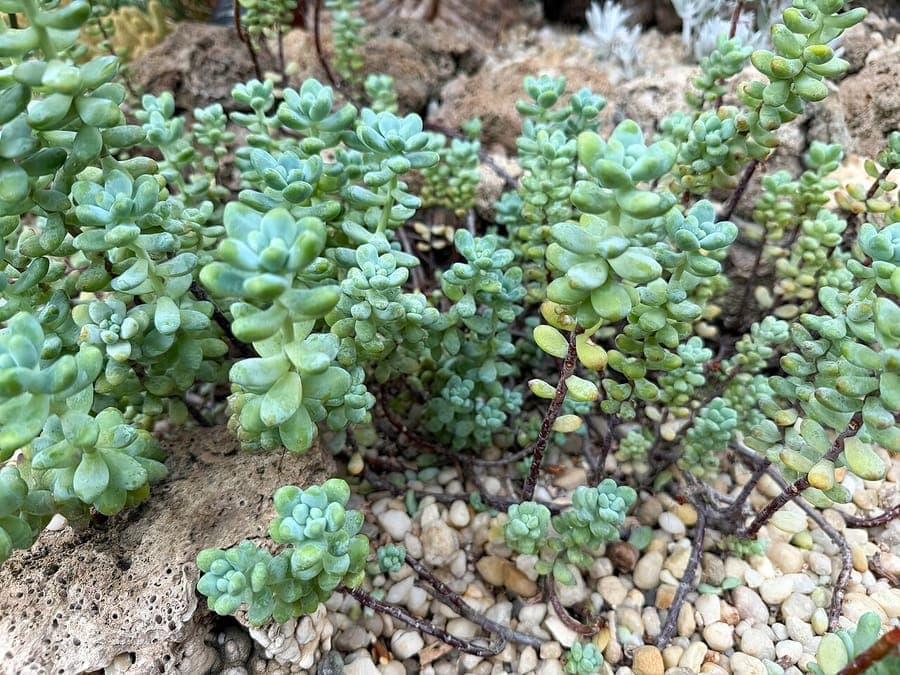
Brighterorange / CC0, via Wikimedia Commons
Sedum pachyphyllum: complete guide
Sedum pachyphyllum
Want to see Sedum pachyphyllum: complete guide in your garden?
1 minute, no credit card
Overview
Sedum pachyphyllum, known as thick-leafed stonecrop or finger sedum, is a robust, low-growing succulent from Mexico. This plant is prized for its thick, fleshy leaves tightly arranged in tight rosettes, and bright golden-yellow flowers that emerge in summer. Its hardy nature and minimal care requirements make it ideal for alpine gardens, rock gardens, and dry landscapes throughout temperate regions.
Native to the high mountains of Puebla and Oaxaca in Mexico (2000+ meters elevation), Sedum pachyphyllum thrives in cold, dry, rocky environments. This makes it exceptionally drought-tolerant and frost-hardy, even compared to other sedum species. Mature plants reach 15-25 cm in height.
Appearance & Bloom
The leaves of Sedum pachyphyllum are distinctly thick and fleshy, arranged in tight, dome-shaped rosettes. Foliage is green to gray-green, with each leaf approximately 1-1.5 cm long, plump and succulent. Under cold stress or intense light, leaves may blush purple-red, adding seasonal interest.
Flowers emerge in summer (July-September) as small, five-petaled, golden-yellow clusters atop short flower stalks. These cheerful blooms attract pollinators and persist for weeks. After flowering, the flower stems wither, but rosettes remain intact and continue growing.
Plants slowly produce offsets, creating dense, multi-rosette colonies over time. Individual rosettes reach 15-20 cm across.
Ideal Location
Sedum pachyphyllum thrives in full sun to light part shade. For the most robust growth, compact form, and abundant yellow flowers, provide 6-8 hours of direct sunlight daily. The plant tolerates part shade, though growth becomes looser and flowers fewer.
This species is significantly hardier than many succulents and can overwinter outdoors in temperate climates, particularly in dry alpine or Mediterranean settings. Hardy to approximately -10 degrees Celsius in dry conditions.
In extremely hot, arid climates, light afternoon shade may prevent wilting. Always ensure excellent drainage to prevent frost-related damage from moisture.
Soil
Sedum pachyphyllum grows best in well-draining, stony soil. Waterlogged conditions are fatal, especially in winter.
- Commercial cactus and succulent mix (standard)
- DIY blend: 60% potting soil + 40% coarse sand, perlite, or crushed terracotta
- Add 2-cm layer of clay pellets to pot base
- In garden beds: plant in raised beds or near rocks/gravel
Neutral to alkaline soil (pH 7-7.5) is optimal. Repot annually or refresh mulch in spring.
Free design
Want to see Sedum pachyphyllum: complete guide in your garden? Make a free design now.
Watering
Sedum pachyphyllum is remarkably drought-tolerant. Less water produces better form and increased hardiness.
Growing season (March-October): Water sparingly when soil is completely dry, roughly every 10-14 days. Perform the finger test: insert finger 1-2 inches into soil. Water soil at base, never foliage.
Winter dormancy (November-February): Reduce watering drastically. In frost-free regions, water once monthly. In cold climates, cease watering entirely. This period is critical for hardiness development.
Golden rules: Overwatering is the primary cause of failure, especially in winter. Never allow water to pool around rosettes. Perfect drainage is essential during freezing periods.
Pruning
Sedum pachyphyllum requires minimal pruning:
- Remove spent flower stalks after blooming
- Strip away dead or blackened leaves
- Cut excessively long stems in spring to maintain compact form
- Thin overgrown rosette clusters to improve light penetration
The plant naturally produces offset rosettes for self-renewal.
Maintenance Calendar
Spring (March-May)
- Resume careful watering as temperatures rise
- Remove winter-damaged foliage
- Repot with fresh, draining mix if needed
- Inspect for pests or disease
Summer (June-August)
- Water moderately; keep soil barely moist
- Ensure full sunlight for flowers
- Golden-yellow flowers bloom abundantly
- Monitor for sun stress in extreme heat
Autumn (September-November)
- Gradually reduce watering
- Remove spent foliage
- Prepare frost protection
- Ensure soil drains perfectly
Winter (December-February)
- Minimal or no watering
- Keep cool and dry
- Hardy to -10C in dry conditions
- Monitor for moisture accumulation
Winter Hardiness
Sedum pachyphyllum is significantly hardier than most other sedums.
- Frost-hardy: To -10 degrees Celsius, especially in dry conditions
- Potted specimens: Can overwinter outdoors in sheltered locations or cold frames
- Garden beds: Excellent choice for alpine or Mediterranean regions in temperate Europe
- Moisture protection: Perfect drainage prevents winter rot better than frost alone
Young plants are more vulnerable; protect in their first winter.
Companion Plants
Pair Sedum pachyphyllum with other drought-tolerant, cold-hardy plantings:
- Sedum species: Sedum moranense, Sedum rupestre for height variation
- Echeveria: Purple or gray rosettes for contrast
- Saxifraga: Low-growing saxifrages
- Sempervivum: Frost-hardy houseleeks (ideal partners)
- Ornamental grasses: Fine texture (Festuca, Stipa)
- Rocks and gravel: Natural dry-garden aesthetic
Design an alpine rock garden with full sun and stony substrate for spectacular results.
Final Words
Sedum pachyphyllum is a tough, frost-hardy succulent perfect for alpine rock gardens and dry landscapes. Provide excellent drainage, full sunlight, and restrained watering, and you'll enjoy years of golden-yellow blooms and beautiful compact rosettes. An absolute treasure for gardeners seeking hardy, low-maintenance alpine color.
Find specimens at alpine and specialty plant retailers. Design your ideal rock garden on gardenworld.app with this robust Mexican alpine jewel.
Want to see Sedum pachyphyllum: complete guide in your garden? Make a free design now.
Upload a photo, pick a style, and get a photorealistic design with plant list in under a minute.
No credit card required


Similar plants
Sedum moranense: complete guide
Sedum moranense
Mexican red stonecrop: vibrant succulent with velvety foliage and rosy-pink flowers. Perfect for dry gardens, patios, and container collections.
Sedum morganianum: complete guide
Sedum morganianum
Burro's-tail succulent from Mexico: elegant trailing plant with watery-green, bead-like foliage. Perfect for hanging baskets and living walls.