
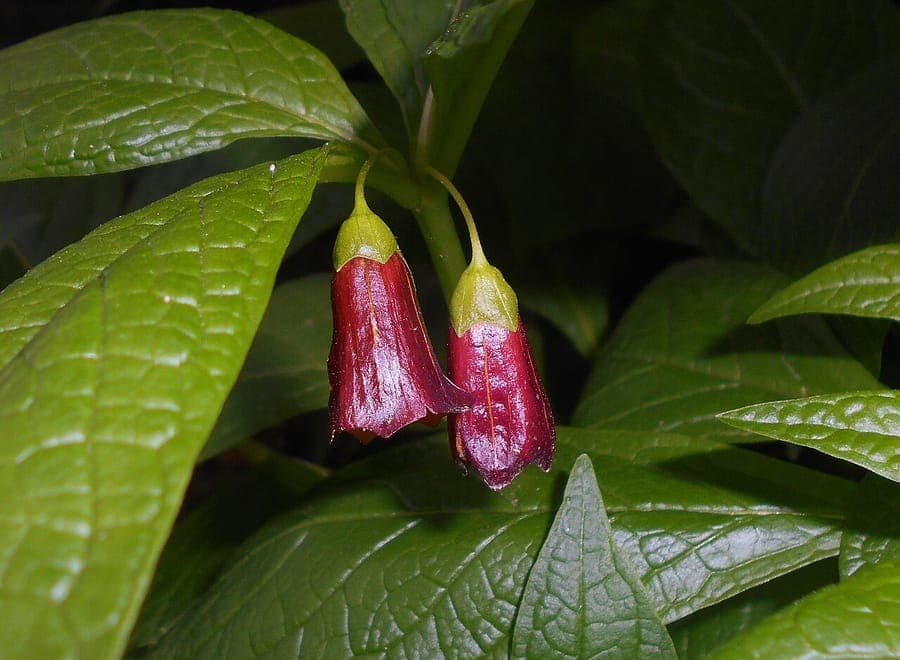
Salicyna / CC BY-SA 4.0, via Wikimedia Commons
Scopolia: complete guide
Scopolia carniolica
Want to see Scopolia: complete guide in your garden?
1 minute, no credit card
Overview
Scopolia (Scopolia carniolica) is a fascinating shade-loving perennial herb from the Solanaceae family, native to mountainous Central and Eastern European regions. This plant is renowned for its unusual, tubular, brownish-yellow flowers arranged in pendulous clusters. The plant grows as an upright, long-lived perennial thriving in moist, woodland environments.
Scopolia is an exotically-appearing plant for shaded garden corners, particularly where moisture is adequate. The plant is, however, highly poisonous and must be handled carefully. Only suitable for mature gardeners who understand the toxicity risks.
Appearance & bloom
Scopolia grows 30-60 centimetres tall and forms an upright plant with dark green, large, oval leaves. The stems are thick, fleshy, and dark green. The leaves are large, up to 20-30 centimetres long, with prominent venation. From April through July, the plant produces abundant brownish-yellow to reddish-brown, tubular flowers arranged in pendulous clusters. Each flower measures approximately 20-25 millimetres long.
The flowers have an extraordinarily unusual form, rather like hanging lanterns, and appear in dense clusters at the leaf axils. Flower colour is typically brownish-yellow to reddish-brown. After flowering, fruit capsules develop containing seed.
Ideal location
Scopolia absolutely thrives in shaded to dappled shade locations. The plant prefers positions where it receives no more than two to four hours of direct sunlight. Shaded woodland locations, beneath large trees, against north-facing walls, and in woodland gardens are ideal.
Deep shade is actually preferable. Full sun will result in leaf yellowing and reduced growth.
Soil
Scopolia demands very specific soil conditions. A moist, humus-rich soil is essential. The plant grows beautifully on humus-rich woodland soils with abundant organic material. Moisture retention is critical. Acidic to neutral soils are ideal, although the plant can also grow on slightly alkaline soils.
The addition of abundant compost or leaf-mould at planting time is essential. The plant prefers woodland-type environment.
Free design
Want to see Scopolia: complete guide in your garden? Make a free design now.
Watering
Scopolia requires regular, consistent watering. The soil must always remain moist but not waterlogged. Regular watering throughout the growing season is essential. During dry periods, daily watering may be needed. Avoid completely dry soil at all costs.
In winter, when the plant is dormant, watering can be reduced, but the soil must not dry out completely.
Pruning
Scopolia requires minimal pruning. After flowering, spent flowers or fruit stalks can be removed. In spring, dead stems or foliage can be removed. The plant grows well with minimal human intervention.
Maintenance calendar
January-February: Inspect for winter damage. Remove dead leaves or stems. March-April: Young shoots appear. Begin regular watering. May-June: Flowering appears. Enjoy the brownish-yellow blooms. Continue regular watering. July-August: Flowering declines. Continued regular watering remains important. September-October: Plant prepares for winter. Watering can be reduced. November-December: Plants go dormant. Minimal watering needed.
Winter hardiness
Scopolia is hardy to approximately -20 degrees Celsius. In most European climates, it overwinters without difficulty outdoors. Plants may die back in very severe winters but typically regenerate from roots in spring.
Companion plants
Scopolia pairs beautifully with other shade-loving, woodland plants:
Excellent companions include:
- Ivy (Hedera helix)
- White flowers such as Helleborus niger
- Shade-loving ferns
- Hostas (for contrasting foliage)
- Primula species
- Fragrant plants such as Sarcococca
WARNING: HIGHLY TOXIC
Scopolia is extremely poisonous in all parts. The plant contains tropane alkaloids that can cause severe poisoning. Avoid contact with sap. Wash hands after removing gloves. Keep children and pets away.
Closing thoughts
Scopolia is a fascinating, unusual plant for shaded, moist gardens. The brownish-yellow flowers and large foliage impart a tropical appearance. However, the plant is extremely poisonous and must be handled carefully. For gardenworld.app users with secure, isolated shaded corners and interest in unusual, exotic plants, Scopolia is an interesting choice, but only for experienced gardeners who take the toxicity warning seriously.
Want more shade plants? Discover more on gardenworld.app!
Want to see Scopolia: complete guide in your garden? Make a free design now.
Upload a photo, pick a style, and get a photorealistic design with plant list in under a minute.
No credit card required


Similar plants
Solanum dolichosepalum: complete guide
Solanum dolichosepalum
Discover Solanum dolichosepalum, an Andean nightshade with striking long sepals. Growing tips, hardiness, and companion planting for your patio.
Solanum ripense: complete guide
Solanum ripense
Discover Solanum ripense, a moisture-loving Andean nightshade for pond edges and conservatories. Growing tips, hardiness, and companions.
Solanum tomentosum: complete guide
Solanum tomentosum
Discover Solanum tomentosum, a thorny South African nightshade with felted leaves. Growing tips, hardiness, and companion planting ideas.