
Nadiatalent / CC BY-SA 4.0, via Wikimedia Commons
Painted-tongue (Salpiglossis sinuata): complete guide
Salpiglossis sinuata
Want to see Painted-tongue (Salpiglossis sinuata): complete guide in your garden?
1 minute, no credit card
Overview
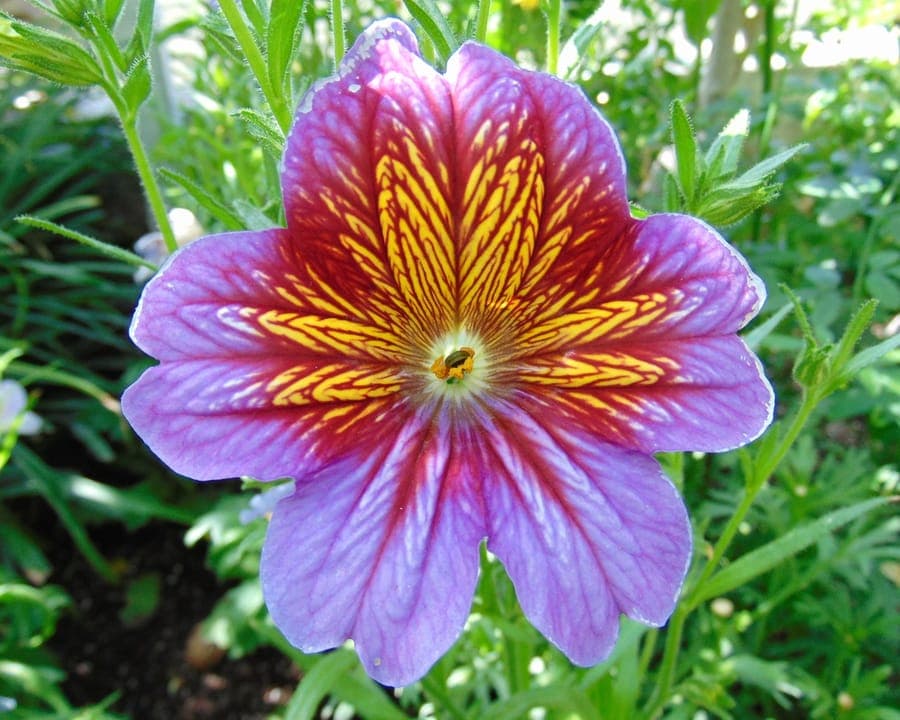
The painted-tongue (Salpiglossis sinuata) is a spectacular annual plant from the Solanaceae family, native to Chile. This striking plant is renowned for its velvety flowers in warm shades of red, orange, purple and yellow with characteristic fine veins. The flowers look almost like paper cutouts, which gave the plant its name. Though not difficult to grow, this plant appreciates full attention and good growing conditions.
Appearance and Bloom
Painted-tongues grow as slender, upright plants reaching about 60 centimeters tall. They produce numerous funnel-shaped flowers that open throughout summer. Each flower features characteristic veining patterns with contrasting colors. Blooming runs from July to October, especially in warmer climates. The plant flowers more abundantly if spent blooms are regularly removed.
Ideal Location
Painted-tongues need full sun to bloom optimally. At least 6-8 hours of direct sunlight daily ensures the best flower production. Position the plant in a warm, sheltered location, preferably with some protection from strong winds. In partial shade they flower less abundantly. Avoid locations with cold night temperatures, as these can slow growth.
Soil
Painted-tongues grow in moisture-retaining, well-drained soils. They prefer neutral to slightly acidic soil with pH between 6.0 and 7.0. Mix organic material into soil when planting and ensure good drainage. The plant does not tolerate stagnant water well. In containers, use quality potting soil with added perlite for better drainage.
Free design
Want to see Painted-tongue (Salpiglossis sinuata): complete guide in your garden? Make a free design now.
Watering
Keep soil consistently moist, especially during growth and blooming periods. Water at the base of the plant, not over foliage. Water more frequently during dry periods, but ensure good drainage. Protect from rain and waterlogging as this promotes fungal diseases. In containers you must water more often than in ground.
Pruning
Regularly remove spent flowers to encourage more blooms. This considerably increases flower production throughout the season. Pinch the tips of young plants (until about 15 centimeters tall) to make them more compact. Remove damaged stems or yellow leaves immediately.
Maintenance Calendar
May: Sow under glass. June: Plant outdoors after frost danger passes. July: First flowers appear. August-October: Peak blooming period. November: Frost danger, bring indoors or protect.
Winter Hardiness
Painted-tongues are only suitable for annual cultivation in temperate climates. They cannot tolerate frost and die at the first freeze. In warm climates they can grow perennially, but are usually treated as annuals. Harvest seeds before frost damage occurs to resow next year.
Companion Plants
Combine painted-tongues with other summer bloomers such as zinnias and dahlias for colorful contrasts. Early yellow flowers from coreopsis add brightness. Low-growing silver-leaf plants like artemisia enhance the flower show. For cut flowers combine with lisianthus and cosmos.
Conclusion
The painted-tongue is a jewel in summer gardens and perfect for cut flower enthusiasts. Though slightly more tender than other annuals, this plant rewards patience with spectacular flowers all summer.
Availability: Available as seed from seed companies and as seedlings at garden centers.
Want to see Painted-tongue (Salpiglossis sinuata): complete guide in your garden? Make a free design now.
Upload a photo, pick a style, and get a photorealistic design with plant list in under a minute.
No credit card required


Similar plants
Solanum dolichosepalum: complete guide
Solanum dolichosepalum
Discover Solanum dolichosepalum, an Andean nightshade with striking long sepals. Growing tips, hardiness, and companion planting for your patio.
Solanum ripense: complete guide
Solanum ripense
Discover Solanum ripense, a moisture-loving Andean nightshade for pond edges and conservatories. Growing tips, hardiness, and companions.
Solanum tomentosum: complete guide
Solanum tomentosum
Discover Solanum tomentosum, a thorny South African nightshade with felted leaves. Growing tips, hardiness, and companion planting ideas.