
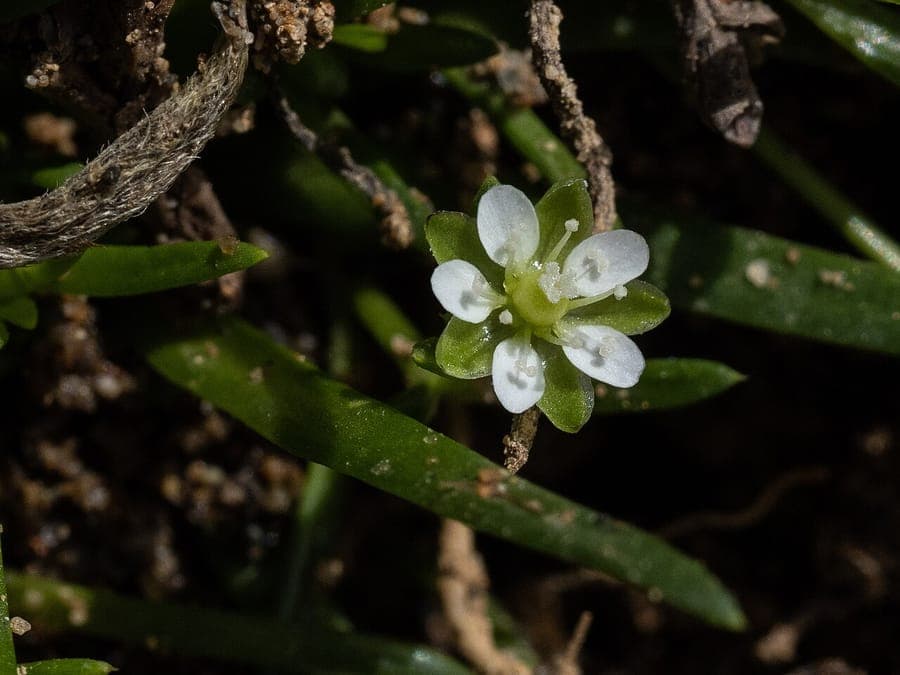
Karen and Mike / CC BY 4.0, via Wikimedia Commons
Sagina maxima: complete guide
Sagina maxima
Want to see Sagina maxima: complete guide in your garden?
1 minute, no credit card
Overview
Sagina maxima, commonly known as stickystem pearlwort or coastal pearlwort, is a delicate alpine plant native to mountainous regions of the Russian Far East, China, and temperate Japan. This Caryophyllaceae distinguishes itself through extremely fine, hairy texture and very small, inconspicuous flowers. Though less well-known than many alpine plants, it is highly valuable for specific garden conditions.
The plant is particularly suited to moist groundcover in alpine situations. Its coastal-origin adaptations make it valuable for coastal gardeners seeking moisture and salt-tolerant plants.
Appearance and Bloom
Sagina maxima forms extremely low, dense mats of fine, hairy-appearing stems and very small leaves (only millimeters long). The plant typically reaches only 4 to 6 inches in height. Very small, white flowers (approximately 0.2 inches across) appear from May to July.
Flowers have four petals and are very neat and delicate. The stems are notably sticky in texture, giving the plant its common name. Seeds form after flowering.
Ideal Location
Sagina maxima thrives in moist soils with excellent drainage. Plant in locations with minimum half-light to full light. In very hot summers, light afternoon shade is beneficial. The plant is highly suited to coastal gardens where wet conditions are normal.
Place it between rocks (for good drainage around roots) or in shallow moist depressions. The delicate nature of the plant means it thrives better in containers or well-made niches than in open soils.
Soil
While Sagina maxima is moisture-tolerant, it requires very well-draining growing medium around the roots. A moist soil immediately surrounding the plant is good, but water must not stagnate. A typical growing medium would consist of equal parts garden peat, fine sand, and fine gravel.
Prefer neutral to slightly acidic pH (5.5-7.0). Avoid heavy clay soils that retain water; this leads to rot.
Free design
Want to see Sagina maxima: complete guide in your garden? Make a free design now.
Watering
In its natural habitat, Sagina maxima grows along mountain streams where it receives regular moisture but doesn't stand in water. In cultivation, it must receive regular water, especially in dry periods.
Keep soil more moist than dry, but not waterlogged. Water every 2-3 days during dry periods. Good drainage around the root zone is essential. In containers, watering may need to be daily during summer months.
Pruning
Minimal pruning needed. Remove only dead foliage. The plant maintains its natural, low mat form. No height pruning necessary.
Maintenance Calendar
May: Plant. Begin regular watering. May-July: Water regularly. Enjoy flowers. August-October: Reduce watering as weather cools. November-April: Minimal water. Protect against extreme frost.
Winter Hardiness
Sagina maxima is moderately hardy to 23 degrees Fahrenheit (-5C) in dry conditions. In wet winter conditions, frost damage may occur. In very cold regions, winter protection is beneficial.
In moist winter soils, protection with dry material (not compost) helps prevent root rot. Bubble tents can help in exceptionally wet winters.
Companion Plants
Sagina maxima combines well with:
With Drosera: both moisture-lovers in alpine settings. With small Primula: alpine flowers. With Saxifraga: delicate alpine combination. With fine sand/gravel: contrast with living plant formation.
Closing
Sagina maxima is for specialized gardeners interested in alpine plants and moist mountain habitats. The very delicate nature and specific requirements demand attention, but the rewards are refined beauty. Plant today and enjoy this rare and elegant specimen.
Available through specialized alpine plant suppliers. Visit gardenworld.app for guidance on alpine garden designs!
Want to see Sagina maxima: complete guide in your garden? Make a free design now.
Upload a photo, pick a style, and get a photorealistic design with plant list in under a minute.
No credit card required


Similar plants
Dianthus karami: complete guide
Dianthus karami
Dianthus karami is a rare Lebanese mountain pink with fringed pink blooms on limestone cliffs, ideal for rock gardens and troughs.
Sicilian pink: complete guide
Dianthus siculus
Discover Dianthus siculus, an elegant purple bloomer from Sicily. Cultivation, June-September flowering and garden combinations.
Alpine mouse-ear chickweed: complete guide
Cerastium pedunculatum
Full growing guide for Cerastium pedunculatum: ideal location, soil, watering, winter hardiness, and companion plants for rock gardens.