Daderot / CC0, via Wikimedia Commons
Rubus tricolor: complete guide
Rubus tricolor
Want to see Rubus tricolor: complete guide in your garden?
Full design in HD: €7.99
Look after your Rubus tricolor with the GardenWorld app
Identify plants with your camera and get a care calendar with reminders for this plant.


Overview
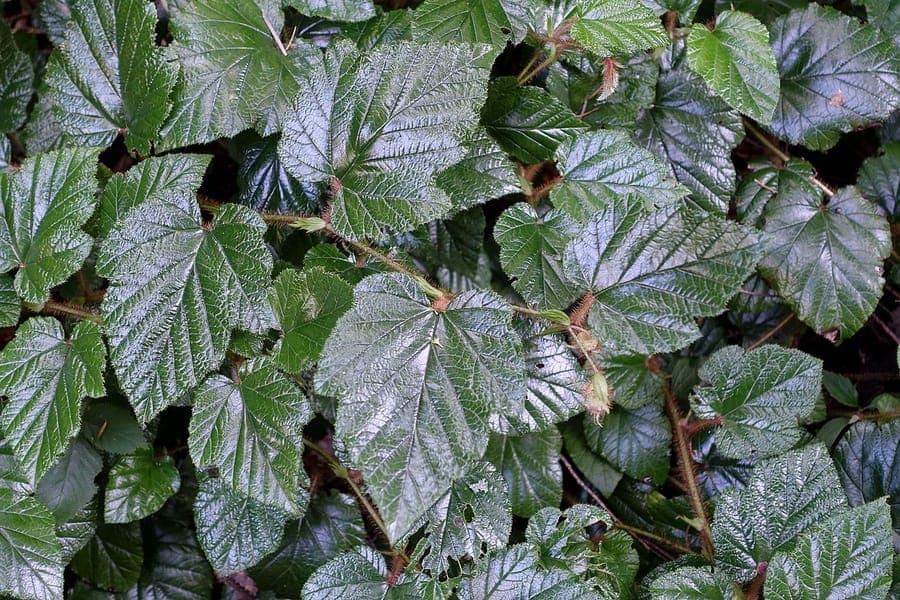
The tricolor bramble (Rubus tricolor) is a Chinese groundcover with red canes, glossy dark green leaves, and red edible berries. This is a unique plant that creeps along the ground, is decorative in all seasons, and produces useful fruit. The plant reaches a maximum height of 30-50 cm and spreads to 1-1.5 meters.
Appearance and bloom
The tricolor bramble grows horizontally with red, hairy canes that can spread across the ground rooting. The leaves are oblong, glossy dark green. The flowers are small, pink-white and appear in May-June. The red berries are about 1-1.5 cm wide and ripen July-August, juicy and pleasant-tasting.
Ideal location
Choose full sun to half-light. The plant grows even in poor soils and on slopes. Suitable for zones 5-9. Plant it in locations where it can spread freely, for example on slopes or as ground cover under trees. Avoid waterlogged soils.
Soil
The tricolor bramble tolerates various soil types, even poor soils. pH 5.5-7.0 is appropriate. Well-drained soil prevents rotting. For larger berries, adding compost improves growth. This plant is very adaptable.
Free preview
Want to see Rubus tricolor: complete guide in your garden? Make a free preview of your design.
Watering
Water regularly after planting until established. Once established, this plant is drought-tolerant and needs little extra water. During dry summers, water occasionally. Excessive water can cause cane rot.
Pruning
Minimal pruning needed. Remove only dead or very long canes. The plant can be lightly pruned each late winter to maintain shape. Too much pruning inhibits fruit production.
Maintenance calendar
Spring: Light pruning, add compost. Summer: Water in very dry periods, harvest. Fall: Prepare for winter. Winter: No special actions.
Winter hardiness
Winter hardy to zone 5 (-29 degrees Celsius). In very cold regions, canes may die back, but the plant regrows. The plant is very winter hardy and doesn't freeze easily.
Companion plants
Combine with other low-growing plants such as daisy, sage, and herbaceous groundcovers. Ensure plants don't suppress each other. Suitable for underplanting taller shrubs.
Closing
The tricolor bramble is an original groundcover that is both decorative and productive. With minimal care, this plant establishes quickly and produces berries annually. Plant it now on gardenworld.app for slopes and poor soils. Visit gardenworld.app for garden plans.
Frequently asked questions about Rubus tricolor
Is Rubus tricolor winter hardy?
Winter hardy to zone 5 (-29 degrees Celsius). In very cold regions, canes may die back, but the plant regrows.
When and how do you prune Rubus tricolor?
Minimal pruning needed. Remove only dead or very long canes.
How much water does Rubus tricolor need?
Water regularly after planting until established. Once established, this plant is drought-tolerant and needs little extra water.
Where does Rubus tricolor grow best?
Choose full sun to half-light. The plant grows even in poor soils and on slopes.
What soil does Rubus tricolor need?
The tricolor bramble tolerates various soil types, even poor soils. pH 5.5-7.0 is appropriate. Well-drained soil prevents rotting.

See it in your garden
See Rubus tricolor in your garden
One photo of your garden and a few questions. You see the result in about a minute.
Try it with a photoIdentify this plant in your own garden. Identify a plant
Similar plants
Red tip photinia: complete guide
Photinia × fraseri
Photinia × fraseri 'Red Robin': evergreen hedging with bright red young leaves. Planting, pruning after the first flush, leaf spot disease and winter hardiness.
Climbing rose 'New Dawn': complete guide
Rosa 'New Dawn'
Climbing rose 'New Dawn' (Rosa 'New Dawn'): a pale pink repeat-flowering climber. Planting, training on walls and pergolas, late-winter pruning and care.
Siberian crab apple: complete guide
Malus x robusta
Complete guide to the Siberian crab apple (Malus x robusta): location, soil, pruning, winter hardiness and the best companion plants for your garden.
