
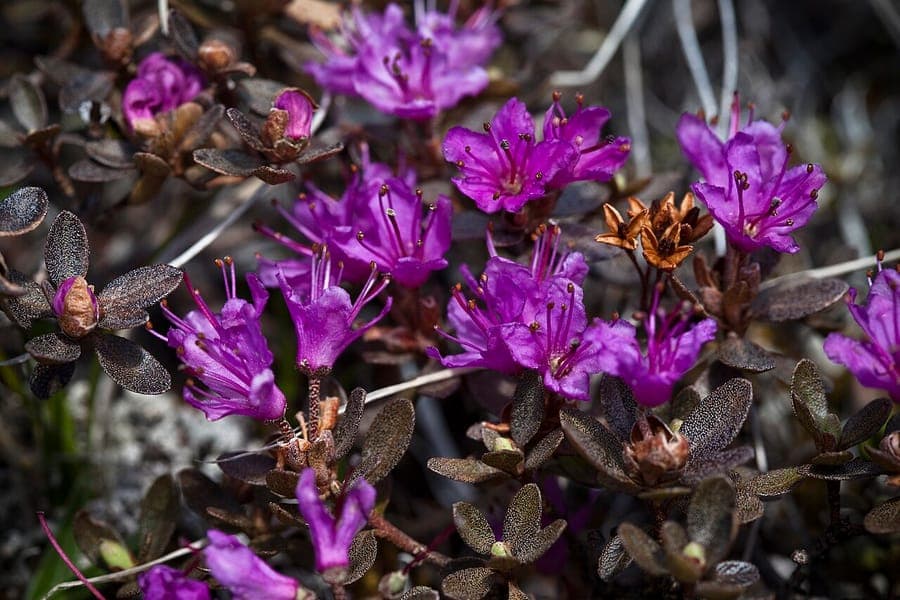
NPS / Jacob W. Frank: Denali National Park and Preserve / Public domain, via Wikimedia Commons
Lapland rosebay: complete guide
Rhododendron lapponicum
Want to see Lapland rosebay: complete guide in your garden?
1 minute, no credit card
Overview
Rhododendron lapponicum, commonly known as Lapland rosebay, is a compact, creeping shrub native to the Arctic and subarctic regions of North America and Eurasia. Found from Alaska to Finland and Greenland, this tough little plant thrives in harsh climates and rocky terrain. It reaches a height of only 15–30 cm with a spread of up to 50 cm, making it ideal for small gardens, rockeries, or container planting. Its evergreen foliage and vibrant purple flowers add year-round interest, especially in early summer.
A member of the Ericaceae family, this rhododendron prefers acidic, well-drained soil and partial shade. It's hardy to USDA zone 2 (-40°C), one of the most cold-tolerant in its genus. For UK and North American gardeners, it's a smart choice for shaded borders or woodland gardens. On gardenworld.app, you can generate a custom garden layout that highlights this plant's natural charm.
Appearance & bloom cycle
The plant forms a dense mat of small, leathery, dark green leaves that curl slightly in winter. The foliage is densely packed along prostrate stems, creating a ground-hugging habit. In late May to early June, clusters of 5–7 funnel-shaped flowers emerge, each about 2 cm wide. The blooms are a rich violet-purple with darker spotting in the throat, adding depth and contrast. A faint, sweet fragrance attracts early pollinators like bumblebees.
Flowering lasts 2–3 weeks. After blooming, the plant maintains visual appeal through its evergreen leaves, which take on bronze tones in winter. This seasonal shift adds subtle texture to the winter garden when most plants are dormant.
Ideal location
Choose a spot with dappled or light shade, preferably under deciduous trees or on the north or east side of a structure. Avoid hot, south-facing areas with intense afternoon sun, which can scorch the leaves. This plant naturally grows in sheltered, rocky crevices, so mimic those conditions by planting it in a raised bed, rock garden, or alpine trough.
It pairs well with other cold-hardy alpines. If you're designing a miniature mountain scene, gardenworld.app offers visual tools to help you position Rhododendron lapponicum alongside companion plants for maximum impact.
Soil requirements
Soil pH is critical: aim for 4.4 to 6.1. Use a mix of peat-free ericaceous compost, pine bark, and coarse sand to ensure good drainage and acidity. Never plant in chalky or alkaline soils. The roots are shallow and sensitive, so avoid disturbing them once established.
Mulch annually with pine needles or oak leaves to maintain acidity and moisture. Do not use lime or wood ash nearby. A top dressing of fresh acidic compost in April supports healthy growth without overfeeding.
Free design
Want to see Lapland rosebay: complete guide in your garden? Make a free design now.
Watering
Keep the soil consistently moist but never waterlogged, especially during the first two growing seasons. Use rainwater whenever possible, as tap water can raise pH over time. During dry spells in May and June, water deeply once or twice a week.
In winter, watering is rarely needed unless the ground is frozen and snow-free for extended periods. Then, water on a mild day in January or February to prevent desiccation.
Pruning
Pruning is minimal. Only remove dead or damaged stems in early spring before new growth starts. Avoid cutting into old wood, as this species doesn't regenerate well from bare stems. Use clean, sharp secateurs to prevent disease spread. Never prune in autumn, as flower buds form in late summer.
Maintenance calendar
- January: Check for winter burn; water if dry and frost-free
- February: Monitor for rodent damage; no pruning
- March: Remove old leaves; inspect for fungal spots
- April: Apply light ericaceous compost
- May: Bloom begins; keep soil moist
- June: Peak flowering; watch for vine weevils
- July: Reduce watering gradually
- August: No feeding; avoid disturbance
- September: No maintenance required
- October: Leave fallen needles as natural mulch
- November: Check for frost heave in containers
- December: Protect young plants with spruce boughs
Winter hardiness
Rhododendron lapponicum is exceptionally hardy, surviving temperatures down to -40°C (USDA zone 2). Mature plants need no protection, but young ones may benefit from a light cover of pine boughs or horticultural fleece in their first two winters. Avoid wet, heavy snow that compacts the stems-shake it off gently if needed.
Companion plants
Pair with other acid-loving, low-growing plants such as dwarf heathers (Calluna vulgaris), lingonberry (Vaccinium vitis-idaea), or bearberry (Arctostaphylos uva-ursi). Ferns like Dryopteris erythrosora add texture, while small bulbs like Scilla bifolia or Chionodoxa luciliae bloom just before the rhododendron. Avoid invasive groundcovers like periwinkle (Vinca minor) that could smother its delicate growth.
Closing
Rhododendron lapponicum isn't flashy, but it's dependable and quietly beautiful. Its ability to thrive in tough conditions makes it a gem for rock gardens and cold climates. You won't find it in every garden centre, but check specialty nurseries or online suppliers. In the UK, keep an eye on local garden centres in spring. With proper care and placement, this little shrub will reward you for years. And when planning your layout, remember that gardenworld.app helps you visualize exactly where it will shine.
Want to see Lapland rosebay: complete guide in your garden? Make a free design now.
Upload a photo, pick a style, and get a photorealistic design with plant list in under a minute.
10,000+ gardens designed already
No credit card required


Similar plants
Zenobia pulverulenta: complete guide
Zenobia pulverulenta
Everything about Zenobia pulverulenta (honeycup): siting, acid soil, pruning and the fragrant white bells, in this complete care guide.
Dwarf huckleberry: complete guide
Gaylussacia dumosa
Everything about dwarf huckleberry (Gaylussacia dumosa): acidic soil, partial shade, pruning and care for this compact North American berry shrub.
Drooping leucothoe: complete guide
Leucothoe fontanesiana
Everything about drooping leucothoe (Leucothoe fontanesiana): shade tolerance, soil, watering, pruning, hardiness and companion plants.