
Hajotthu / CC BY-SA 3.0, via Wikimedia Commons
Radiola linoides: complete guide
Radiola linoides
Want to see Radiola linoides: complete guide in your garden?
1 minute, no credit card
Overview
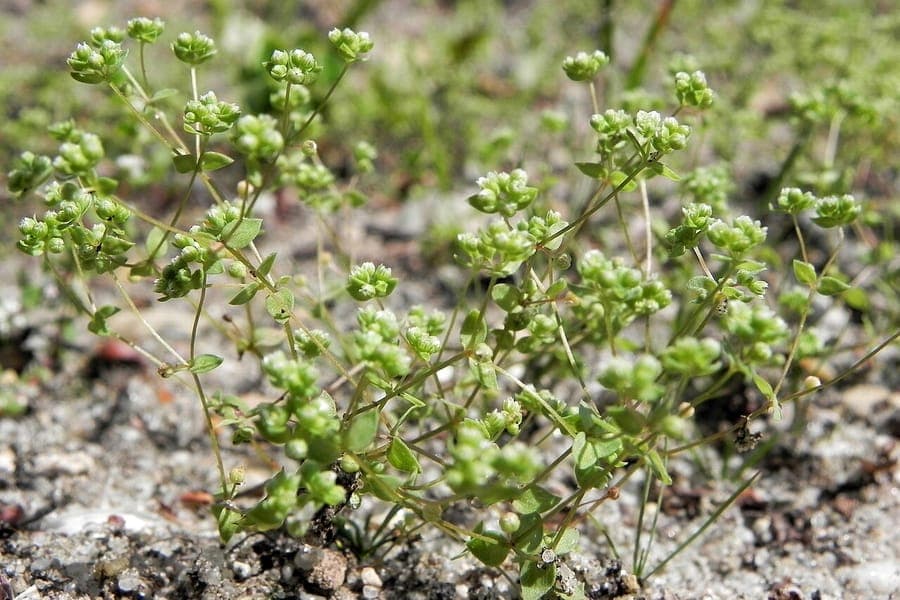
Allseed (Radiola linoides) is a minuscule herbaceous plant from the linseed family (Linaceae) naturally occurring in Europe and the Mediterranean region. This rare plant is renowned for its extremely fine branches and tiny flowers. The plant reaches only 10-25 centimeters in height and grows in dense, delicate bushes. With its silk-like texture and white flowers, it is a unique addition to a botanical garden or natural wetland.
Radiola linoides is a plant for enthusiasts who appreciate patience and attention to detail. This plant thrives best in moist environments and is eye-catching through its minimalist elegance. It is not easy to cultivate, but for those who succeed, it is a richly rewarding group.
Appearance and bloom
Allseed distinguishes itself through its extremely fine growth pattern. The stems are as thin as silk thread, with minuscule, opposite leaves that are barely noticeable. The flowers are very small, approximately 3-4 mm, white to pinkish-dotted, with five petals. Blooms from June to August in moist environments.
The plant naturally occurs in moist spots such as marsh edges and moist heathland. The seed capsules are nearly spherical, approximately 2-3 mm, and produce many minuscule seeds.
Ideal location
Radiola linoides thrives best in moist, sunny to partially shaded spots. The plant tolerates dry conditions poorly. Ideal is a location with moist soil but good drainage. Grows well in pool edges and moist marsh zones. The plant is very sensitive to desiccation and can die quickly in dry conditions.
Protection from extreme heat is desirable, especially in mid-summer.
Soil preference
Radiola linoides grows best in moist, acidic soils. A pH of 5-5.5 is ideal. The soil must not be compacted but must retain moisture. Adding peat or compost helps create the proper soil texture. Poor drainage is a problem - ensure water does not stagnate.
The soil must remain moist throughout the growing season.
Free design
Want to see Radiola linoides: complete guide in your garden? Make a free design now.
Watering
Radiola linoides prefers moist environments and performs optimally in moist soil. Regular watering is essential, especially during periods of low rainfall. The soil must not dry out. Provide fine watering preferably - strong water spray can damage the delicate plant.
In winter, moisture requirements may be lower, but avoid complete drying even then.
Pruning
Radiola linoides requires no pruning. The plant naturally grows compact and maintains its form without intervention. Dead parts can be carefully removed, but this is rarely necessary.
Maintenance calendar
Spring: Sow seeds in moist seed compost or collect from natural populations. Water regularly. Summer: Blooms during this season. Ensure moist conditions. Fall: Plant begins to fade. Collect seeds for next season. Winter: Plant mostly dies back. Save seeds for next spring.
Winter hardiness
Radiola linoides is less of a winter-hardy plant than a summer annual in temperate climates. The plant tolerates frost temperatures poorly. In the Netherlands and Belgium, the plant typically grows as a summer annual, grown from seed in spring.
Companion plants
Radiola linoides grows well with other moisture-loving plants such as Gnaphalium, small Sphagnum moss species, and other wetland plants. Plant it in small groups for more decorative effect.
Conclusion
Radiola linoides is a fascinating plant for specialized gardeners. With its minimalist elegance and moisture dependence, it offers a unique cultural challenge. At gardenworld.app, we help you incorporate this special plant into your garden design. With gardenworld.app, you create a moist para-nature for all your favorite water-loving plants.
Want to see Radiola linoides: complete guide in your garden? Make a free design now.
Upload a photo, pick a style, and get a photorealistic design with plant list in under a minute.
No credit card required


Similar plants
Lewis's flax: complete guide
Linum lewisii
Everything about Linum lewisii (Lewis's flax): location, soil, watering and maintenance. An elegant blue-flowered prairie plant for sunny, dry garden borders.
Tree Flax: complete guide
Linum arboreum
Discover Tree Flax (Linum arboreum), a Mediterranean shrub with golden-yellow flowers and fine needle-like foliage. Perfect for sun-soaked dry gardens and rocky terraces.
Sea flax: complete guide
Linum maritimum L.
Sea flax is a Mediterranean coastal shrub with delicate yellow flowers. Learn how to grow and care for this salt-tolerant plant in your garden.