
Quercus pagoda: complete guide
Quercus pagoda
Want to see Quercus pagoda: complete guide in your garden?
1 minute, no credit card
Overview
Quercus pagoda, commonly known as cherrybark oak or Texas oak, is an elegant and refined American tree from the Fagaceae family native to southeastern and central United States. This tree distinguishes itself through characteristic fine, slightly pendulous branching pattern that suggests a graceful pagoda-like form (hence the name). The tree reaches 20-25 meters in temperate climates and displays brilliant red-gold autumn foliage.
Quercus pagoda is particularly valued for its elegant form, rapid growth in suitable conditions, and attraction for birds and wildlife. With its mid-sized stature, it offers a superior alternative to larger oaks for space-limited gardens. The tree is very cold-hardy and dependable, making it an excellent choice for temperate gardens throughout much of Europe. The name pagoda references the layered, gently tiered silhouette the tree displays in winter once branches are bare. This oak pairs ornamental value with practical benefit: the dense crown provides pleasant summer shade, while the fall color display ranks among the longest-lasting within the oak genus.
Appearance and seasonal characteristics
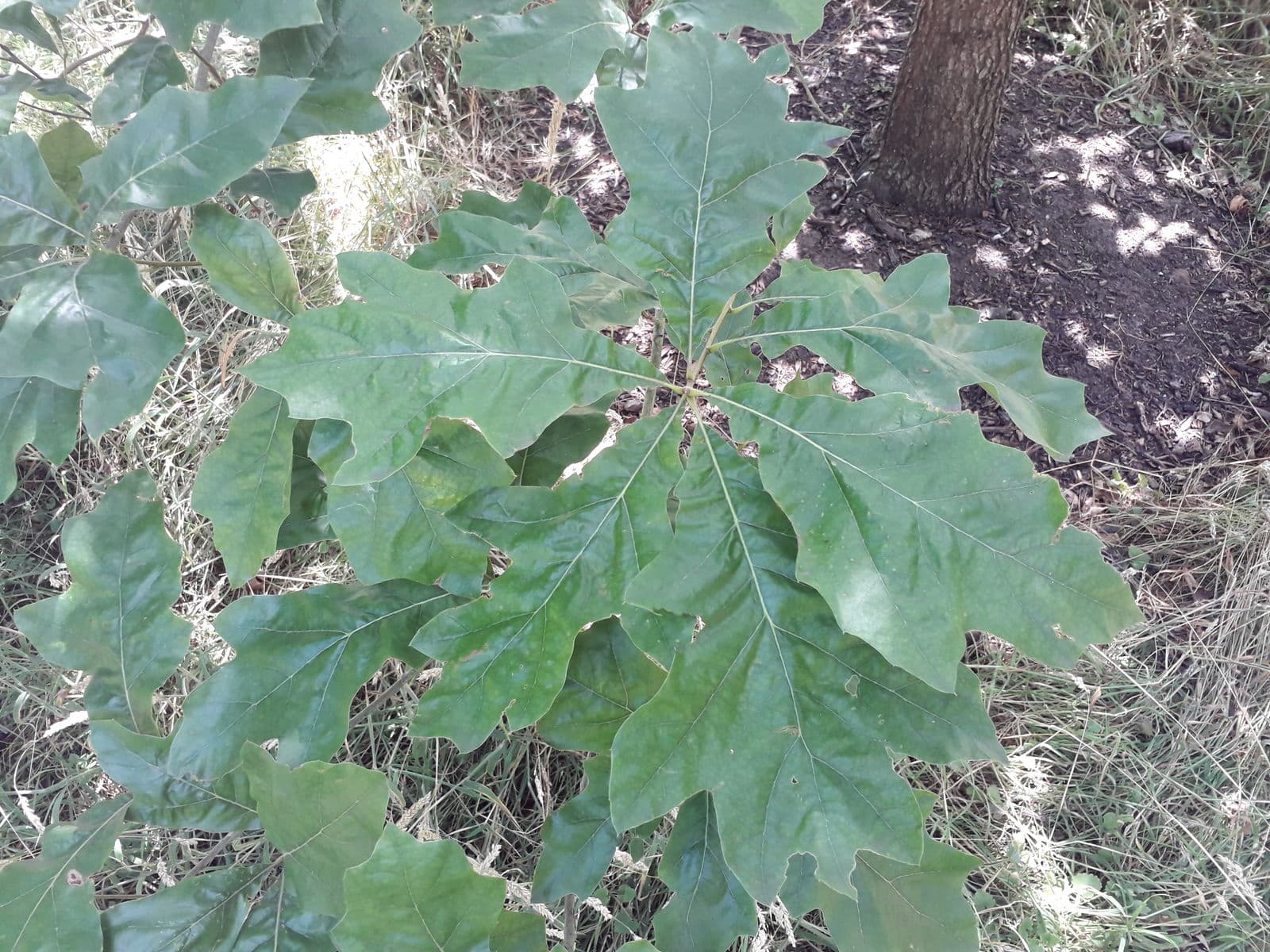
The tree forms a characteristic pyramidal shape in youth, widening with maturity. The branching structure is notably fine and delicate with slightly pendulous, elegant branches. Leaves are approximately 10-18 centimeters long, deeply divided into 5-7 lobes, glossy green in summer. In October-November, leaves transform into spectacular red-gold hues.
Flowers appear in April-May: inconspicuous hanging catkins. Following pollination, characteristic round acorn fruits form in flat cups in September-October, approximately 1-1.5 centimeters in diameter. These acorns are highly valuable food for squirrels, crows, and other wildlife.
Ideal location
Full sun to half-shade; minimum five to six hours of direct daily sunlight. The tree grows better in full sun but can tolerate half-shade. Good air circulation helps prevent fungal diseases. Wind tolerance is generally good, though extremely strong wind is not ideal.
Quercus pagoda excels in medium to large gardens (10-15 meters diameter), as a specimen on lawn areas, and in dappled shade woodland plantings. Combination with other American tree species or native shrubs creates harmonious plantings. In smaller gardens, the graceful growth habit is elegant enough to function as a solitary specimen.
Soil requirements
The tree naturally grows in acidic to neutral soils (pH 4.5-6.0) and tolerates a broader range of soil types than many other oak species. Sandy loam soils are ideal, but heavy clay soils can also work if well-drained. The tree tolerates seasonal moisture fluctuations better than drought-preferring oak species.
Fertility should be low to moderate. Annual surface application of compost (3-5 centimeters) aids root development. In very dry soils: addition of organic matter (30-40% by volume) substantially improves moisture retention. When planting in clay soil, dig a hole at least 60 to 80 centimeters wide and backfill with a blend of native soil, coarse sand, and compost.
Watering
At planting, water the young tree thoroughly until soil around the rootball is fully saturated, then maintain a regular schedule of once or twice weekly during the first growing season. Once established (after 1-2 years), Quercus pagoda tolerates drought reasonably well, though consistent moisture stimulates optimal growth.
During dry periods, a weekly deep soak with substantial volume (20-30 liters per tree) is more beneficial than frequent light sprinkling. Mulching with 5-7 centimeters of compost around the base, kept clear of the trunk itself, aids moisture retention considerably. Drainage must remain adequate; standing water around the roots can lead to root rot, particularly in clay soils.
Free design
Want to see Quercus pagoda: complete guide in your garden? Make a free design now.
Pruning
Minimal pruning is needed. In early years post-planting: removal of damaged branches and training a central leader. Formal pruning should be avoided as it disrupts natural form. Later: removal of low-hanging branches and deadwood is acceptable.
The tree naturally grows in elegant form; minimal pruning yields best results. Perform pruning preferably during winter dormancy (December through February) using clean, sharp tools, disinfecting saws between trees to prevent disease transmission.
Propagation
Quercus pagoda is almost always propagated from seed (acorns), since cuttings and grafting generally prove difficult with oaks. Collect ripe acorns in September-October immediately after they drop, before they dry out or are gathered by squirrels. Test viability with a water bucket: acorns that sink are typically viable, while floating ones are often hollow. Sow acorns within a few weeks of collection in a mix of garden soil and sand, in nursery pots at least 20 centimeters deep due to rapid taproot development. Germination typically occurs in spring following a cold period. Young seedlings can be planted at their permanent site after one to two growing seasons.
Diseases and pests
Quercus pagoda is generally a robust tree with few serious disease problems. Oak processionary moth caterpillars can occur and cause irritating urticating hairs; inspect the tree in May-June for nests and engage a specialized pest control company if infestation occurs. Powdery mildew can affect foliage during humid summers, recognizable by a white powdery coating; good air circulation reduces this risk. Leaf spot disease occasionally appears under prolonged wet conditions but rarely threatens tree vitality. Gall wasps sometimes cause conspicuous but harmless galls on leaves and twigs.
Maintenance calendar
March-April: Inspection of new growth, removal of winter-damaged branches. May-September: No active maintenance needed; regular watering during dry periods. October-November: Fall color display; no maintenance needed. December-February: Winter dormancy; no care required.
Winter hardiness
Quercus pagoda is hardy to USDA zone 7 (-18 to -12°C), which is very cold-hardy for Dutch and European gardens. Even in northern Netherlands and Scandinavian regions it grows well. Young trees may experience minor frost damage in extremely severe winters, but recovery is rapid.
Protection of young trees is only needed in very northern regions or extreme winters. Mature trees are extremely cold-hardy and require no protection. A 10 to 15 centimeter layer of mulch around, but not touching, the base offers extra protection to the root zone during the harshest frost periods in January and February.
Companion plants
Quercus pagoda combines well with:
- Other American tree species (Cornus, Liquidambar)
- Native shrubs: Ilex, Sambucus, Viburnum
- Ground layer: native low-growing plantings
- Underplanting with smaller trees creates layered composition
When combining plantings, account for the tree's eventual crown width of 10 to 15 meters and position smaller companions at least 3 to 4 meters from the trunk.
Closing remarks
Quercus pagoda represents an optimal balance of elegance, cold-hardiness, and maintenance ease. This tree suits gardens throughout the Netherlands and functions well in sustainable landscape planning. Young trees of 60 to 150 centimeters in height are available from specialized nurseries, often as balled-and-burlapped stock or in 10 to 30 liter containers. For more inspiration on selecting medium-sized shade trees, consult gardenworld.app's comprehensive tree selection guide. For ecological benefits, see gardenworld.app's wildlife-friendly gardening guide.
Want to see Quercus pagoda: complete guide in your garden? Make a free design now.
Upload a photo, pick a style, and get a photorealistic design with plant list in under a minute.
10,000+ gardens designed already
No credit card required


Similar plants
Lucombe oak: complete guide
Quercus crenata
Lucombe oak (Quercus crenata): a majestic semi-evergreen giant with corky bark, perfect for large gardens, parks, and country estates.
Blue oak: complete guide
Quercus douglasii
Discover the blue oak, a drought-tolerant Californian shade tree with striking blue-green foliage, ideal for large, climate-resilient gardens.
Quercus montana: complete guide
Quercus montana
Quercus montana, the chestnut oak, is a rugged American shade tree with deeply furrowed bark and large acorns, well suited to dry, rocky, spacious gardens.