
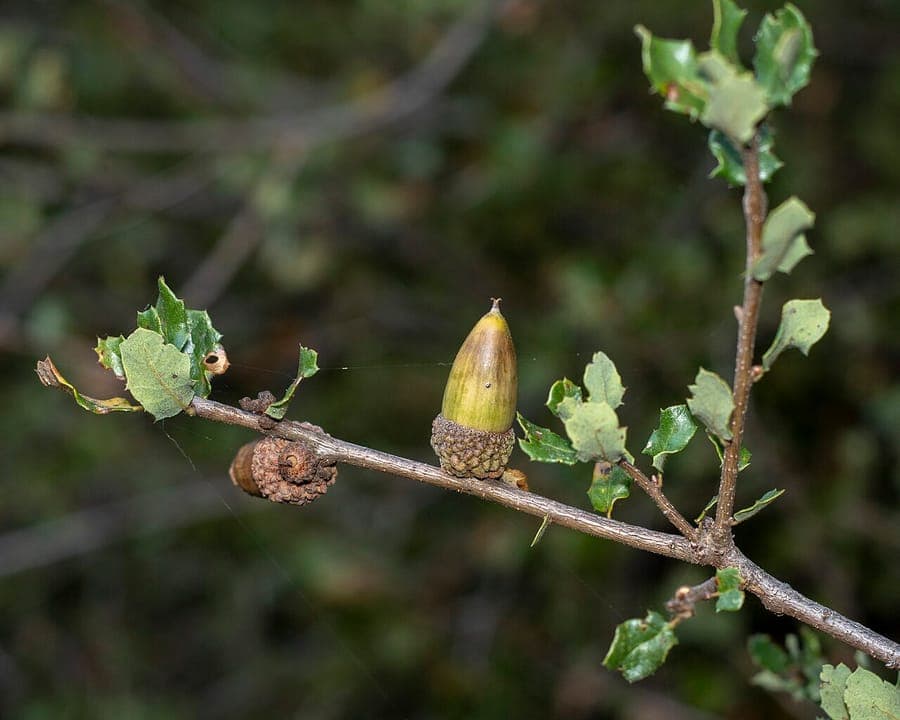
Toyonbro / CC BY-SA 4.0, via Wikimedia Commons
Quercus dumosa: complete guide to coastal sage scrub oak
Quercus dumosa
Want to see Quercus dumosa: complete guide to coastal sage scrub oak in your garden?
1 minute, no credit card
Overview
Quercus dumosa, known as coastal sage scrub oak or Nuttall's scrub oak, is a unique tree-shrub native to California and Mexico. This is no typical large oak: rather, it's a dense, compact tree-shrub form perfectly suited to dry landscapes. With its slow growth rate and native character, it's the ideal plant for xeriscaping and Mediterranean gardens.
Appearance and Bloom
The coastal sage scrub oak is a multi-stemmed shrub-like tree typically growing 5 to 8 meters tall. The foliage is distinctly coarse-textured - immediately noticeable on close inspection. Leaves are small to medium, shiny green with interesting surface texture that catches light beautifully.
The plant grows compact and dense, making it excellent for natural screens and group plantings. Spring brings inconspicuous flowers, but the focus is on attractive foliage and compact form. The trunk displays dark, rough bark with considerable character.
Ideal Location
Position this oak in full sun to partial shade. Minimum four hours direct sunlight is acceptable. This tree excels in warm, sunny corners of your garden. Its compact form makes it suitable even for larger gardens where space is limited.
This is an excellent plant for coastal regions and windy locations. The plant tolerates salt spray and strong winds well. In Mediterranean gardens, xeriscaping designs, and modern landscapes, it's a favored choice. Plant multiple specimens for natural screens.
Soil
Quercus dumosa grows in virtually every soil type: sand, clay, loam - all work. The plant is remarkably soil-tolerant. The key requirement is good drainage - no standing water. In very wet gardens, improve drainage by adding sand or gravel.
This plant tolerates even poor soils. After planting, you can incorporate some compost, but it's unnecessary. It's among the least demanding oaks. Even very acidic or alkaline soils pose no problem.
Watering
Once the plant has been growing for a year, the coastal sage scrub oak needs no water. In the first year, regular watering helps the root system establish. After that, watering is limited to extremely dry periods.
Young plants appreciate weekly watering during dry summers. An established plant tolerates months-long drought. In very wet winters, ensure water doesn't pool around the base.
Free design
Want to see Quercus dumosa: complete guide to coastal sage scrub oak in your garden? Make a free design now.
Pruning
This plant requires minimal to no pruning. Allow its natural form to develop. You may gently remove dead branches. If you desire a more open form, perform light pruning in spring.
The plant naturally forms an attractive shape. Heavy pruning is unnecessary and inadvisable. Annual inspection for dead wood suffices.
Maintenance Calendar
First year: Regular watering during dry periods. Subsequently:
Spring: Remove any dead wood. Summer: Rarely water - only during exceptional drought. Fall/Winter: No maintenance needed.
This plant cares for itself. Truly low-maintenance. Ideal for gardeners wanting minimal time commitments.
Winter Hardiness
Quercus dumosa occurs wild from California to northern Mexico, so it favors warm, dry climates. In warmer parts of Europe, it thrives. In Britain, it suits warmer southern regions and favored sites.
In very cold regions, frost may damage young plants. A protective mulch layer assists. Once established, winter hardiness rarely presents challenges.
Companion Plants
Combine coastal sage scrub oak with other drought-tolerant plants. Lavender, rosemary, sage, and other Mediterranean herbs thrive in the same dry conditions. Rock plants and succulents create interesting contrast.
Other Quercus species work well together. Silver-gray foliage or golden flowers create interesting combinations. This plant is ideal in groups of two or three for informal screens.
Conclusion
Quercus dumosa is ideal for garden designers seeking a slow-growing, drought-tolerant structural plant. Quality material is available through major garden suppliers. This is a plant for those wanting to conserve water while appreciating native species.
In gardenworld.app designs, this oak helps create modern, sustainable gardens. Its compact form and drought tolerance make it a favorite in contemporary landscape architecture. Let gardenworld.app redesign your garden with this elegant oak as the structural foundation!
Want to see Quercus dumosa: complete guide to coastal sage scrub oak in your garden? Make a free design now.
Upload a photo, pick a style, and get a photorealistic design with plant list in under a minute.
10,000+ gardens designed already
No credit card required

