
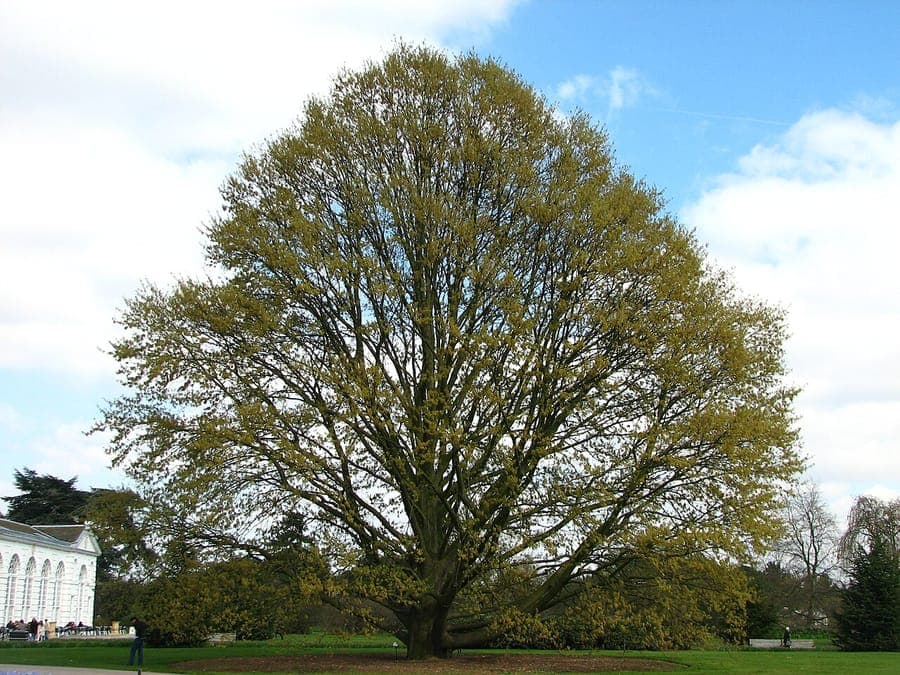
User:Mmparedes / CC BY-SA 2.5, via Wikimedia Commons
Quercus castaneifolia: complete guide
Quercus castaneifolia
Want to see Quercus castaneifolia: complete guide in your garden?
1 minute, no credit card
Overview
Quercus castaneifolia, known as the Chestnut-leaf Oak, is a large, stately tree native to the Caucasus mountains and regions between the Caspian Sea and Iran. This unique oak is celebrated for its strikingly large, chestnut-like leaves that resemble those of chestnut trees, from which its scientific name derives. The tree ultimately reaches 20-25 metres in height and is highly valuable as a specimen shade tree in larger gardens and parks.
The Chestnut-leaf Oak is a much undervalued tree species in Europe, particularly outside its native range. Yet it grows far better in temperate climates than many native oaks and is highly suitable for both landscape and timber production.
Appearance and Growth
The leaves of Quercus castaneifolia are the most striking feature of this tree. They are very large, up to 20 centimetres long, deeply lobed, and remarkably resemble chestnut leaves. In summer they are dark green and glossy; in autumn they change to attractive yellow-brown tones before dropping (the tree is deciduous).
The tree grows in a broad, spreading form, creating a very attractive, dense canopy. The trunk is straight and robust. The acorns are highly characteristic - they are elongated and sit in unusual cups that closely resemble chestnut husks.
Growth rate is moderate to fast under favourable conditions. The tree can live 500+ years.
Ideal Location
Quercus castaneifolia grows best in full sun to light dapple, in a location well-exposed to open sky. The tree reaches its full potential in open, south- or west-facing positions.
Avoid very windy locations in early years, though mature trees are wind-tolerant. Protection in the first years helps faster tree establishment.
Soil
The Chestnut-leaf Oak is very flexible regarding soil requirements. It grows well on:
- Well-drained loamy soils (preferred)
- Sandy soils
- Moist soils (provided not waterlogged)
- Acidic to neutral pH (pH 5.5-7.5)
The tree resists drought once well-established, though younger plants prefer adequate moisture. Very heavy clay soils can be improved with sand and organic matter.
Watering
In the first year after planting, water regularly to ensure good root establishment. Water deeply but not too frequently - the goal is to reach good moisture deep in the soil, not excessive surface watering.
Once established (after 2-3 years), the tree needs very little supplemental water except in severe drought conditions. In normal climates with regular rainfall, supplemental watering is unnecessary.
In very dry summers, light watering supports vigorous growth, especially in early years.
Free design
Want to see Quercus castaneifolia: complete guide in your garden? Make a free design now.
Pruning and Maintenance
Minimal pruning is needed for this naturally loosely growing tree. Remove only dead, damaged, or crossing branches. The best time for pruning is late winter (February-March) when sap begins rising.
Younger trees can receive some formative pruning to encourage a single strong central leader and balanced branch structure. Do not prune drastically - the tree recovers slowly from heavy pruning.
Maintenance Calendar
March-April: Final dormancy. Prune if necessary. Growth begins. Add mulch around base.
May-July: Active growth. Water recently planted trees regularly. Watch for pests.
August-September: Growth stabilizes. Continue watering if dry. Feeding not needed.
October-November: Fall colour. Leaf fall begins. No watering after autumn.
December-February: Complete dormancy. No watering except in extreme drought. Pruning may occur.
Winter Hardiness
Quercus castaneifolia is hardy to approximately -18 to -22 degrees Celsius, suitable for USDA zones 6-9. In colder regions, younger trees may suffer damage in severe winters, but mature trees recover well.
The tree is susceptible to late spring frost damage - very early leaf growth can be damaged by late frosts in May. Therefore, plant in a location not in frost pockets where cold air settles.
Companion Plants
Since Quercus castaneifolia grows large, plant carefully around this tree. Good companions in larger gardens:
- Cornus mas (Cornelian cherry) - understory tree
- Carpinus betulus (Hornbeam) - privacy screen
- Viburnum lantana (Wayfarer tree) - understory shrub
- Buxus sempervirens (Common box) - underplanting
- Other oaks (excellent choice)
Closing
Quercus castaneifolia is a beautiful, stately tree with highly unusual leaves and excellent properties for larger gardens, parks, and landscape projects. Though this Caucasian oak is not as famous as many other tree species, it delivers decades of shade, beauty, and ecological benefits.
Looking for quality trees for your garden? Many specialist nurseries stock excellent selections. Visit gardenworld.app for more advice on tree selection and landscape design.
Want to see Quercus castaneifolia: complete guide in your garden? Make a free design now.
Upload a photo, pick a style, and get a photorealistic design with plant list in under a minute.
No credit card required


Similar plants
Quercus durata: complete guide
Quercus durata
Discover the tough Leather Oak from California. Practical guide to growing this native species with drought tolerance and beautiful habit.
Quercus engelmannii: complete guide
Quercus engelmannii
Discover the resilient Engelmann Oak from Southern California. Guide to growing this drought-tolerant native with strong form and ecological benefit.